
RRM: Decoding the "Internal Influence" of Reviews for Precision Social Recommendation
Exploring Users' Internal Influence from Reviews for Social Recommendation
The paper proposes the Review-based Recommendation Model (RRM), which integrates internal user influence factors—sentimental deviation and review reliability—into a matrix factorization framework. By utilizing word2vec-based sentiment analysis and an attention mechanism to weigh these factors alongside external popularity, the model achieves state-of-the-art accuracy in rating predictions on the Yelp dataset.
TL;DR
While most social recommenders look at who you follow, the Review-based Recommendation Model (RRM) looks at how your friends write. By quantifying "Sentimental Deviation" (how polarized a user's opinions are) and "Review Reliability" (the depth of their feedback), and fusing these with an attention mechanism, this model improves rating prediction accuracy by up to 6.7% over existing SOTA methods.
The Missing Link: Why Traditional Social Recommendation Fails
Most social recommender systems operate on a simple "trust" premise: if User A follows User B, they share interests. However, this relies on explicit social graphs or tags that are often sparse or non-existent.
The authors identify a critical gap: Internal Factors. They argue that a reviewer’s influence isn't just about popularity—it's about their psychological impact on the reader. For instance:
- The Polarized Critic: Someone who gives varied, strong opinions (high sentimental deviation) is often more influential than someone who gives "3 stars" to everything.
- The Detailed Guide: A user who writes long, feature-rich reviews is more "reliable" than a user who writes one-word summaries.
Methodology: From Sentiment to Social Latent Space
The RRM architecture processes raw text into a mathematical influence score through three main stages:
1. Sentiment Analysis via Word2Vec + SVM/SVR
Instead of simple lexicon-based matching, the authors use word2vec to capture the semantic nuance of reviews. They transform reviews into feature vectors and use Support Vector Regression (SVR) to predict a continuous sentiment score ().
2. Quantifying Internal Influence
The model introduces two novel metrics:
- Sentimental Deviation (): Calculated as the variance of a user's sentiment scores across items. High variance indicates a user who is discerning and polarized, making their reviews more "accessible" and impactful.
- Reliability (): Modeled as an exponential distribution where review length is correlated with the number of product features mentioned.
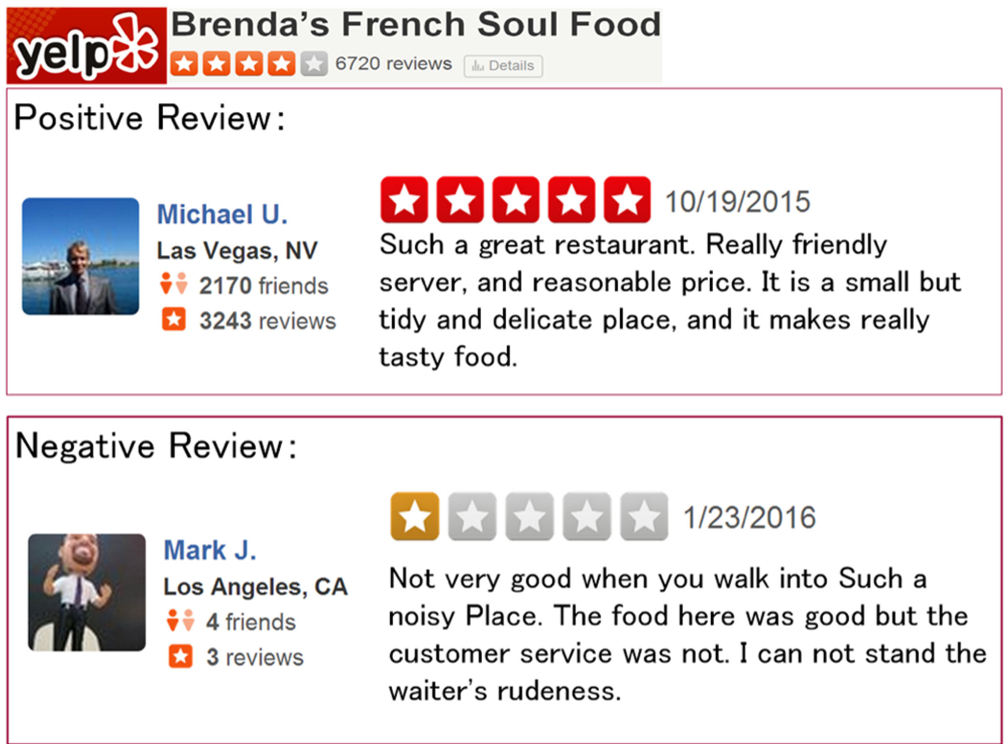 Fig 1: The RRM framework integrating sentiment extraction and matrix factorization.
3. The Attention Mechanism
Not all influence factors are equal. The paper uses an Attention Mechanism to automatically learn the weights () for Sentimental Deviation, Reliability, and Popularity. This allows the model to adapt to different datasets (e.g., valuing detail more in "Home Services" than in "Nightlife").
Experimental Results: SOTA Performance
Testing on the Yelp dataset across 8 categories (from Restaurants to Pets), RRM consistently outperformed baselines like CircleCon and PRM.
| Metric | Average Improvement over 2nd Best |
|---|---|
| RMSE | 5.6% |
| MAE | 6.7% |
Key Insight: The Power of Polarization
One of the most fascinating findings (shown in the figure below) is that (Sentimental Deviation) usually received a high positive weight, while (Popularity) was often lower or even negative in its relative gradient. This suggests that a user's distinct "voice" is more predictive of their influence than the sheer number of friends they have.
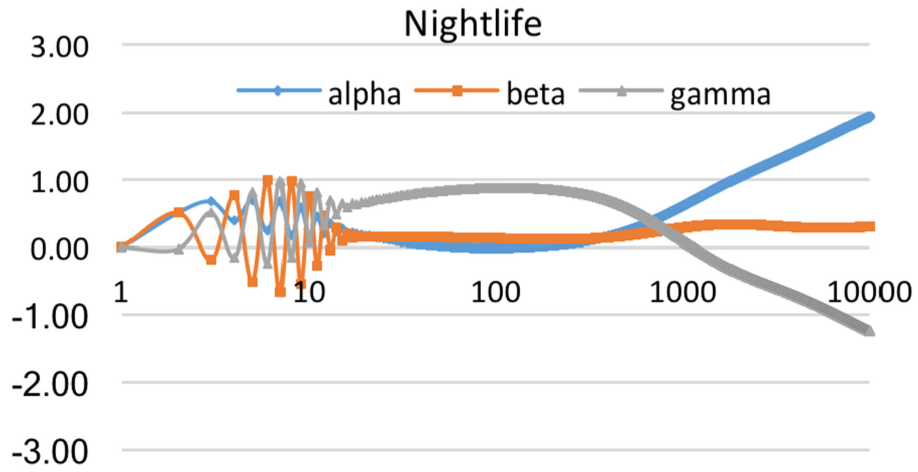 Fig 2: The relevance between weight learning and iterations, showing the dominance of sentimental factors.
Critical Analysis & Takeaways
The RRM model successfully shifts the focus from "tangible" social actions to "untouchable" internal influence.
Strengths:
- Implicit Signal Mining: Extracts value from unstructured text reviews that are usually discarded by matrix factorization models.
- Scalability: The attention mechanism allows the model to "ignore" non-beneficial factors automatically.
Limitations:
- Text Length Dependency: The authors admit their Word2Vec-based sentiment analysis is optimized for short texts (like Yelp) and underperforms on long-form movie reviews compared to NBSVM.
- Computational Overhead: Performing SVR and Word2Vec on millions of reviews adds significant preprocessing latency compared to simple CF.
Future Outlook: This research paves the way for "Psychological Recommendations," where the system understands not just what you like, but whose style of critique moves you to make a purchase.