The Architecture of Obsession: Why Students Pervasively Adopt Social Media
Applying uses and gratifications theory and social influence processes to understand students' pervasive adoption of social networking sites: Perspectives from the Americas
This study investigates the drivers of pervasive adoption of Social Networking Sites (SNSs) among university students in the Americas. By integrating Uses and Gratifications Theory (UGT) and Social Influence (SI) processes, the research identifies how specific psychological needs and social pressures lead to the deep "embedment" and "embracement" of SNSs in daily life.
TL;DR
Why do some technologies feel like tools while others feel like extensions of our identity? This study moves beyond "how much" we use social media to "how deeply" it is integrated into our lives. By surveying students across four countries, the research reveals that entertainment value and social identification are the primary engines of pervasive adoption, while cultural backgrounds significantly dictate the depth of this digital immersion.
Beyond Usage: The Concept of Pervasive Adoption
The scholarly discourse on technology has long relied on the Technology Acceptance Model (TAM), focusing on "perceived usefulness" and "ease of use." However, these metrics are insufficient for Social Networking Sites (SNSs). The author argues that we must look at Pervasive Adoption, defined by two pillars:
- Embracement: The willing and positive acceptance of the tech.
- Embedment: The degree to which the tool becomes an integral, inseparable part of a user's social fabric.
The Psychological Motors: UGT and SI
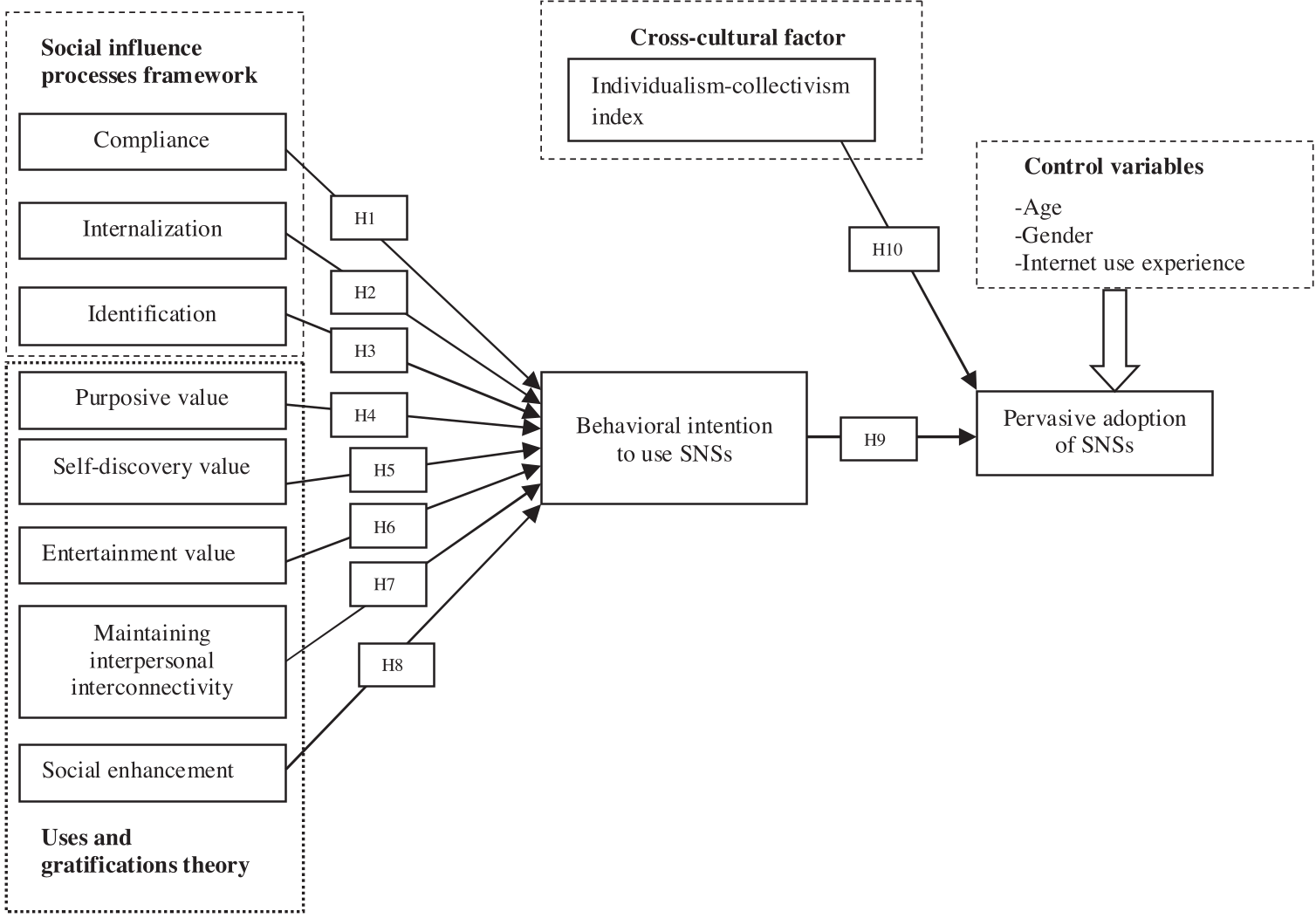
The study utilizes two heavy-hitting theories to explain the "Why":
1. Uses and Gratifications Theory (UGT)
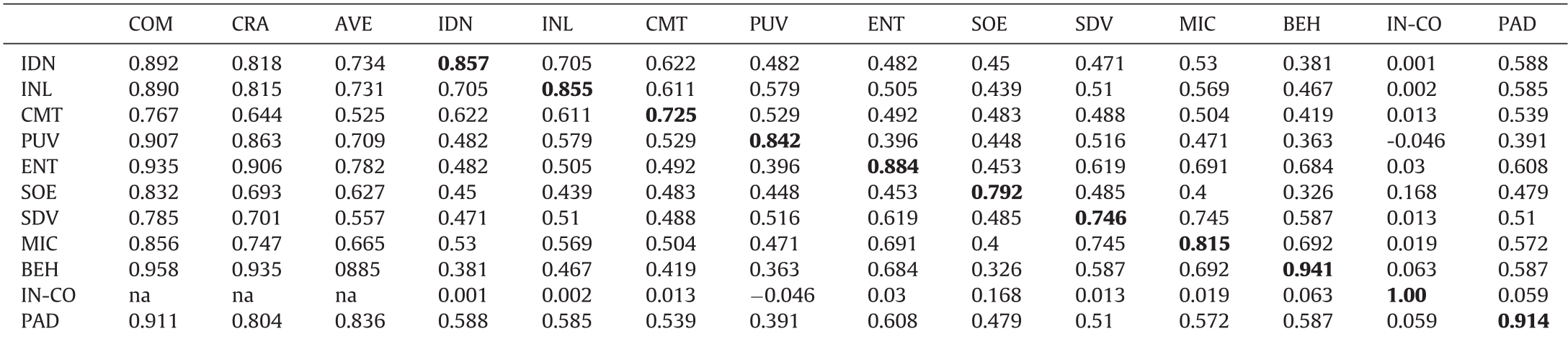
Users aren't passive; they seek specific rewards. The study found that Entertainment Value () and Interpersonal Interconnectivity () are the strongest drivers. If a platform isn't "fun" or doesn't keep you connected to your inner circle, it will never be "pervasively adopted." Interestingly, "Purposive Value" (using SNS for specific tasks) was found to be insignificant, suggesting SNSs are emotional hubs, not utility toolboxes.
2. Social Influence (SI) Processes
The study highlights a critical distinction between three types of influence:
- Internalization: Adopting the tech because it aligns with your values. (Significant)
- Identification: Using it to maintain a self-defining relationship with a group. (Significant)
- Compliance: Using it because of external pressure. (Not Significant)
This is a major insight: Peer pressure might get someone to sign up, but only value-alignment and identity-building keep them there.
The Cultural Multiplier
One of the paper's most sophisticated contributions is the inclusion of Hofstede’s Cultural Dimensions. The data suggests that Individualism-Collectivism (ID-CO) is a key differentiator.
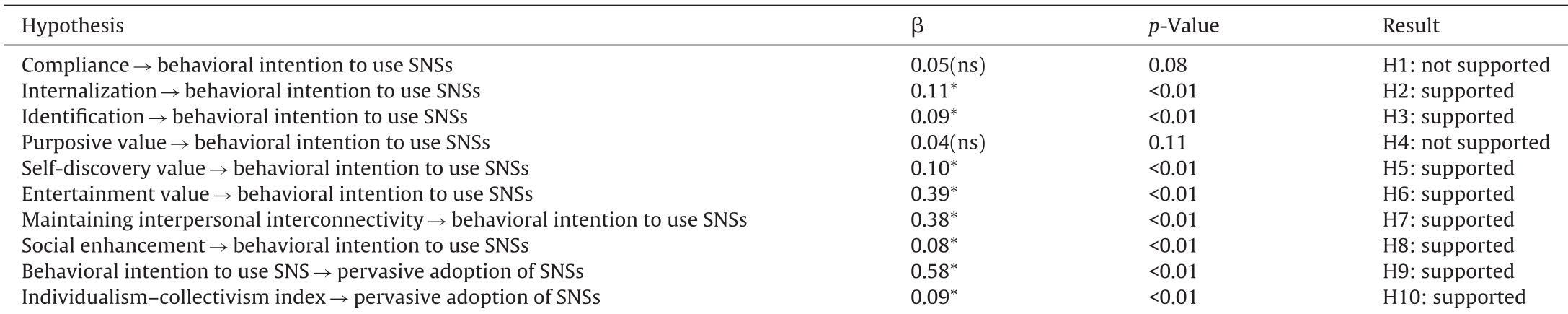
Students from more individualistic cultures (Canada R=80, USA R=91) showed a higher propensity for pervasive adoption. Why? In individualistic societies, SNSs provide a critical stage for self-expression and the individual pursuit of social capital, whereas in collectivist cultures (Mexico R=30, Argentina R=46), traditional offline group structures may satisfy these needs more robustly.
Critical Insight & Conclusion
This research provides a roadmap for "Sticky" technology. If you want a platform to become pervasive, don't just build features; build identities.
- Takeaway for Educators: Leverage the "embedment" of these platforms for e-learning rather than fighting against them.
- Takeaway for Developers: Prioritize self-discovery and entertainment over utilitarian productivity.
Despite its strengths, the study is cross-sectional (a "snapshot" in time). Future research should explore how these factors evolve as a user moves from "Newbie" to "Power User," and whether the same logic applies to emerging technologies like the Metaverse.
Final Summary Table: