
SDArch: Revolutionizing Course Authoring via Semantic Documents and Social Networks
Using Semantic Documents and Social Networking in Authoring of Course Material: An Empirical Study
This paper introduces SDArch, a novel Semantic Document Architecture that integrates Semantic Web technologies and social networking into course material authoring. By transforming conventional office documents into queryable "Semantic Documents," it enables fine-grained reuse of content units within a collaborative social environment.
TL;DR
Authoring high-quality educational material is often a redundant "copy-paste" nightmare. This paper presents SDArch, a system that transforms standard documents (Word, PowerPoint) into a network of "Semantic Document Units." By combining Semantic Web indexing with Social Networking, it allows educators to find and reuse specific slides or paragraphs from their peers with a single click. Empirical results show a 50% reduction in time and a ~70% reduction in mechanical clicks compared to traditional methods.
Problem & Motivation: The "Copy-Paste" Bottleneck
Most educators don't write new courses from scratch; they reuse existing slides, articles, and notes. However, current workflows suffer from three critical flaws:
- Granularity Issues: You can search for a "document," but not for a specific "definition of Design Patterns" hidden inside a 100-slide deck.
- Isolation: High-quality content is often trapped in personal folders or centralized Silos, disconnected from the "Web 2.0" social flow.
- Lack of Integration: Most semantic tools require users to leave their familiar environments (like MS Office) to use complex, specialized software.
The authors' insight is simple but powerful: Don't replace the editor; augment it. By treating documents as collections of semantically-linked units rather than monolithic files, they enable a much more fluid reuse cycle.
Methodology: The Pillars of SDArch
The Semantic Document Architecture (SDArch) rests on two pillars: Semantic Web technologies for structured data and Social Networking for human relevance.
1. The Semantic Document Model (SDM)
Instead of a file-based approach, SDArch uses an RDF-based model where:
- Document Units (DUs): The smallest reusable pieces (a paragraph, a chart, a table).
- Ontological Annotations: Concepts that describe "what" the content is.
- Social Context Annotations (SCA): Metadata that tracks "how" the content is used (e.g., "reused by 10 professors," "recently updated").
2. Architecture and Integration
The system is built as a three-layer Service-Oriented Architecture (SOA). Crucially, the Presentation Layer isn't a new app; it is a set of plugins for MS Office called SemanticDoc.
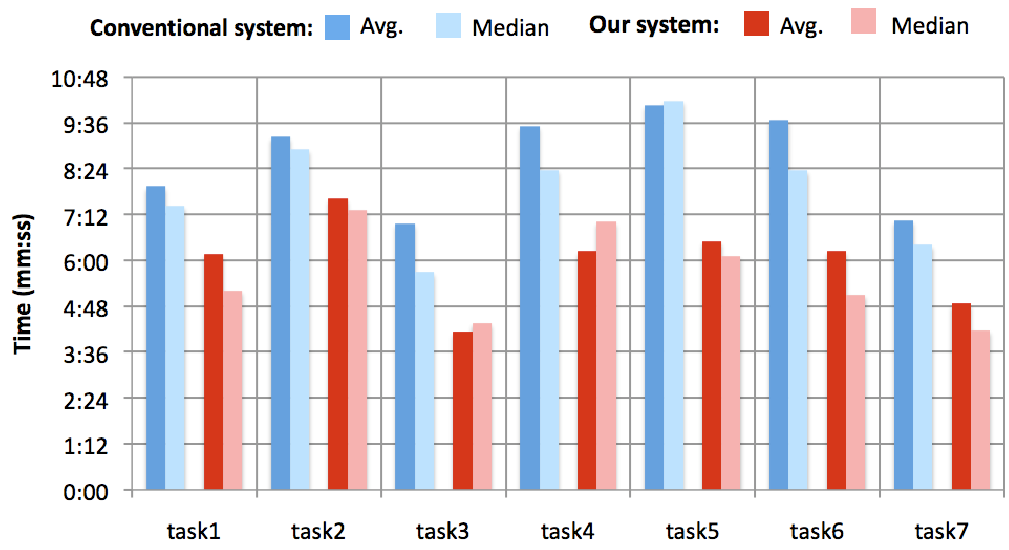 Figure 1: While the underlying system manages complex RDF triples and social graphs, the user interacts via familiar Toolboxes in MS Word and PowerPoint.
Experiments & Results: Quantitative Proof of Utility
The authors conducted a task-based evaluation where domain experts (professors and TAs) had to create a 7-slide presentation on "Design Patterns" using both a conventional setup and the SDArch-enhanced setup.
Efficiency Gains
The results were stark. Not only did participants finish faster, but the "interaction cost" (clicks and window switching) plummeted.
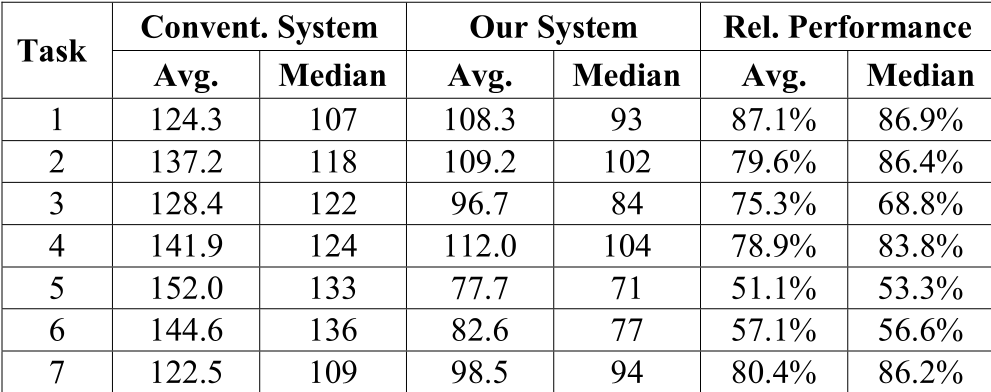 Figure 2: Comparison of average execution times. In tasks involving complex examples (Tasks 5 & 6), SDArch nearly halved the time required.
Key takeaways from the data:
- Time Efficiency: In task 5 (pattern examples), performance improved by 48.9%.
- Effort Reduction: The number of mouse clicks dropped to 21.5% of the baseline in some tasks, as the SemanticDoc tool handles the "find-copy-format-paste" sequence automatically.
User Satisfaction
Subjective feedback was overwhelmingly positive (Average score of 4.8/5.0 for overall usefulness). Users particularly valued the ability to see the "social reputation" of a content unit before deciding to reuse it.
Critical Analysis & Conclusion
The true value of this work lies in its pragmatic approach to the Semantic Web. Many semantic projects fail because they require manual, tedious tagging. SDArch mitigates this by allowing the authoring community to "crowdsource" value through social networking and semi-automated transformation.
Limitations:
- The study utilized a small sample size (6 experts), which limits statistical generalization.
- The system relies on "Domain Ontologies," which still require maintenance as fields evolve.
Future Outlook: In the age of LLMs, the concept of a "Semantic Document Unit" is more relevant than ever. One could imagine SDArch units acting as "Ground Truth" for RAG (Retrieval-Augmented Generation) systems, ensuring that AI-generated course materials are derived from trusted, socially-vetted expert units rather than hallucinated data.
Summary Takeaway: By breaking documents into "Socially-Aware Semantic Units," SDArch proves that we can make academic authoring faster and more collaborative without forcing professors to learn a new language.