
Decoding Social Evolution: A Utility-Based Approach to Latent Meeting States
Utility-Based Model for Characterizing the Evolution of Social Networks
This paper introduces a utility-based model to characterize social network evolution by treating link formation as a result of individual micro-decisions. The authors propose a novel estimation framework combining the Expectation-Maximization (EM) algorithm with Snowball Sampling (SS) to handle latent meeting states and large-scale data, achieving a high prediction AUC for real-world Facebook ego-networks.
TL;DR
Why do we form the connections we do? Most models treat social network growth as a purely statistical phenomenon. This paper shifts the focus to individual utility, proposing that network evolution is driven by intelligent agents making optimal decisions. By combining Snowball Sampling and the EM algorithm, the authors successfully account for "latent meeting states"—the invisible barriers to connection—resulting in a 29% improvement in link prediction accuracy over standard logistic regression.
The Hidden Dimension: Why "Meeting" Matters
Existing models like Exponential Random Graph Models (ERGMs) are excellent at describing what a network looks like (transitivity, community clusters), but they often fail to explain why it got there. A significant blind spot in current research is the Meeting State.
In reality, a link isn't formed just because and want to connect; they must first have the opportunity to meet.
- If there is a link, they definitely met.
- If there is no link, it’s either because they haven't met or they met and decided they didn't like each other (low utility).
Ignoring this distinction leads to biased results. The authors' research intuition suggests that by modeling this hidden layer, we can uncover the true preference parameters of social actors.
Methodology: The Core Engine
The authors define a utility function that includes structural effects like common friends and attribute differences. To scale this to massive networks, they employ two key techniques:
1. Snowball Sampling (SS)
Unlike random sampling, SS preserves the "neighborhood" of a node. The paper proves (Proposition 2) that two-wave SS is the mathematical minimum required to capture critical effects like "friends-of-friends" without losing information.
2. The EM Algorithm for Hidden States
Since meeting states are unobserved, the authors use the EM algorithm:
- E-Step: Calculate the posterior probability that two nodes met given their current link state and existing parameters.
- M-Step: Update the preference parameters (θ) by maximizing the expected log-likelihood.
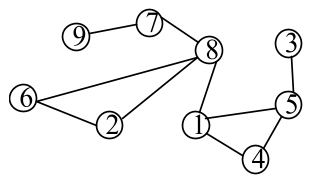 Figure 1: Comparison of 1-wave and 2-wave Snowball Sampling architecture.
Experimental Results & Scalability
The authors validated their model through extensive simulations and a real-world application on Facebook ego-network data.
Key Findings:
- Bias vs. Network Size: As network size grows, the "seed set" (starting nodes for sampling) must also grow to maintain accuracy, especially for long-distance structural effects.
- Superior Prediction: In the Facebook dataset (347 nodes, 5038 edges), the utility-based EM method achieved a 0.80 AUC, far surpassing the 0.62 AUC of traditional Logistic Regression (LR).
- Scalability: The algorithm demonstrates a linear relationship between node count and running time, making it suitable for modern cloud-based distributed computation.
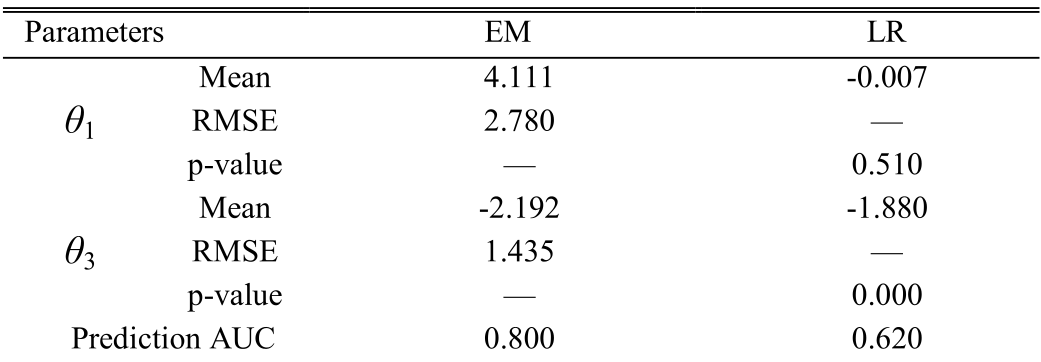 Table 1: Performance metrics on Facebook data: EM vs. Logistic Regression.
Critical Insight: The "Choice" of Sampling
One of the most profound takeaways from this work is that the sampling method and the utility function are not independent.
If your model assumes humans care about "friends of friends of friends" (3-path), a 2-wave snowball sample will fail you. You must match the "depth" of your sampling to the "horizon" of your agents' utility functions. This insight provides a rigorous framework for future researchers to choose their data collection methods based on the specific social behaviors they intend to study.
Conclusion
This paper bridges the gap between game theory and big data analytics. By moving from "how many triangles exist" to "why do individuals choose to form triangles," it provides a more robust, interpretable, and predictive tool for understanding the digital societies of the future.
Limitations: The current model assumes a constant meeting probability across pairs. Future work could benefit from making the meeting process endogenous to the network structure itself.