
Validating Mobile Crowdsourcing: Why "Real-World" Testing is Overrated
How to validate mobile crowdsourcing design? leveraging data integration in prototype testing
The paper introduces a hybrid data integration approach for validating mobile crowdsourcing application designs through prototype testing. By combining real-time, historical, and simulated data, the researchers enable developers to reconstruct complex, context-aware scenarios that are otherwise difficult or expensive to replicate in the real world.
Executive Summary
TL;DR: Mobile crowdsourcing apps thrive on context, but testing them in the wild is a logistical nightmare. This paper proposes a methodology to "fake it until you make it" by integrating real-time sensor data with historical logs and simulated edge cases to validate prototypes without breaking the bank.
Context: Published at UbiComp '16, this work addresses a critical gap in the software engineering lifecycle for ubiquitous computing: the transition from a lab prototype to a robust, context-sensitive deployment.
The "Wild" Problem: Why Traditional Testing Fails
Testing a standard app is easy: you click a button, and it works or it doesn't. Testing a context-aware crowdsourcing app is a different beast. Imagine an app that asks users about their environment only when they are near a specific park, it's raining, and their heart rate is over 100 bpm.
How do you test that?
- Participant Recruitment: You can't always find 100 people to stand in the rain at 3 PM.
- Hardware Heterogeneity: Every Android sensor behaves differently.
- Rare Events: You can't wait weeks for an app crash or a specific GPS outage just to see if your "fallback" code works.
Methodology: The Data Integration Triad
The authors suggest that the "Intended Context" shouldn't rely on luck. Instead, they propose building a testing environment using a mix of three data streams:
- Real-Time Data: High-fidelity data pulled directly from the tester's device.
- Historical Data: Replaying sensor logs from previous studies (using the AWARE framework) to see how the app would have behaved.
- Simulated Data: Manually injecting "dummy" data (e.g., a fake battery failure or a forced sensor error) to test robustness.
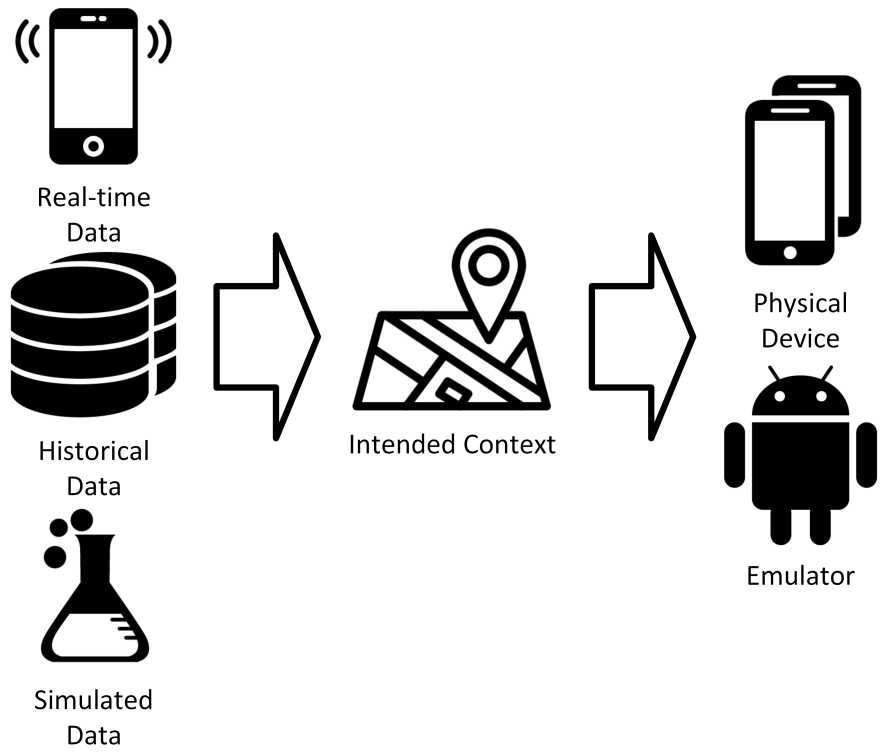 Figure 1: The architecture of the integrated testing flow, bridging data sources to testing environments.
The Trade-off: Realism vs. Cost
The genius of this approach lies in its pragmatism. As shown in the authors' comparison, there is an inverse relationship between how "real" the data is and how much it costs to acquire.
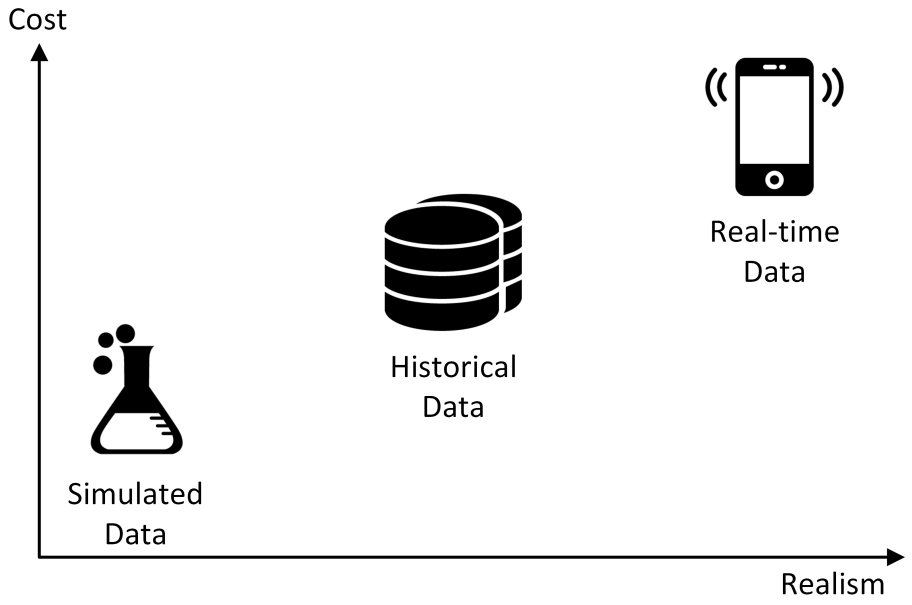 Figure 2: The trade-off between realism, development cost, and frequency of occurrence.
Implementation Example: AWARE + ContextSimulator
The researchers implemented this logic using the AWARE framework, a powerful hub for managing smartphone sensors (motion, location, environmental, and human input).
To test "Uncommon Contexts," they created a Dummy Application. Instead of waiting for a real phone crash, a developer inputs a "Crash" event into the dummy app, which then broadcasts this state to the AWARE database. The target prototype "sees" this event and triggers its error-handling logic, allowing for seamless validation of robust design.
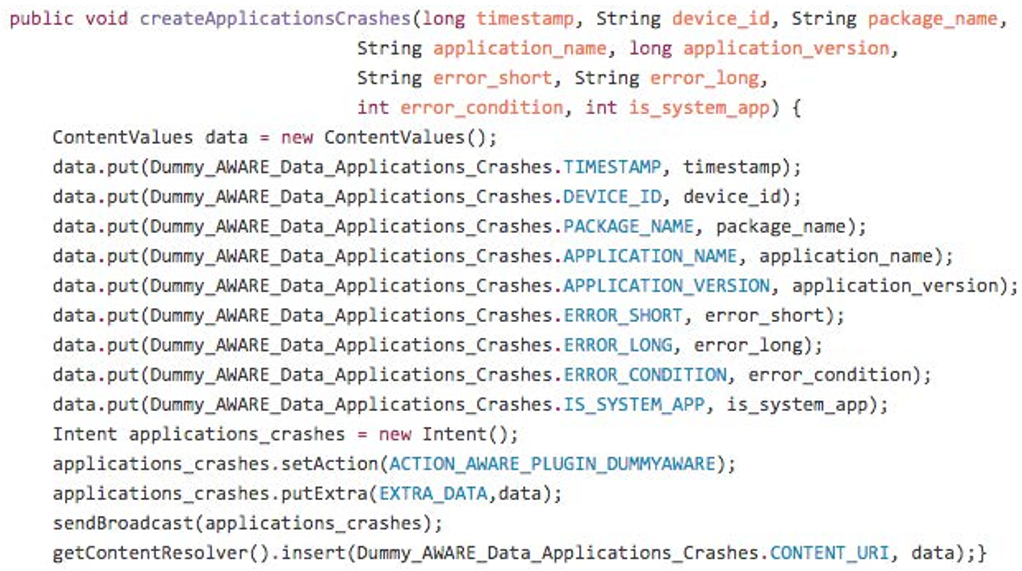 Figure 3: The AWARE interface serves as the central hub for sensor management and human-in-the-loop input.
Deep Insight & Conclusion
The core takeaway is that Response Quality in crowdsourcing is a direct function of Context Relevance. If an app asks a user a question at the wrong time (e.g., asking for a street photo while the user is driving), the data is useless.
By leveraging data integration, developers can ensure their triggers are pixel-perfect before a single participant is recruited.
Limitations: While powerful, simulated data can suffer from "distortion." A simulated GPS jump might not perfectly mimic the nuances of urban canyon interference. However, as a validation tool for initial prototype logic, this framework is far superior to the "deploy and pray" method commonly seen in early-stage mobile research.
Future Outlook: As we move toward more complex wearables and IoT ecosystems, the ability to "stitch together" virtual and real context will become the standard for all ubiquitous computing validation.