
Cultural Capital vs. Social Currency: Decoding the Performing Arts Value Chain on Social Media
A Research on Value Chain Structure of the Performing Arts Consumers’ Social Media Usage - Application of Means-End Chain Theory and Involvement
This research applies Means-End Chain (MEC) theory and the concept of Involvement to analyze the value chain structures of performing arts consumers using social media. By utilizing Association Pattern Technique (APT) laddering, the study identifies distinct hierarchical value maps (HVM) for current (high involvement) and potential (low involvement) audiences, revealing how social media facilitates both social capital and cultural capital.
TL;DR
Why do we share photos of a theater play or follow a ballet troupe on Instagram? This study utilizes Means-End Chain (MEC) theory to prove that our "Involvement" levels radically change the value we extract from social media. While casual fans use performing arts as a tool for social networking, enthusiasts use digital platforms to build cultural capital and seek aesthetic transcendence.
Background Positioning
This research serves as a behavioral bridge between sociology (Bourdieu’s Capital Theory) and marketing psychology. It moves beyond "what" people post to "why" they post it, positioning social media as a critical infrastructure for audience development in the arts.
Problem & Motivation: The "Involvement" Gap
Performing arts organizations often struggle to convert "one-time" attendees into "loyal" patrons. The authors argue that the missing link is understanding Involvement—the perceived personal relevance of the art form.
Existing research often treats social media as a monolith, but this paper posits that a high-involvement theater buff uses Twitter differently than a casual attendee dragged along by a friend. The researchers set out to map these cognitive "ladders" to reveal how digital behavior correlates with physical consumption.
Methodology: Mining the Consumer's Mind
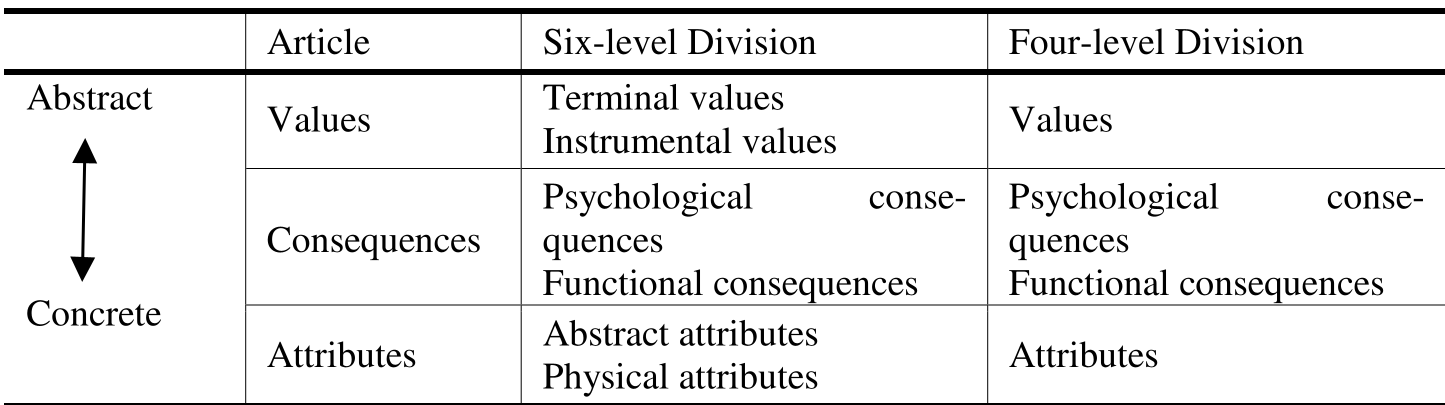
To map these mental connections, the authors used MEC Theory, which structures consumer perception into a hierarchy:
- Attributes: Features of the media (e.g., newsfeeds, comments).
- Consequences: Functional or psychological benefits (e.g., getting info, self-expression).
- Values: The ultimate life goals satisfied (e.g., self-fulfillment, warm relationships).
Using the Association Pattern Technique (APT), they surveyed nearly 500 consumers to build Hierarchical Value Maps (HVM).
Core Insights: Two Different Worlds
1. The Low Involvement Group: Social Interaction First
For the potential or casual audience, performing arts are a "means to a social end." Their strongest cognitive ladder is:
- Accompanying others Maintaining social relationships Warm relationships. In the digital realm, they use social media for self-display and managing their social accounts to feel a sense of belonging.
2. The High Involvement Group: The Quest for Beauty
For the core audience, social media is an extension of the artistic experience itself. Their ladders prioritize:
- Information/Content Acquisition Aesthetic Inspiration A World of Beauty. They utilize social media functions (like creating groups or following specific institutions) as a "pre-evaluation" tool and a way to deepen their specialized knowledge.
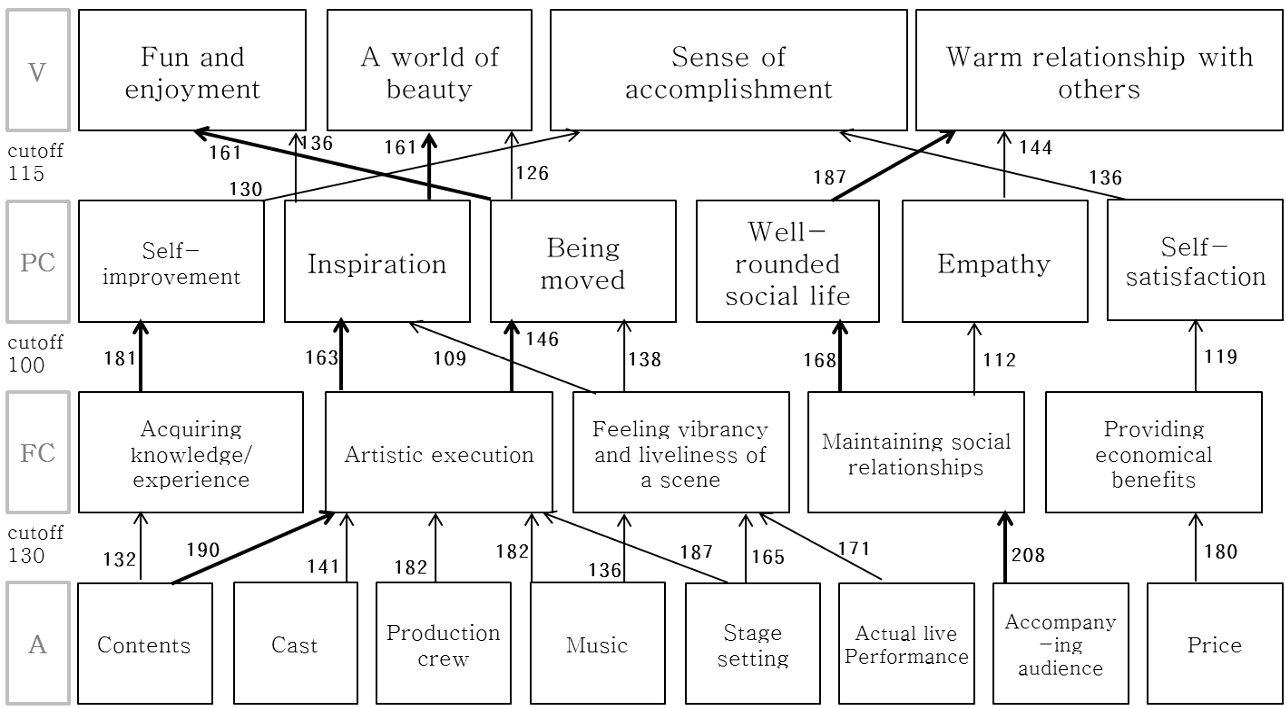 Typical cognitive structure for low-involvement users focusing on self-fulfillment through social interaction.
Deep Dive: Cultural vs. Social Capital
The study leans heavily on Pierre Bourdieu’s theory of Cultural Capital. For high-involvement individuals, social media is a factory for domesticating "symbolic meanings." By consuming digital content, they gain the "ability to understand" the arts, which reduces the perceived risk of attending an expensive, complex live performance.
By contrast, the low-involvement group views the performance as Social Capital. The "quality" of the art matters less than the "quality" of the social interaction it facilitates.
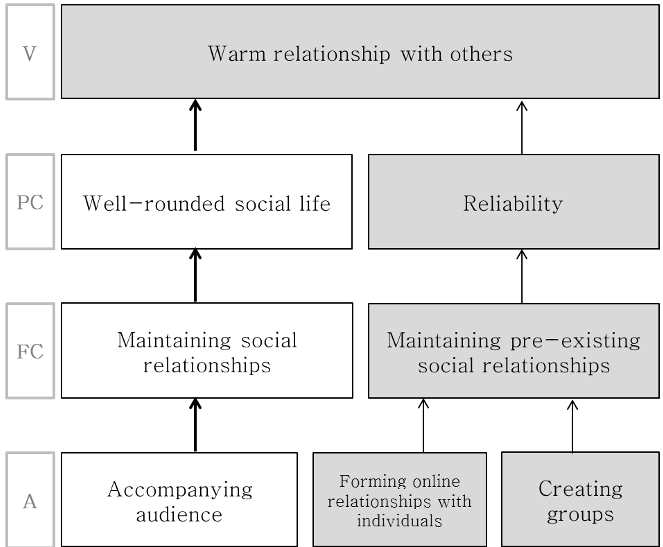 Figure: Analyzing how both groups link social media and performances to 'Warm Relationships with Others'.
Critical Analysis & Conclusion
Takeaway
Social media has shifted the paradigm from passive consumption to active "value co-creation." Marketing strategies should not be "one-size-fits-all":
- For Casuals: Emphasize the "social night out" and the shareability of the experience.
- For Enthusiasts: Provide "deep-dive" content, behind-the-scenes insights, and intellectual stimulation to build their cultural capital.
Limitations
The study relies on "Hard Laddering" (structured surveys), which can sometimes lead respondents toward pre-determined answers compared to "Soft Laddering" (natural interviews). Additionally, the average age of 25.26 suggests a heavy bias toward Gen Z/Millennial perspectives, which may not represent the "High Involvement" donors who typically fall into older demographics.
Future Outlook
As AI and algorithmic feeds become more dominant, understanding these cognitive ladders will allow arts organizations to deliver "Micro-Involvement" content—gradually moving users from social connectivity to aesthetic appreciation.