
Value Co-creation: The Hidden Engine Behind Social Media Purchase Intentions
Value co-creation and purchase intention in social network sites: The role of electronic Word-of-Mouth and trust – A theoretical analysis
This study proposes a comprehensive theoretical model exploring the interplay between electronic Word-of-Mouth (eWOM), trust, and value co-creation on Social Network Sites (SNSs). It establishes a linkage between consumer-driven content and purchase intention, highlighting the moderating role of the message source.
TL;DR
Is a simple "Like" or a comment just feedback, or is it a part of a larger value-creation process? This paper argues the latter. By bridging the gap between electronic Word-of-Mouth (eWOM), multi-layered Trust, and Value Co-creation, this research provides a theoretical roadmap for understanding why some social media strategies convert into sales while others fall flat.
Problem & Motivation: Beyond the Review Box
For years, marketers viewed eWOM as a static output—a review that a user reads and reacts to. However, with the explosion of Social Network Sites (SNSs) like Facebook and Google+, the "Review Box" has evolved into a dynamic community.
The authors identified two major gaps in existing literature:
- Lack of Theory: Many studies were purely empirical without explaining why trust and intention fluctuate.
- Missing link to Co-creation: They recognized that value is no longer created solely by the factory; it is co-created when a user engages with a brand’s fan page, shares an experience, and interacts with other potential buyers.
Methodology: The Core Framework
The paper introduces a sophisticated model that treats the consumer as an active participant rather than a passive recipient.
1. The Trust Triad
The authors break down trust into three distinct dimensions essential for SNS transactions:
- Disposition to Trust: The user’s general tendency to trust others.
- Institutional-based Trust: Trust in the SNS platform itself (security and normality).
- Trusting Beliefs: Specific belief in the brand’s benevolence, competence, and integrity.
2. The Value Co-creation Mechanism
Drawing from Service-Dominant (S-D) logic, the model suggests that eWOM activities are part of an "encounter process." When users share positive experiences, they help "engineer" the service value for future users, fundamentally altering their own and others' intent to buy.
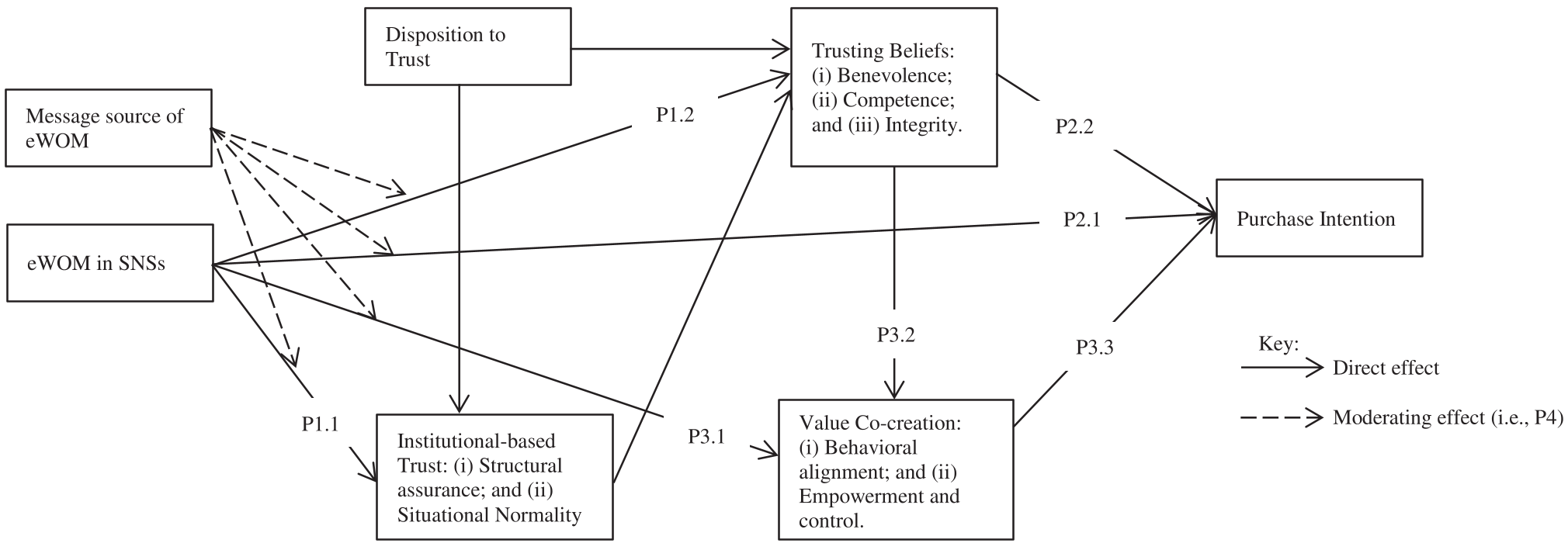 Figure 1: The theoretical model illustrating how eWOM flows through Trust and Value Co-creation to reach Purchase Intention.
Why the "Source" Changes Everything
A pivotal insight of this work is the Moderating Effect of the Message Source. The impact of eWOM is not uniform. The model posits that:
- Close Friends: High trust, high impact on co-creation.
- Unknown Peers: Moderate impact.
- The Firm (Official Posts): Often viewed with skepticism unless backed by high institutional trust.
Experiments & Theoretical Results
Though this study is a systematic review and theoretical deduction, it synthesizes prior empirical evidence to support its propositions.
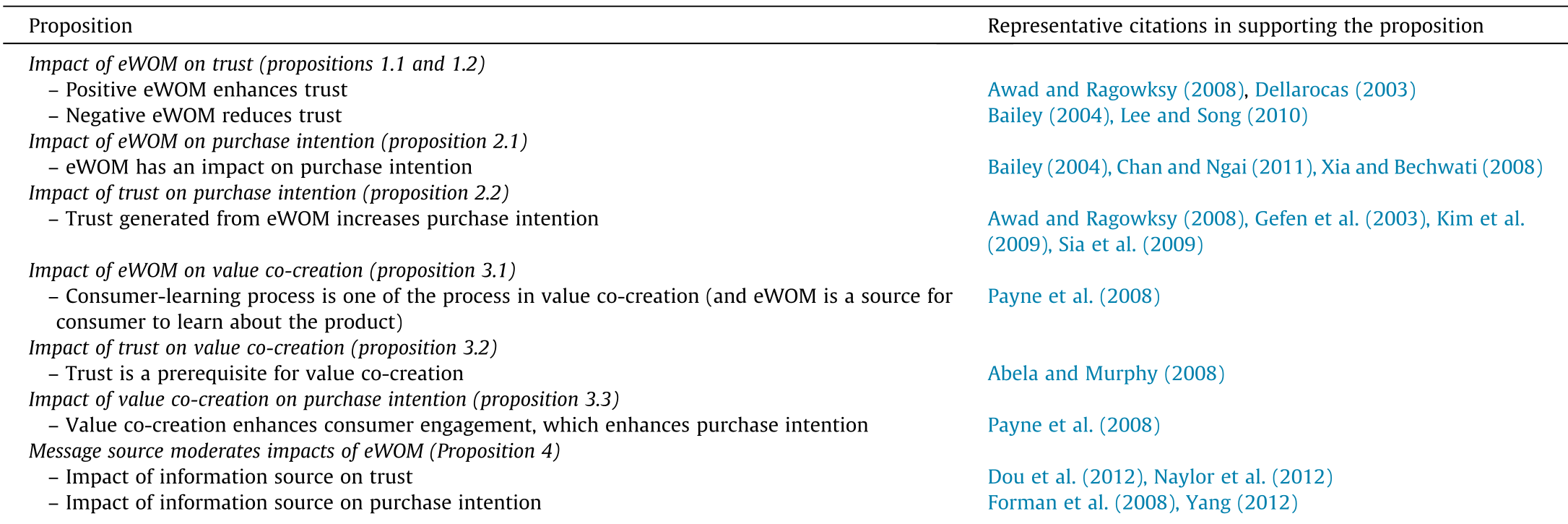 Table 1: Representative citations supporting the model's core propositions.
The paper successfully argues that Trust is a prerequisite for Value Co-creation. Without a baseline level of trust in the platform and the brand, consumers will not participate in the dialogue necessary to co-create value, thus stalling the purchase intention.
Critical Analysis & Conclusion
Takeaway
The shift from "Consumer as a target" to "Consumer as a partner" is the core takeaway. To increase purchase intention on SNSs, firms shouldn't just chase positive reviews; they should foster an environment where users feel empowered to contribute their knowledge (Behavioral Alignment).
Limitations & Future Work
The study is primarily theoretical. While it builds a robust logical structure, it calls for future quantitative research (using Structural Equation Modeling) to measure the exact weights of these relationships in modern algorithmic environments (like TikTok or Instagram’s "reels" algorithms).
In conclusion, this work serves as a foundational text for anyone looking to build a social media strategy that relies on more than just "hype," but on the sustainable co-creation of value between brand and community.