
VeDi: Orchestrating a Video Social Network on the Move
VeDi: A vehicular crowd-sourced video social network for VANETs
The paper proposes VeDi, a vehicular crowd-sourced video social network based on the Social Internet of Things (SIoT) paradigm. It utilizes VANETs and tNote metadata (blur, shakiness, resolution) to enable selective video sharing and social interactions among vehicles, achieving a viable peer-to-peer multimedia ecosystem.
TL;DR
VeDi is a vehicular social network that turns cars into content creators and consumers. By leveraging VANETs (Vehicular Ad-Hoc Networks) and a novel metadata-first exchange protocol, it allows passengers to share, "like," and "comment" on videos captured on the road without clogging the limited network bandwidth.
Background Positioning: This work bridges the gap between traditional VANET safety applications and the emerging Social Internet of Things (SIoT), positioning the vehicle as a proactive social agent.
Problem & Motivation: The Bandwidth Trap
In a high-mobility environment like a highway, network connections are 1-to-N and "fleeting" (lasting only seconds). Traditional video sharing assumes a stable connection where you browse, then download. In VANETs:
- Network Partitioning: Vehicles move out of range halfway through a download.
- Medium Contention: Broadcasting raw video files wastes the entire channel.
- Quality Uncertainty: Users don't know if a 40MB video is shaky or blurry until they've already spent the bandwidth to get it.
The authors' insight is simple: Don't share the video; share the "vibe" (metadata) first.
Methodology: The tNote and Quality Calculus
The core of VeDi is the tNote message, which acts as a lightweight social "business card" for available videos.
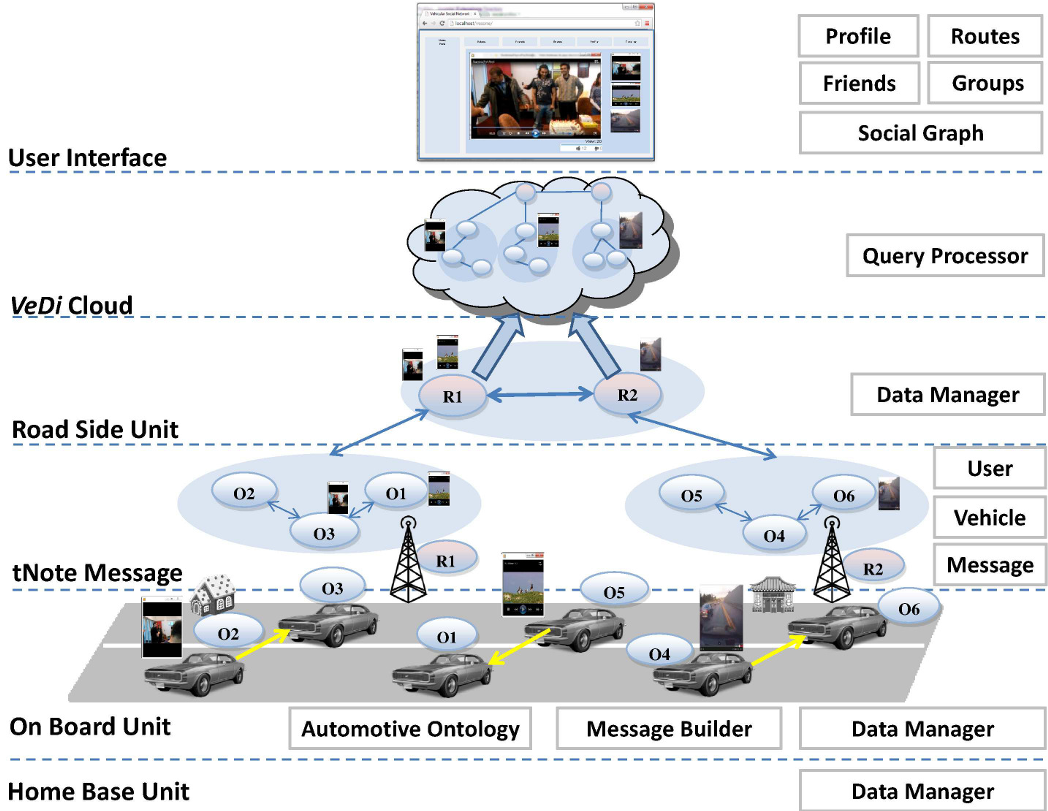
1. The Architecture
VeDi uses a hierarchical structure:
- OBU (On-Board Unit): Processes video in-car to extract quality metrics.
- RSU (Road Side Unit): Collects social interactions (likes/comments) and syncs them to the cloud.
- HBU (Home Based Unit): Allows for high-speed video syncing when the car is parked at home, reducing road-network load.
2. Math Behind the Quality
Instead of subjective ratings, the OBU automatically calculates:
- Shakiness (): Using pixel projections and a median filter to separate intentional "panning" from undesired hand tremors.
- Blur (): A no-reference metric mapping the loss of high-frequency components.
The final score is a weighted sum: This mathematical approach allows the system to rank videos automatically based on a user’s "tolerance" for low quality.
Experiments & Results: Efficiency Wins
The authors tested their metadata model using the Jiku mobile video dataset and implemented a prototype using Android tablets and a "mock" VANET setup.
Key Findings:
- Encoding Matters: Using ASN.1 PER (Packed Encoding Rules) reduced the metadata message size drastically compared to BER or XML (XER), making it viable for the 5.9 GHz DSRC band.
- Video Quality Trends: Most mobile-recorded videos follow a Gaussian distribution for blur, allowing a simple "Mean/Variance" tuple to represent the quality of a 4-minute clip accurately.
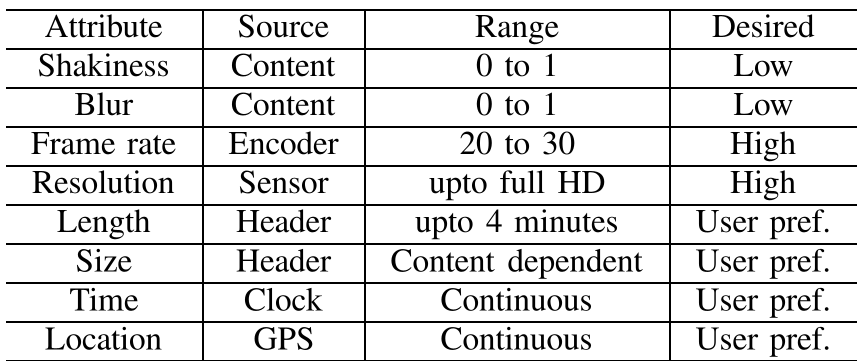 Table 1: The standard attributes defined for the tNote metadata protocol.
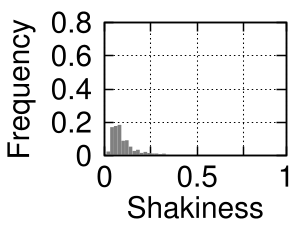 Figure 4: Analysis of shakiness spikes across different recorded clips.
Critical Analysis & Conclusion
Takeaway
VeDi moves beyond mere "data forwarding." It introduces content-awareness into vehicular social networks. By using content processing to create "previews" (metadata), it creates a market-like mechanism where only the highest-quality or most relevant data occupies the precious airwaves.
Limitations
- Battery Drain: The prototype showed that using mobile devices as Wi-Fi Access Points for peer-to-peer sharing is extremely energy-intensive.
- Security/Privacy: While the paper mentions a "Privacy" tag in the tNote, it doesn't deeply explore how to prevent malicious nodes from spoofing high-quality metadata for low-quality (or harmful) content.
Future Outlook
As we move toward 6G and 5G-V2X, the "VeDi" concept could evolve into a federated learning or edge computing node where cars don't just share social videos, but high-definition mapping data filtered by the same quality metrics.