
Beyond Rationality: Boosting VANET Cooperation via Behavioral Anchoring
Vehicle Cooperation Promotion Mechanism Based on Behavioral Economics Anchoring Theory
2021-05-10
Summary
Problem
Method
Results
Takeaways
Abstract
The paper introduces the Dual-Process Mechanism (DPM), a novel incentive framework for Vehicular Ad-hoc NETworks (VANETs) based on behavioral economics' anchoring theory. It distinguishes between new and experienced nodes to optimize resource sharing and data forwarding cooperation.
## TL;DR
Most incentive mechanisms for Vehicular Ad-hoc Networks (VANETs) assume nodes act as perfectly rational agents of traditional economics. This paper breaks that mold by introducing **DPM (Dual-Process Mechanism)**, which uses **Anchoring Theory** from behavioral economics. By treating first-time participants and veterans differently—using public market benchmarks vs. personal history as "anchors"—DPM achieves a **10% higher cooperation rate** and superior latency management compared to state-of-the-art game-theoretic models.
## The Motivation: Why Traditional Economics Fails VANETs
In a VANET, we need vehicles to act as relays. However, bandwidth is scarce, and drivers are inherently "selfish." Current solutions (Reputation-based, Currency-based, or Game Theory) share a common flaw: they use a **static utility function**.
In reality, human decision-making is **context-dependent**. Behavioral economics tells us that people don't look at absolute gains; they look at gains relative to a **reference point (the "Anchor")**.
- **The First-Timer's Dilemma**: A new node has no experience. It relies on external cues (Experimenter-Provided Anchoring, EPA).
- **The Veteran's Choice**: Once a node has forwarded data, it relies on its own history (Self-Generated Anchoring, SGA).
## Methodology: The Dual-Process Mechanism (DPM)
The authors propose a split logic flow to mirror human psychology:
### 1. AEPA (Attraction through External Benchmarks)
For new nodes, the platform provides an **EPA** based on the average market acceptance rate. This acts as a "hook" to normalize expectations.
- **Equation Insight**: The utility $U$ is boosted by an "additional value" parameter $\omega$, which is essentially the psychological weight of the anchor.
### 2. CWSGA (Continuous Working through Personal History)
Once a node becomes an "experienced" user, the anchor shifts. The platform calculates a new **SGA** based on the user's average previous rewards.
- **Adaptive Strategy**: If a node cooperated in the last round, the anchor is adjusted by a "cooperative factor" $\alpha$. If it sat out, a "non-cooperative factor" $\beta$ lowers the anchor, making it easier for the node to see "profit" in the next round and rejoin the network.
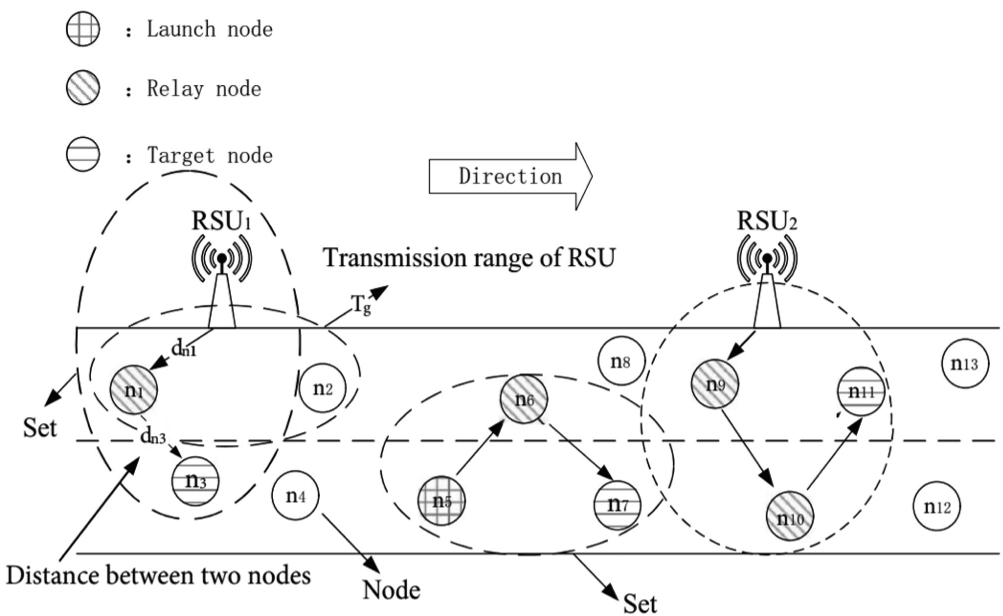
*Fig 1: The decision flow distinguishing between new and experienced nodes.*
## Experimental Evidence
The researchers compared DPM against **COMES** (a popular Coalition Formation Game).
- **Cooperation Rate**: DPM maintains a steady 10% lead. Why? Because it specifically targets nodes that might be "uninterested" in a specific message type but find the "anchored utility" attractive.
- **Delay Ratio**: As the number of cooperative nodes increases, the path to the destination is found faster. Unlike traditional models where delay might fluctuate, DPM’s delay remains stable and low.
- **Speed Sensitivity**: The study highlights that while increasing vehicle speed (10m/s to 60m/s) naturally degrades performance (due to link instability), DPM's anchored incentives mitigate the drop-off more effectively than traditional models.
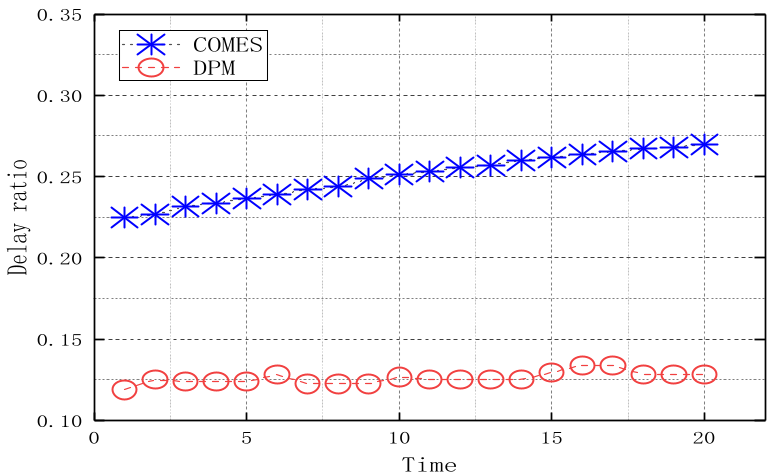
*Fig 2: Comparison of cooperation rates between DPM and traditional game-theoretic models.*
## Critical Insight: The "Anchor" as a Control Knob
The most fascinating part of this research is the **$\alpha$ and $\beta$ analysis**. The authors found that setting $\alpha=0.4$ and $\beta=-0.1$ created the perfect "psychological gravity." If the anchor is too high, nodes feel they are losing out and quit; if it's too low, they participate but the network efficiency drops. This "calibration" suggests that future network protocols could be "tuned" like a social psychological experiment to maximize efficiency.
## Conclusion & Future Work
DPM proves that human-centric modeling outperforms abstract mathematical rationality in mobile networks. By acknowledging that vehicles are controlled by humans with biased reference points, the authors have created a more resilient and cooperative VANET.
**Limitations**: The current model assumes a relatively simple highway environment. Moving forward, the team aims to test this in urban scenarios with real-world vehicle trajectories where signal interference and complex intersections might challenge the anchoring stability.
***
**Key Takeaway**: Don't just build for robots; build for the irrational humans driving them.