
Hybrid Vehicle Ontology: Bridging Skeleton Law with Decision Tree Logic
The Method of Vehicle Ontology Building Based on Decision Tree
This paper proposes a structured methodology for building domain-specific ontologies, specifically for the vehicle industry, by integrating the traditional "Skeleton Law" with "Decision Tree" algorithms from data mining. The core contribution is a systematic framework that moves from subjective domain analysis to a computable, tree-based classification model.
TL;DR
Building a robust domain ontology is often an art rather than a science. This paper introduces a more rigorous approach by merging the conceptual Skeleton Law with the mathematical structure of Decision Trees. By applying this to the vehicle industry, the authors demonstrate how to turn messy domain requirements into a predictable, accurate hierarchy with 100% accuracy in specific classification categories.
Background & Motivation: The Gap in Skeleton Law
The Skeleton Law (ENTER TSE) is a cornerstone of ontology engineering, providing a four-step cycle: Purpose, Building, Assessment, and Documentation. However, its Achilles' heel is its lack of "how-to." It tells you to "build an ontology" but doesn't provide the technical tools to ensure the classification is optimal or verifiable.
The authors argue that Decision Trees are the perfect structural counterpart to ontologies. Both rely on hierarchical branching, inheritance, and logical classification. By combining the two, we move from vague definitions to a model that can be evaluated using standard data mining metrics like Coverage and Accuracy.
The Methodology: Three Layers of Demand Analysis
Before drawing the tree, the authors propose a deep-dive "Triple Realm" analysis:
- Layer 1 (Objective Description): Comprehensive recording of data (e.g., surveying 100 individuals on travel distances).
- Layer 2 (Pattern Induction): Discovering non-obvious laws within the data.
- Layer 3 (Pattern Innovation/Prediction): Using "Evolutionary" thinking to predict future shifts (e.g., the rise of private cars and aircraft due to economic growth).
Architecture: From Logic to Tree
Once analyzed, the domain is mapped into a top-down Decision Tree. In this model:
- Nodes: Classes or Properties.
- Edges: Successive relations (Part-of, Kind-of, Instance-of).
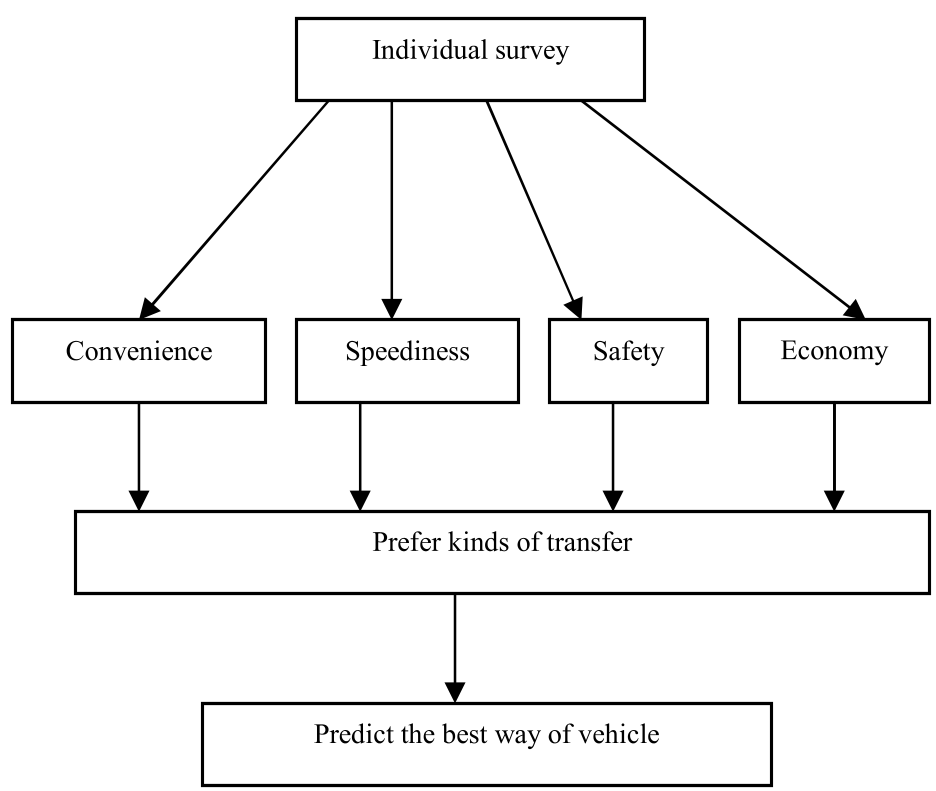 Table 1: The foundational data showing travel distribution across different categories (City, Short Province, etc.), which serves as the input for the decision logic.
Implementation: The IF-THEN Transformation
The genius of the method lies in the Documentation phase. By following a path from the root to a leaf, you generate an IF-THEN rule. Example: "IF person has private cargo business AND going to another city, THEN vehicle = Car."
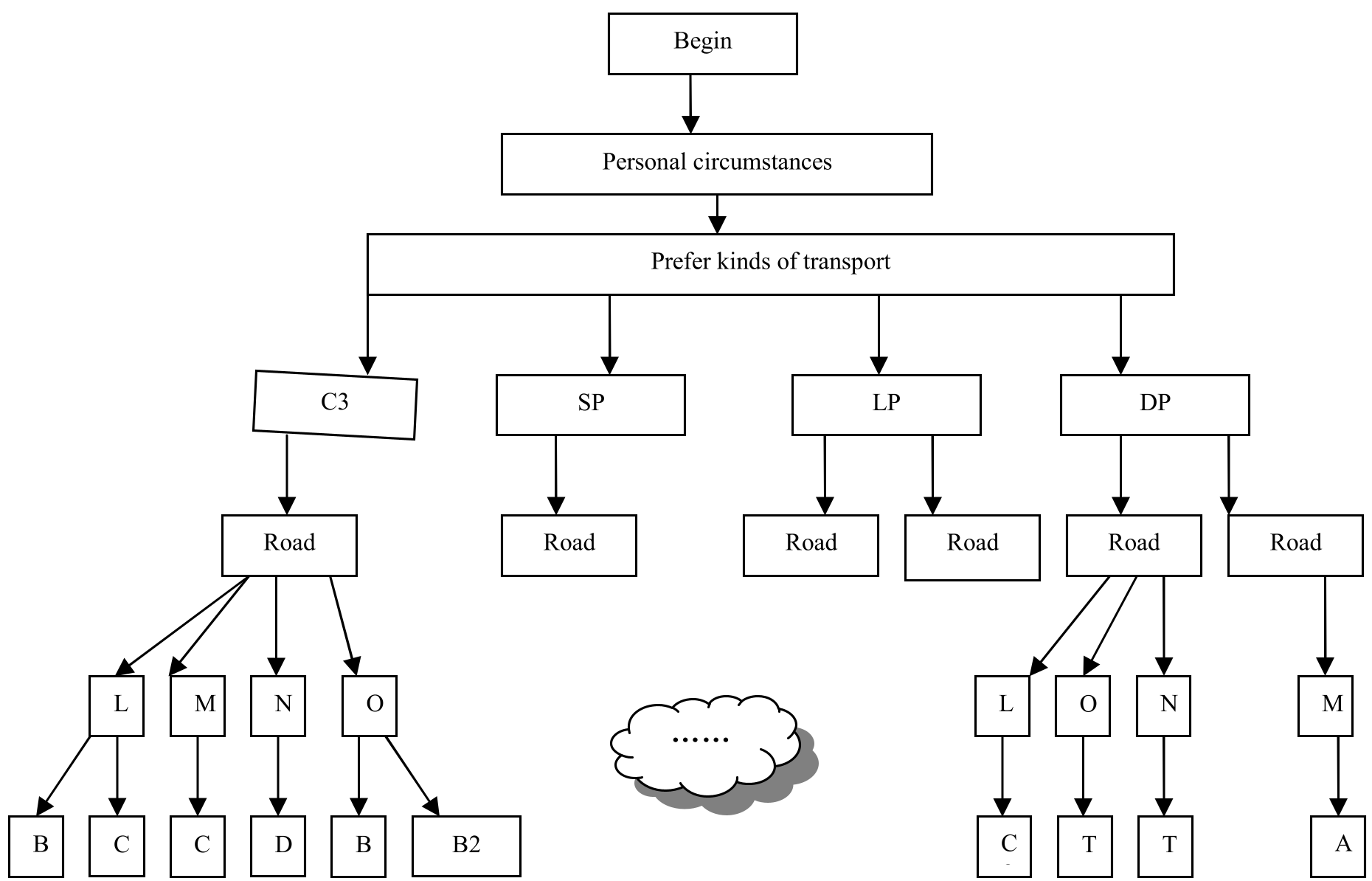 Figure 5: The resulting document model formatted as a decision tree, where each branch represents a rigorous rule for the ontology.
Experimental Results & Performance
The authors didn't just build the model; they audited it. Using two key formulas:
- Coverage(R) =
- Accuracy(R) =
| Vehicle | Coverage | Accuracy |
|---|---|---|
| Train (T) | 8/21 | 0.875 |
| Aircraft (A) | 2/21 | 1.000 |
| Bus (B) | 4/21 | 0.500 |
The results show that while some categories like Buses are more ambiguous (lower accuracy), high-stakes categories like Trains and Aircraft are captured with extremely high precision within the ontology framework.
Critical Insight & Conclusion
This work highlights that Ontology is not just a vocabulary; it is a classification engine. By using Decision Trees, the authors provide a way to handle the "Iterative Incremental" nature of domain experts' knowledge.
Limitations: The paper primarily focuses on single-inheritance trees. In complex domains, a "Forest" (Multiple Inheritance) or a more complex Graph structure might be required. Furthermore, the reliance on manual survey data for Layer 1 analysis could be automated using modern Big Data scraping techniques.
Final Takeaway: If you are building a domain-specific Knowledge Graph, don't start with code—start with a Decision Tree to validate your logic and ensure your "rules" are accurate before they are set in stone.