
Verifying the Invisible: formal Prevention of Emergent Behavior in Social Networks
Verification of lack of emergent behavior in extending a social network of agents
This paper presents a formal verification methodology to detect and eliminate emergent behavior in social networks of agents. It introduces the Emergent Behavior Detection (EBD) tool, which uses Message Sequence Charts (MSCs) and semantic causality to ensure that system extensions do not trigger unintended or illegal scenarios.
TL;DR
Expanding a social network of agents isn't just about adding nodes; it’s about ensuring the complex web of interactions doesn't produce "emergent behavior"—unintended logic paths that can break system integrity. This paper introduces a formal verification methodology and the Emergent Behavior Detection (EBD) tool to catch these "implied scenarios" during the design phase using Message Sequence Charts (MSCs) and semantic causality.
Background: The Scalability Trap
In modern Multi-Agent Systems (MAS), such as semantic search engines, there is no central controller. Scale is achieved through distributed coordination. However, as functionality grows, the gap between "what we told the system to do" and "what the system can actually do" widens. This gap is known as Emergent Behavior.
The authors argue that catching these flaws at the design stage is 20 times cheaper than fixing them in the field. But how do you find a behavior that you didn't explicitly program?
The Core Challenge: Implied Scenarios
An implied scenario occurs when several autonomous components handle a joint task, and their individual local views allow for a sequence of events that the designer never intended.
- The Problem: Standard manual reviews cannot track the state-space of hundreds of interacting agents.
- The Insight: Use the physical logic of the domain—Semantic Causality—to determine why one message must follow another, creating a rigorous map of the system's "state."
Methodology: From Scenarios to Formal Models
The proposed workflow follows a crystalline logic:
- Requirement Specification: Represent system behavior using Message Sequence Charts (MSCs).
- Behavior Modeling: Synthesize Finite State Machines (FSMs) for each agent node.
- Domain Knowledge Integration: Build static and dynamic ontologies to define message relationships.
- Verification: Compare the synthesized global behavior against a set of "Illegal Scenarios."
Visualizing the Architecture
The system leverages a semantic search engine prototype where agents learn concepts and manage "tie strengths" between one another.
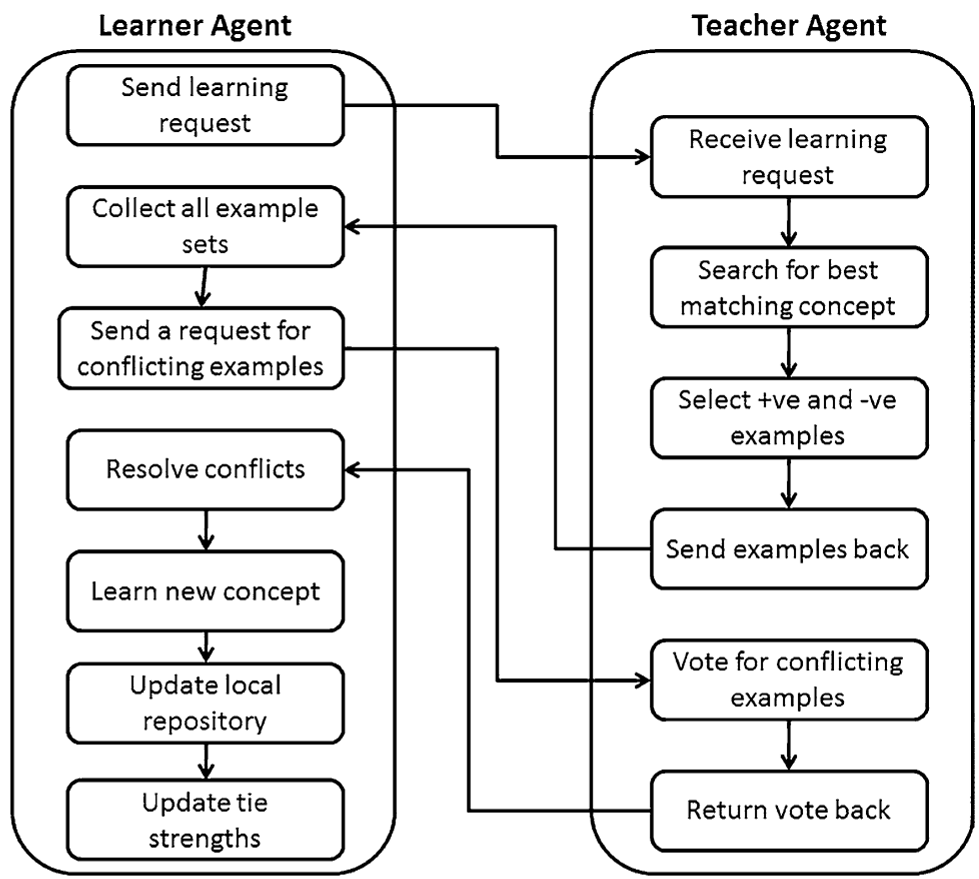 Fig 1: The Multi-Agent Architecture for Semantic Search.
Detailed Insight: Semantic Causality
The breakthrough in this methodology is Semantic Causality. Unlike previous methods that relied on subjective global variables assigned by engineers, the authors define state values based on whether a component needs the result of a message to perform a subsequent operation.
When two states in the synthesized FSM are identical but lead to different outcomes, the system becomes "confused." This is the fingerprint of emergent behavior.
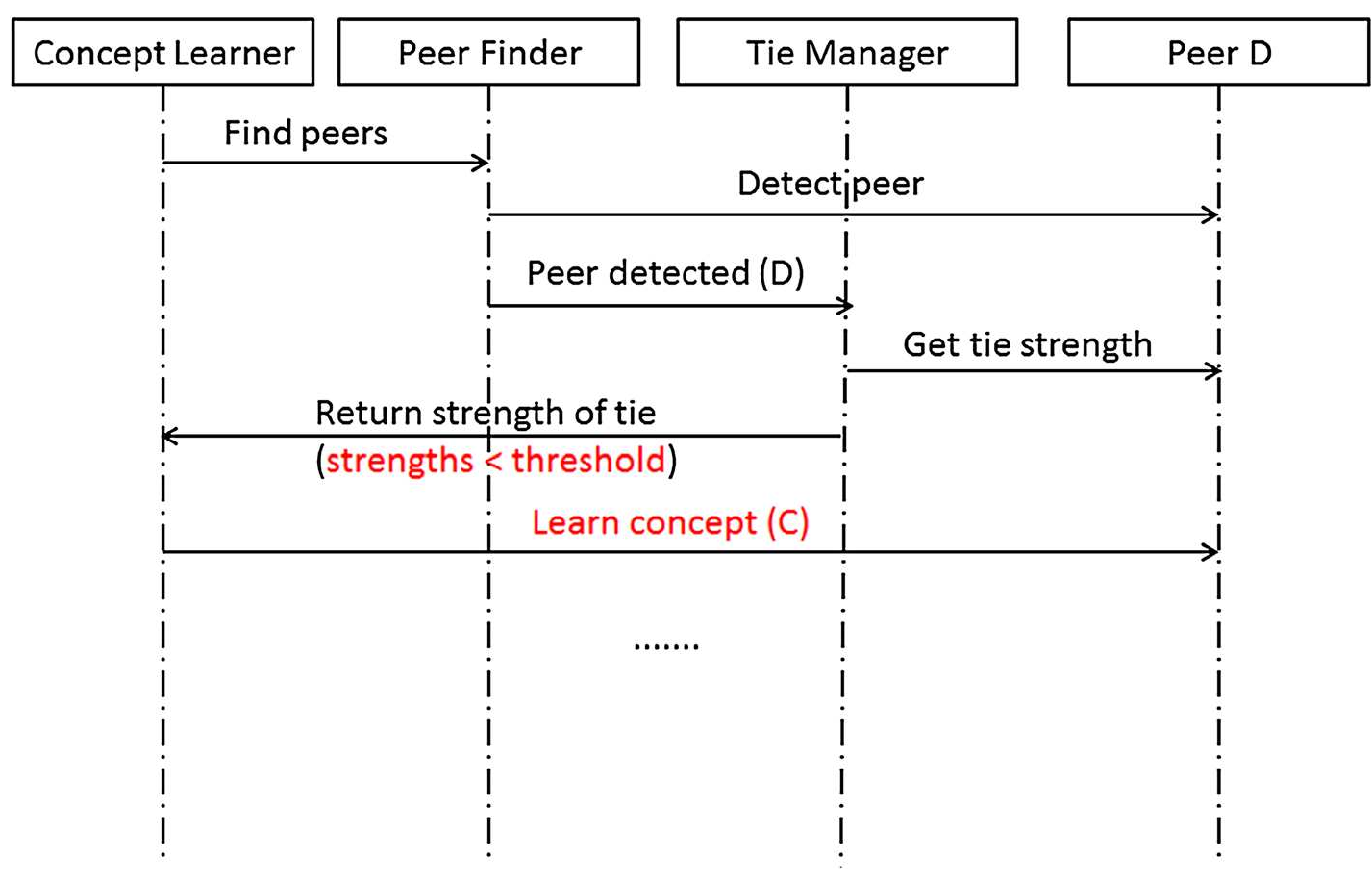 Fig 2: An illegal scenario where a learner agent communicates with an untrusted teacher due to a tie-management flaw.
Experimental Validation: The EBD Tool
The authors developed the EBD Tool, which integrates with Microsoft Visio to automate this process. By importing design diagrams, the tool automatically:
- Generates the static and dynamic ontologies.
- Synthesizes the FSMs (Behavioral Models).
- Flags areas where "Unwanted Behavior" could occur.
In the case study, the tool successfully flagged a scenario where a Tie Manager agent was unable to distinguish whether to increase or decrease the strength of a connection, leading to a potential system failure in search reliability.
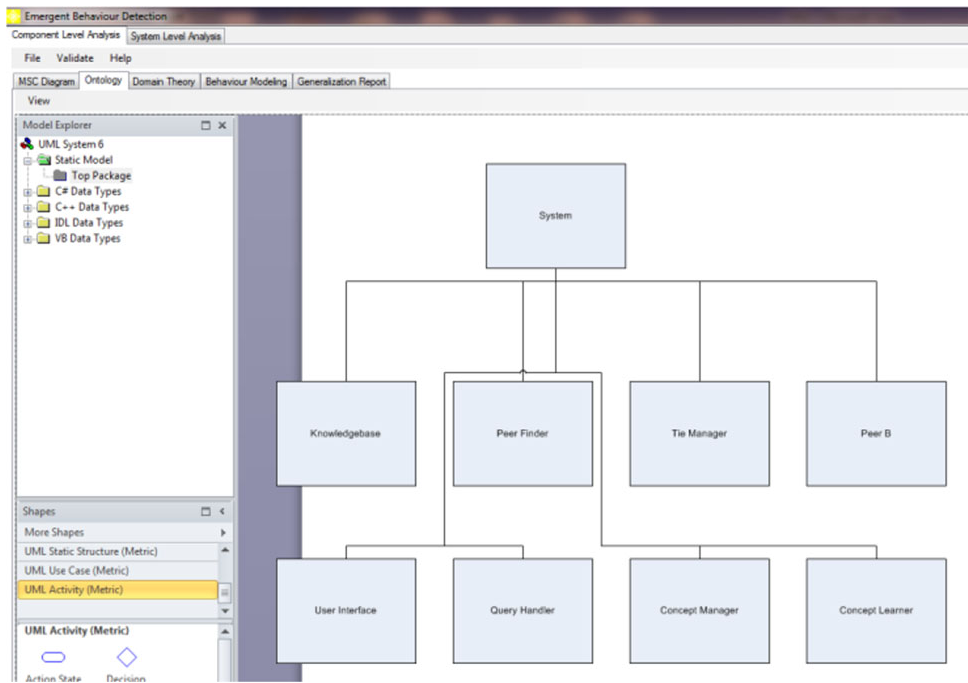 Fig 3: The EBD Tool interface showing the static structure and FSM synthesis.
Critical Analysis & Future Directions
The strength of this work is its objectivity. By deriving state values from message causality rather than human labeling, it removes a significant source of error in formal verification.
Limitations:
- Component-Level Focus: Currently, the analysis is performed primarily from the perspective of individual components. A holistic system-level outlook might reveal even more complex "macro" emergent behaviors.
- Good vs. Bad Emergence: As the authors note, not all emergent behavior is bad. In some MAS, emergence is the goal (e.g., swarm intelligence). Future versions of the tool need to distinguish between "bugs" and "features."
Conclusion
This research provides a vital safety net for software engineers building the next generation of decentralized social networks. By formalizing the "lack of emergent behavior," it ensures that as systems grow in scale, they remain predictable, stable, and true to their original design intent.