
VIBES: Decoding the Emotional Pulse of Personal Narratives
VIBES: visualizing changing emotional states in personal stories
This paper introduces VIBES, a system designed to extract topics and track emotional trajectories within personal blogs. By combining Named Entity Recognition (NER) and context-aware sentiment analysis, VIBES generates three distinct visualizations—EmoGraph, EmoMeters, and EmoCloud—to represent an individual's emotional development over time.
Executive Summary
TL;DR: VIBES is an innovative system that transforms unstructured personal blog entries into rich, visual emotional histories. By identifying recurring topics and measuring the "vibe" associated with them over months or years, it provides users with a tool for self-reflection and social connection.
Academic Positioning: This work marks a shift from Global Sentiment Analysis (tracking what the world thinks of an iPhone) to Personal Affective Trajectories (tracking how an individual feels about "work" or "family" over time). It resides at the intersection of Affective Computing and Information Visualization.
Problem & Motivation: The Noise in Our Stories
The blogosphere is a goldmine of human emotion, yet it is nearly impossible to synthesize a person’s emotional journey from a chronological list of posts.
The Challenge:
- Information Overload: Readers cannot easily "see" the long-term trend of a friend's well-being.
- Lack of Self-Awareness: Authors often lack the distance needed to identify their own emotional patterns.
- Narrative Complexity: Emotions aren't global; an author might feel positive about "home" but negative about "finances" simultaneously.
The authors' insight was to move away from aggregate moods and focus on storylines—specific, recurring nouns that define an individual's life.
Methodology: From Text to Trajectory
VIBES employs a four-stage pipeline to bridge the gap between human prose and visual data:
- Entry Parser: Specifically targets LiveJournal to bypass the limitations of RSS feeds, extracting full historical data.
- Topic Identification: Uses Balie, a semi-supervised NER system. Since NER can be noisy, VIBES applies a strict filter: only single-word nouns/gerunds mentioned at least three times are considered "topics."
- Emotional Classification: Utilizes the Reasoning Through Search (RTS) model. Unlike simple bag-of-words, RTS examines "word windows" around a topic to assign a valence score from -2 to +2.
- Visualization Suite:
- EmoGraph: A temporal line graph using a color gradient (dark for negative, light for positive).
- EmoMeters: A "dashboard" of gauges showing the most recent sentiment for various topics.
- EmoCloud: A tag cloud that splits positive and negative associations surrounding a topic.
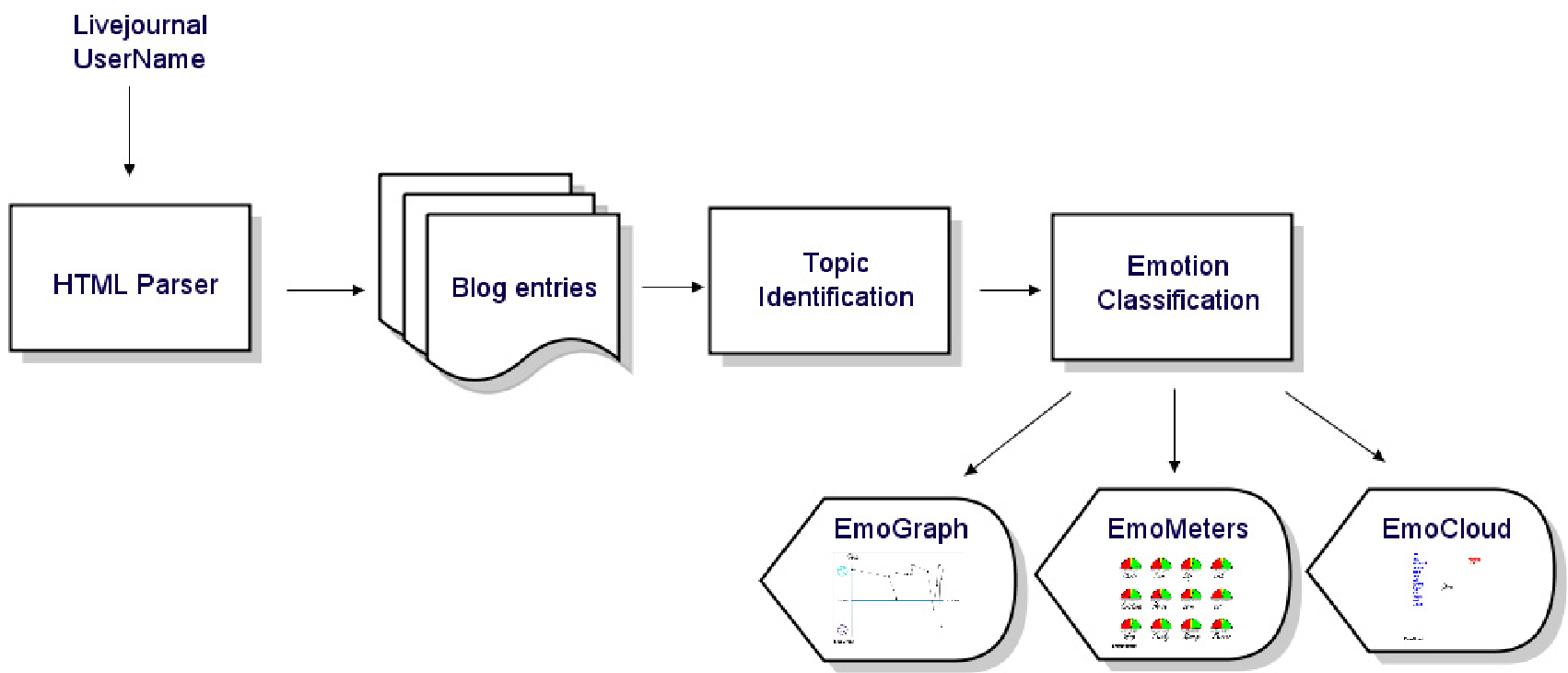 Figure 1: The modular architecture of VIBES, from retrieval to visualization.
Experiments & Results: Is Temporal Better?
The researchers tested VIBES with 10 participants, comparing how they perceived a stranger's blog versus the VIBES visualizations.
Key Findings:
- The Power of Time: EmoGraph was the clear winner. 70% of users agreed it was useful for understanding emotional development.
- Static vs. Dynamic: While EmoMeters and EmoCloud were better at showing "current state," users found them less intuitive and less "useful" for regular reading compared to the narrative flow of a graph.
- Accuracy: Users overwhelmingly (80-90%) agreed that the identified topics (like "Chris" or "loyola") were indeed central to the blogger’s life.
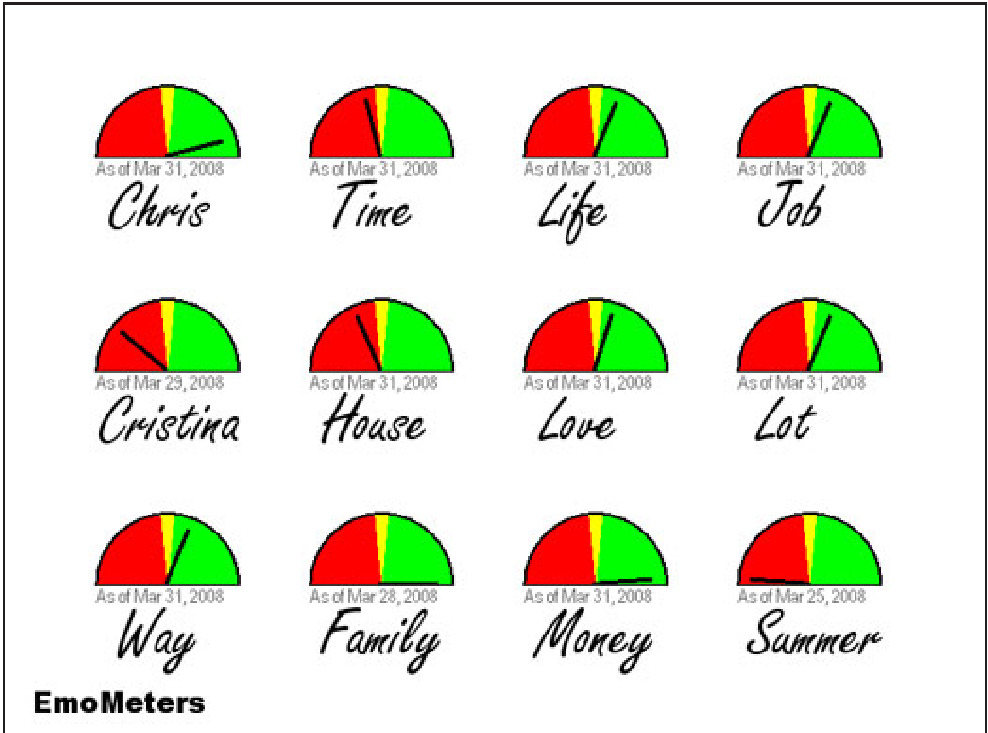 Figure 2: EmoGraph tracking a specific storyline. Point-clicking allows users to dive back into the original text.
Deep Insight & Conclusion
Takeaway
VIBES proves that Emotional Intelligence (EQ) can be augmented through technology. By visualizing the "hidden" data in our writing, we can facilitate catharsis for writers and empathy for readers.
Limitations
- Sarcasm & Nuance: Like many 2008-era sentiment tools, it may struggle with complex irony or subtle emotional shifts that don't rely on "emotion-bearing" keywords.
- Visual Clarity: Users found the "dashboard" (EmoMeters) confusing, suggesting that the metaphor of a car's speed for a human's emotion may be too clinical.
Future Outlook
The framework of modeling emotional variation over time is a precursor to modern "emotionally intelligent" AI. Imagine a digital assistant that notices your sentiment toward "work" has been declining for three weeks and adjusts its interface to be more supportive. VIBES laid the groundwork for this personalized, affective interaction.