
Viral Mechanisms: Deciphering Video Propagation with the S2I3R Model
Understanding Video Sharing Propagation in Social Networks: Measurement and Analysis
This paper presents a comprehensive measurement study of video sharing propagation on RenRen, a large-scale online social network. It introduces the S2I3R model, an extension of classical epidemic theory, to accurately characterize user behaviors (initiating, viewing, sharing) and achieves high fidelity in predicting propagation dynamics.
Executive Summary
TL;DR: This research provides a deep-dive analysis of how videos spread across social networks by tracking 115 million viewing events on RenRen. The authors move beyond stationary coverage metrics to propose the S2I3R model, a specialized epidemic framework that accounts for the behavioral friction of watching and sharing. They reveal that while video propagation is fast, it is hindered by "free-riders" and a lack of stage dependence, suggesting that content reach can be vastly improved by "view-aware" contagion strategies.
Context: Published in ACM TOMM, this work acts as a bridge between classical epidemiological modeling and modern social media analytics, providing a mathematical foundation for traffic engineering and resource provisioning in CDNs and cloud-based video services.
The Motivation: Why Video is Different
Unlike a tweet or an image, a video requires a significant "time tax" from the user. You don't just see a video; you must decide to watch it, spend time on it, and then decide to share it.
The authors identified a critical gap: prior models treated information spread as a simple infection. In reality, modern social video propagation is a two-gate decision process. This study dissects these gates using a massive dataset to answer: Why do some videos die instantly while others reach "epidemic" proportions?
Methodology: From SIR to S2I3R
To capture the nuances of user behavior, the authors extended the classical SIR (Susceptible-Infectious-Recovered) model into the S2I3R architecture.
The Model Architecture
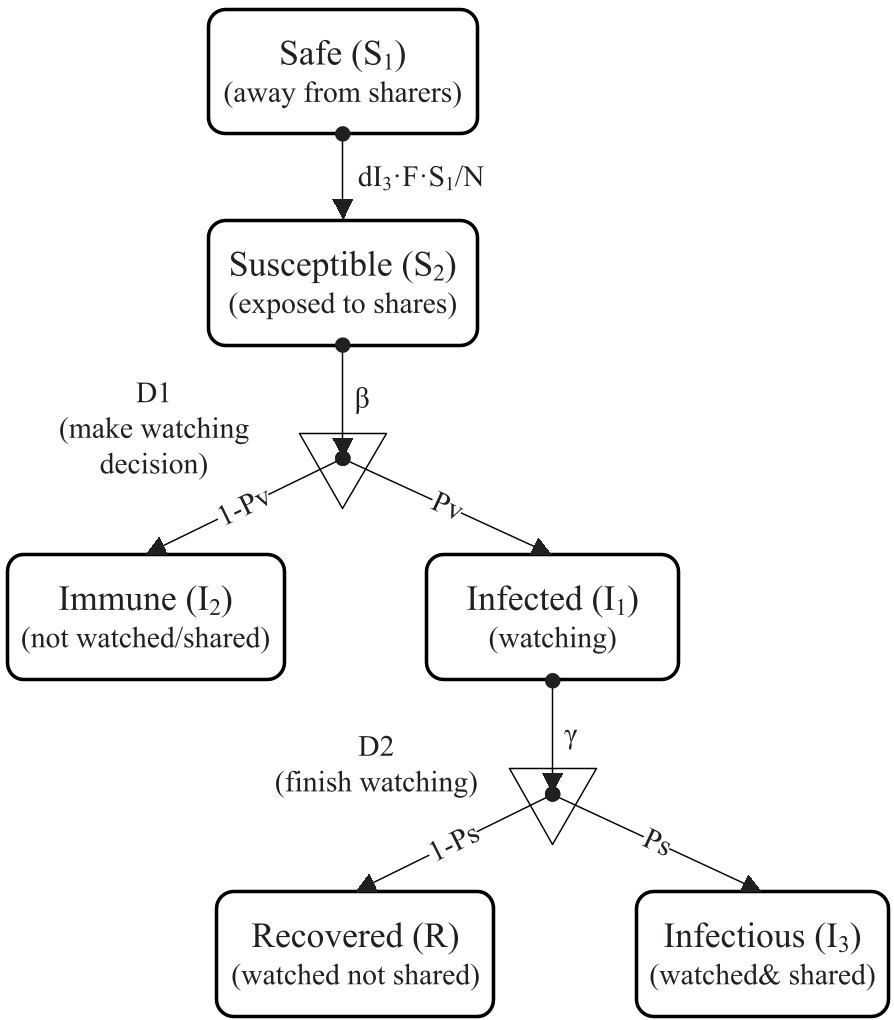
The S2I3R model introduces several unique compartments:
- Safe (): Users not yet exposed.
- Susceptible (): Users who see a video link in their news feed.
- Infected (): Users currently watching the video (Incurring latency).
- Immune (): Users who saw the link but chose not to click.
- Infectious (): Users who finished watching and decided to share.
The Physics of Transition
The model uses transition rates (time to watch) and (time to share) derived from empirical data. Interestingly, the researchers found that most propagation happens within one hour, after which the "infectivity" of a link drops off a cliff.
Key Insights & User Archetypes
Through their measurement, the authors categorized users into three distinct roles:
- Spreaders (SU): Hub-like accounts, often non-personal, that act as the spark for viral cascades.
- Free-Riders (FU): The 3.5% of users who watch hundreds of videos but never share. They act as "dead-ends" in a social epidemic.
- Ordinary Users (OU): The majority who occasionally watch and rarely share, determining the steady-state decay of a video.
Spatial Structures
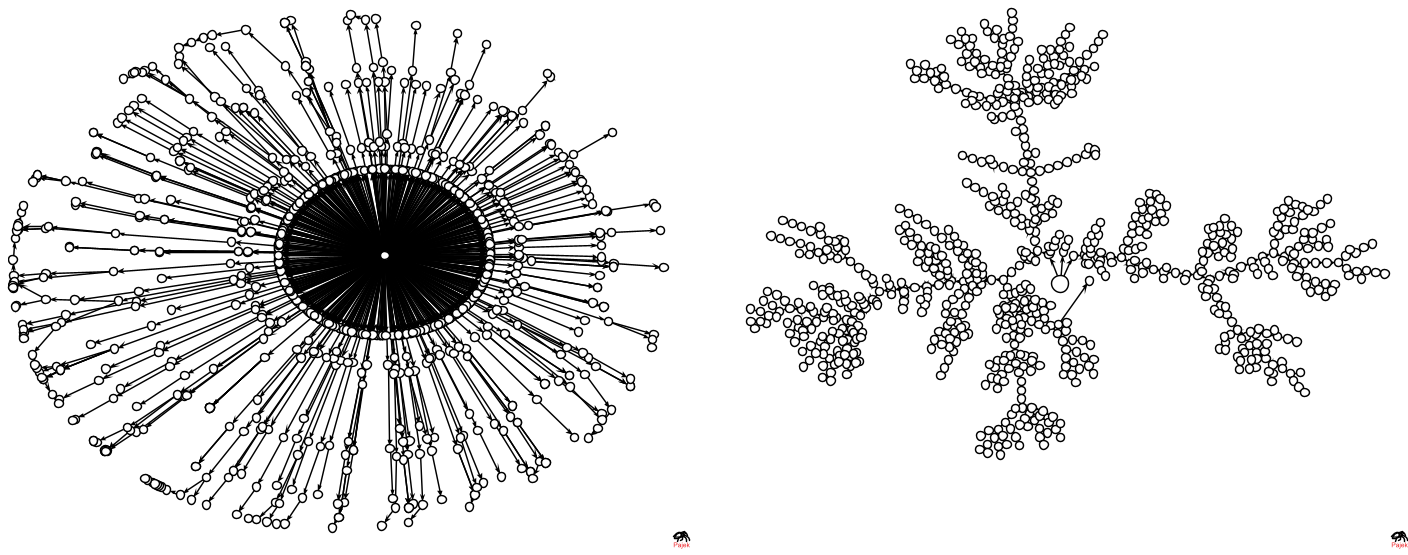
Unlike email propagation (which is ultra-shallow), video propagation trees on RenRen can reach heights of 30 hops. However, most trees remain small (under 100 nodes), suggesting that content usually circulates within tight-knit social clusters rather than exploding globally.
Results: Validating the Epidemic
The S2I3R model's strength lies in its accuracy. In simulations, the model matched real-world trace data with an of over 0.99 for reception rates and share rates.
The "View-Aware" Solution
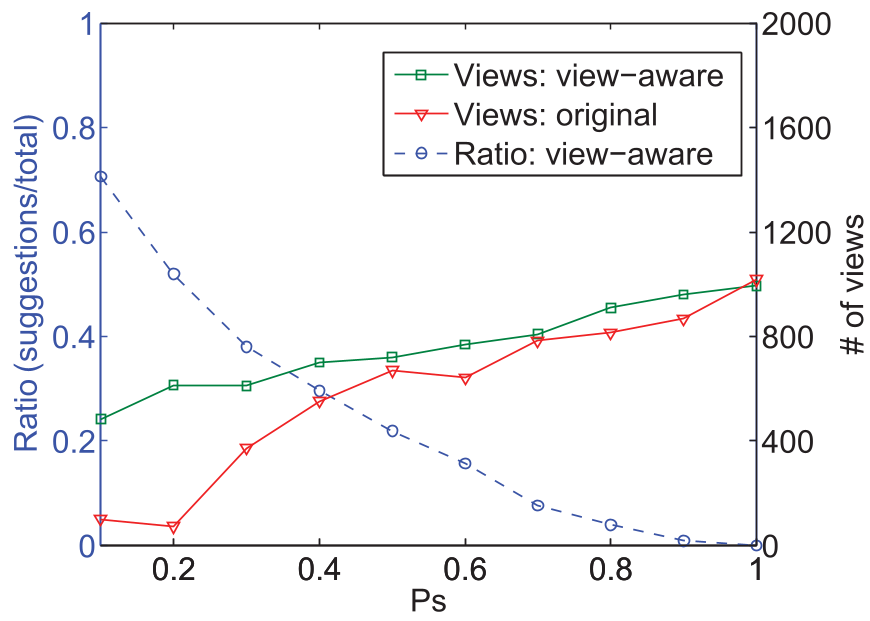
One of the most actionable findings is the View-Aware Contagion Strategy. The authors argue that because sharing is a "high-effort" action, many popular videos stop spreading prematurely. By introducing a mechanism where a video appears in a user's feed if K friends have watched it (even if they didn't share it), the propagation range can be significantly extended.
Critical Analysis & Conclusion
Takeaways
- Temporal Locality is King: If a video doesn't gain traction in the first hour, it likely never will. Resource provisioning for video servers should be extremely elastic to handle these "flash crowds."
- Behavioral Decoupling: Just because a user shares many videos doesn't mean they watch many. This decoupling is vital for recommendation algorithms.
Limitations & Future Work
The study assumes a relatively static social graph. In the modern era of "Algorithmic Feeds" (like TikTok), the "Subscription" or "Friend" link is less important than the global interest graph. Future iterations of S2I3R would need to incorporate algorithmic push factors alongside social contagion to truly model today's landscape.
Summary: This paper remains a seminal blueprint for understanding how high-latency content moves through human networks, providing the mathematical tools necessary to turn social "noise" into predictable traffic patterns.