
Multi-Product Viral Marketing: Balancing Global Influence and User Fatigue
Viral Marketing for Multiple Products
This paper introduces the t-Product Influence Maximization (t-IM) problem, focusing on selecting optimal seed nodes for multiple non-competing products in a social network. The authors propose two algorithms, GREEDY and FAIRGREEDY, designed to maximize total influence while adhering to budget and anti-spam (node-level) constraints.
TL;DR
Marketing firms today don't just promote one product; they manage hundreds. While traditional Influence Maximization (IM) targets a single seed set, this paper tackles t-IM—the joint optimization of seeds for multiple non-competing products. By introducing node-level constraints to prevent "spamming" and leveraging the theory of p-systems, the authors provide algorithms that guarantee high influence and fairness across products.
Background & Motivation: Moving Beyond the Single-Product Vacuum
Most academic literature treats viral marketing as a isolated game: you have one budget, one product, and one network. In reality, a firm might be promoting soap, music players, and health warnings simultaneously.
If we simply pick the most influential users (the "celebrities" of the network) for every single product, two things happen:
- Diminishing Returns: The same user is overwhelmed with messages.
- User Friction (Spam): Excessive direct promotions irritate users, rendering the campaign counter-productive.
The authors' core insight is that we must treat multi-product seeding as a constrained joint optimization problem rather than a sequential one.
Methodology: The Geometry of Influence
The t-IM problem is NP-hard. However, the authors prove that the influence function remains submodular (the law of diminishing returns applies) even when summed across products.
1. The Power of the 2-System
A critical contribution is the proof that the feasible seed sets—limited by both product budgets () and node-specific spam thresholds ()—form a 2-system. While not a perfect Matroid (where greedy is optimal), a 2-system ensures that a greedy approach will always be at least 1/3 as good as the theoretical optimum.
2. GREEDY vs. FAIRGREEDY
- GREEDY: At each step, it scans all products and all available nodes, picking the pair that offers the highest marginal gain in influence.
- FAIRGREEDY: It asks: "Which product is currently struggling the most?" It then assigns the best possible seed to that specific product. This prevents a single high-potential product from cannibalizing all the best seeds early on.
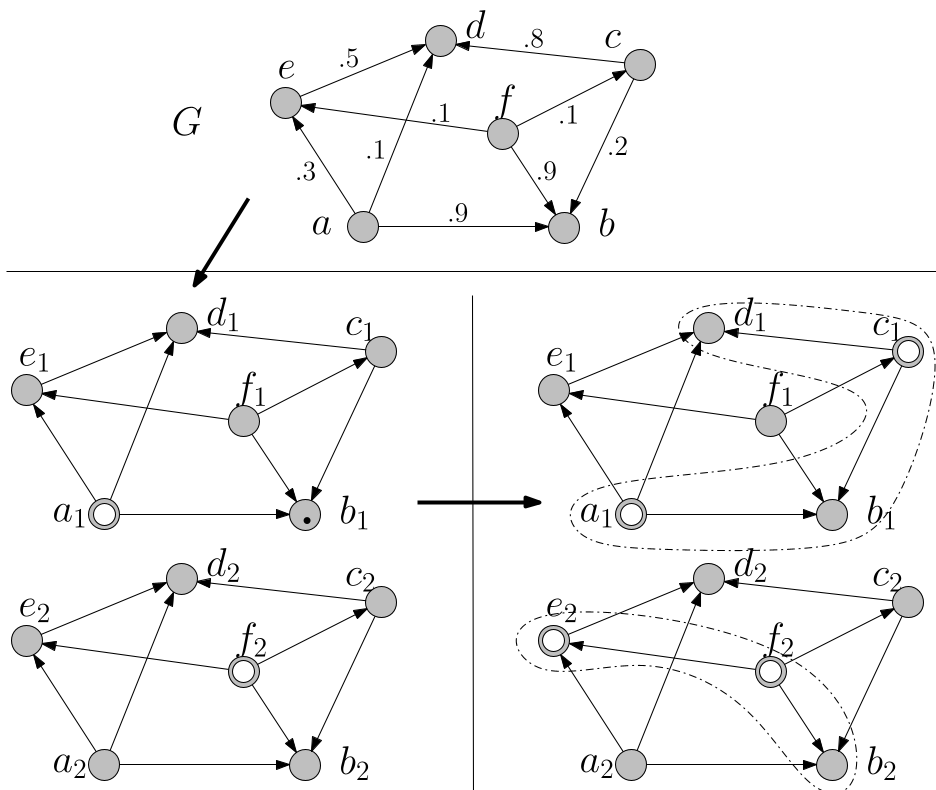 Figure 1: Comparison of seed selection steps in the GREEDY framework.
Experimental Insights: Real-World Performance
The researchers tested their theories on massive social graphs from Orkut, Flickr, and Twitter.
Key Findings:
- Superiority over Heuristics: Simply picking nodes with the highest degree (MAXDEG) or immediate neighbors (1-LEVEL) is vastly inferior to the GREEDY approach, which accounts for the "ripple effect" of influence.
- Scale: The total influence grows linearly with the seed budget (), suggesting that the network doesn't saturate as quickly as one might fear.
- Fairness: FAIRGREEDY successfully keeps the influence ratio between products close to 1:1, whereas the standard GREEDY often allows a 25% or higher gap in performance between campaigns.
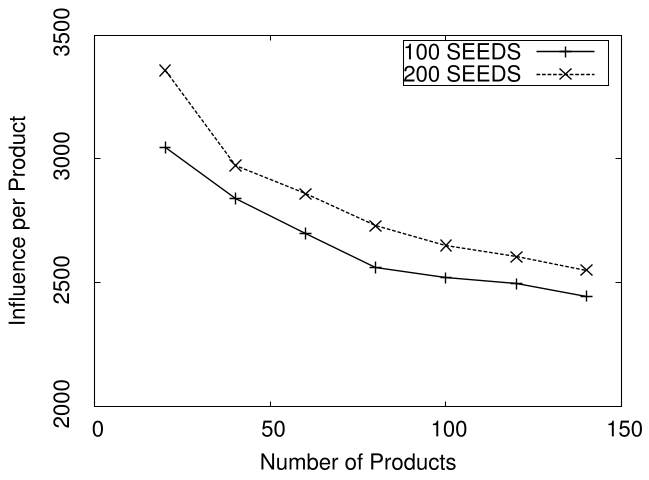 Figure 2: Influence performance across different datasets (Twitter, Flickr, Orkut). Red and Blue lines represent the authors' proposed methods.
Critical Analysis & Future Outlook
This work provides a robust framework for professional marketers, but it assumes "non-competing" products. In the real world, products often compete for a user's limited wallet, not just their attention.
Future Work could involve:
- Dynamic Probabilities: Adjusting a user's influence potential dynamically as they receive more messages (rather than a hard threshold).
- Online Arrivals: Improving the -approximation for products that aren't announced until the campaign is already underway.
Conclusion
The transition from single-product IM to multi-product t-IM is a necessary step for making social network theory practical for the advertising industry. By proving the 2-system nature of the problem, this paper provides a solid mathematical foundation for "fair and greedy" marketing strategies that respect user boundaries while maximizing reach.