
Bridging the Mobility Gap: A Multimodal VR/AR Framework for Remote Wheelchair Training
Virtual and augmented reality environment for remote training of wheelchairs users: Social, mobile, and wearable technologies applied to rehabilitation
This paper presents a multimodal training environment for Electric-Powered Wheelchair (EPW) users, integrating Virtual Reality (VR), Augmented Reality (AR), and remote tele-rehabilitation. The system utilizes diverse non-invasive biomedical signals (sEMG, EOG, EEG) to enable individuals with severe motor disabilities to practice driving safely before transitioning to real-world operation.
TL;DR
Researchers from Brazil and France have developed a comprehensive "tele-rehabilitation" ecosystem that allows users with severe motor disabilities to learn how to drive electric wheelchairs. By combining biomedical signals (EEG, sEMG, VOG) with Virtual and Augmented Reality, the system provides a risk-free path from virtual mastery to real-world remote operation, all while staying connected via social support networks.
The Challenge: When Driving is a Danger
For many with conditions like Amyotrophic Lateral Sclerosis (ALS) or cerebral palsy, an Electric-Powered Wheelchair (EPW) is a gateway to independence. However, the learning curve is steep. Standard joysticks are often unusable, requiring complex interfaces like eye-trackers or brain-computer interfaces (BCI). Practicing on a real wheelchair for the first time is not just difficult—it is a safety hazard for both the user and their surroundings.
Prior simulators like Wheelsim lay the groundwork, but they often lack the "physicality" of real-world obstacles and the ability to transition the user safely to a physical machine.
Methodology: The Three Pillars of Training
The authors propose a hybrid "Control Room" and "Training Room" architecture that moves the user through three distinct levels of immersion:
- Virtual Reality (VR) Stage: Users utilize the ViEW platform to practice basic maneuvers using their preferred biological signal (e.g., eye blinks or mental tasks).
- Augmented Reality (AR) Stage: To bridge the gap to reality, the system overlays virtual obstacles onto a real-world video feed, creating a safe "middle ground."
- Tele-operation Stage: The final step involves the user remotely controlling a physical wheelchair located in a different city, receiving real-time feedback through wearable devices and HMDs.
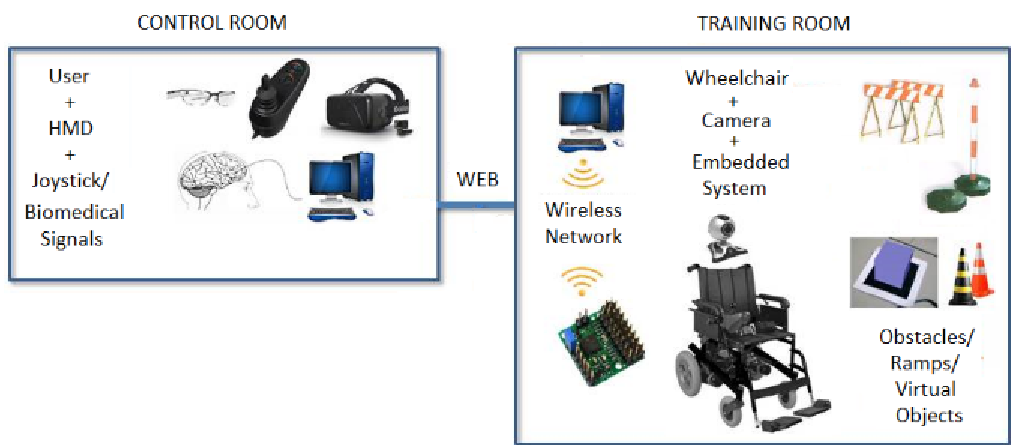 Fig 1: The architecture allows a user in Uberlandia to control a physical wheelchair in Manaus, facilitating remote expert clinical assessment.
Decoding the Body: Multimodal Interfaces
The genius of the system lies in its flexibility. It doesn't force a user to adapt to a joystick; it adapts to the user's remaining motor functions:
- sEMG (Muscle activity): Uses eye-blinks captured from temporal muscles. By applying a Resilient Backpropagation ANN, the system filters out noise to achieve a near-perfect 99.6% recognition rate.
- VOG (Eye-tracking): A webcam detects iris movements using Kalman filters and Hough transforms to track gaze even in varying light conditions.
- EEG (Brain-Computer Interface): For "locked-in" patients, the system uses SSVEP paradigms, where the user looks at flickering checkerboards to issue directions (Forward, Left, Right, Stop).
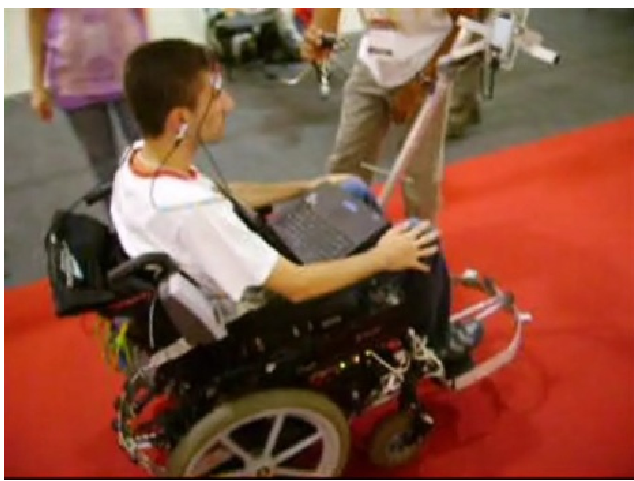 Fig 2: The pipeline for iris detection and tracking using Canny filters and ROI definition.
Performance and Human Connection
Beyond technical metrics, the paper emphasizes Social Network Integration. Rehabilitation is often an isolating journey. By allowing the training software to share progress and "milestones" on social platforms, the system provides a psychological boost that is often missing from traditional clinical settings.
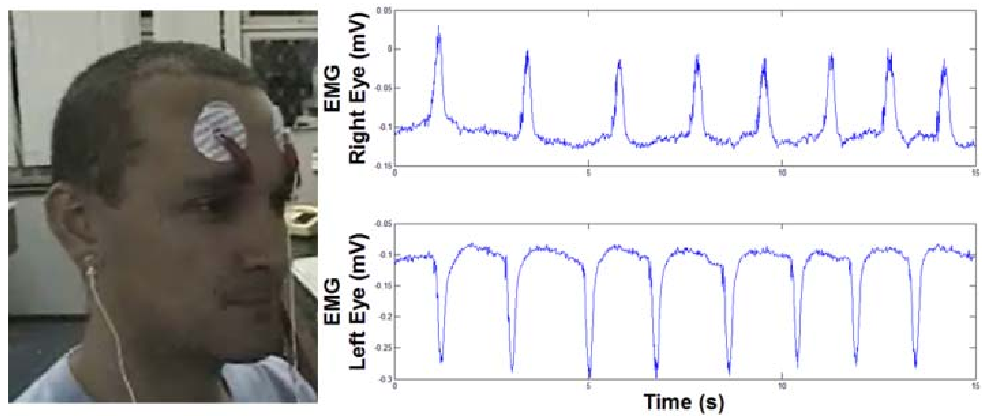 Fig 3: sEMG acquisition setup for detecting eye-blink commands via temporal muscle activity.
Critical Insight & Future Outlook
This work represents a shift toward Open-Source Assistive Tele-rehabilitation. By using mobile devices (smartphones) and wearable HMDs, the researchers are driving down the cost of high-end rehabilitation.
Limitations: While the eye-blink detection is highly accurate, it remains unsuitable for users with muscle spasms. Future iterations would benefit from hybridizing these signals (e.g., combining EEG with sEMG) to increase robustness.
Takeaway: The move toward "Augmented Tele-immersion" means a patient in a rural area can now receive training from the world's best specialists in a centralized lab, safely navigating a virtual world before ever touching a real joystick.