
Virtual Avatars: Engineering the Next Generation of Autonomous Life Coaches for ASD
12845_Virtual Avatar-Based Life Coaching for Children With Autism Spectrum Disorder.
This article reviews emerging research on virtual avatar-based systems designed to improve social and communication skills in children with Autism Spectrum Disorder (ASD). It classifies existing technologies from an engineering perspective and proposes "BUDDY," an Intelligent Physical System (IPS) that functions as an autonomous life coach.
TL;DR
Autism Spectrum Disorder (ASD) presents significant social challenges and a massive financial burden on families. While virtual reality and avatars have been used for years, they remain largely clinical and static. This article argues for a paradigm shift: moving from passive training tools to Intelligent Physical Systems (IPS) like the proposed "BUDDY"—autonomous, home-deployed life coaches that sense physiology, recognize genuine emotion, and adapt in real-time.
The Engineering Gap in ASD Intervention
Current interventions for ASD are essentially "therapist-in-the-loop" systems. Even when computers are involved, they often serve as mere displays for pre-scripted content. The authors identify several critical pain points in the status quo:
- The Content-Reality Gap: Improvements in a lab setting often fail to generalize to real-life social environments.
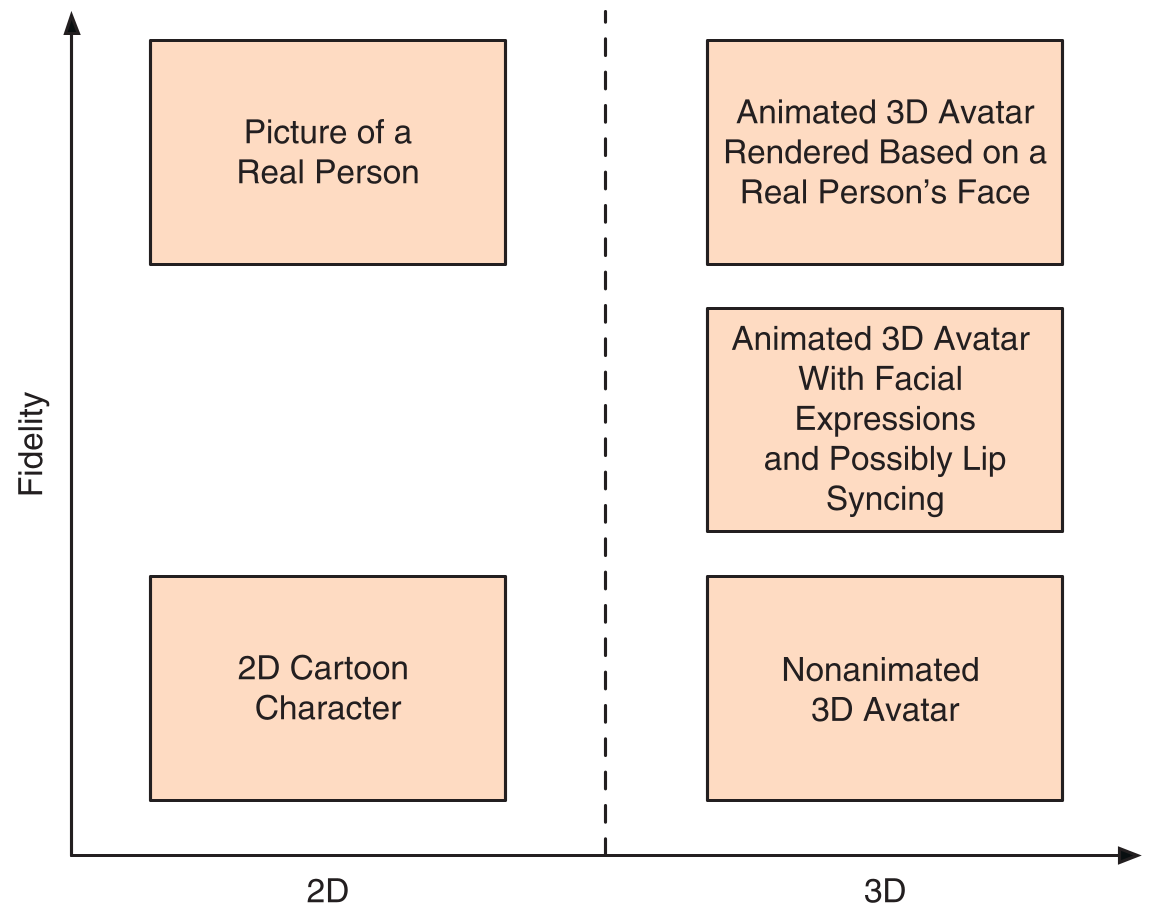
- Sensory Overload: While 3D avatars offer realism, they can cause sensory stress; 2D cartoon avatars are simpler but less engaging.
- Reliance on Manual Analysis: Most physiological data (EEG, ECG, EDA) is currently analyzed offline, meaning the "avatar" cannot react to a child’s rising stress levels in the moment.
Methodology: From Avatars to Intelligent Physical Systems (IPS)
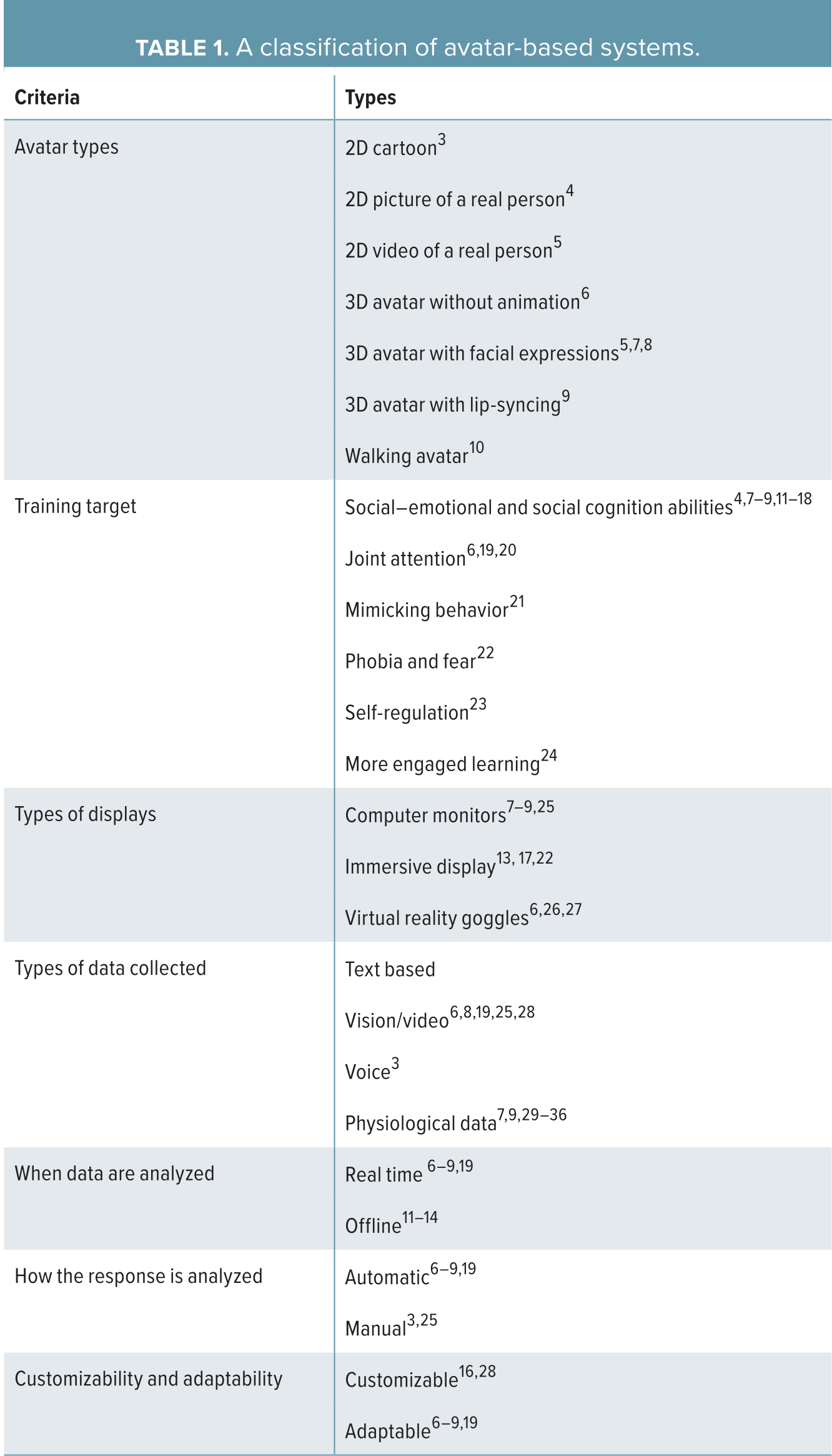
The core insight of this work is the classification of these technologies not just as "apps," but as engineering systems categorized by their input/output modalities.
The Multimodal Sensing Framework
The paper outlines four major types of user response modalities that form the backbone of a truly adaptive system:
- Text/Touch: Direct interaction.
- Computer Vision: Tracking gaze, body gesture, and facial micro-expressions.
- Voice: Recognizing both content and emotional prosody.
- Physiology: Using ECG (Heart Rate) and EDA (Skin Conductance) to gauge the "authentic" internal state of the user.
Designing "BUDDY"
The authors propose the BUDDY system, which embodies the requirements of an IPS. Unlike current tools, BUDDY is designed to be:
- Cognizant: Aware of persistent user needs beyond simple tasks.
- Reflective: Learning from past interactions to optimize the coaching strategy.
- Knowledge-Rich: Mining information from the child's educational placement team to discuss specific interests (e.g., trains, space, dinosaurs) to build deep trust.
Real-time Adaptation and the "Nonverbal Weight"
One of the most profound technical insights in the paper is the hierarchy of data. In ASD care, verbal responses might be "scripted" or "masked" by the child. The authors argue that an effective IPS must give more weight to nonverbal signals (physiological data and body language) as they are more authentic indicators of the child’s true emotional state and potential for sensory overload.
Future Outlook and Challenges
The transition to fully autonomous life coaches faces one major hurdle: Safety. Institutional Review Boards (IRBs) are hesitant to approve autonomous decision-making systems for children.
The path forward requires:
- Ethical AI Frameworks: Hard-coding safety rules into the IPS logic.
- Low-cost Portability: Moving from expensive VR goggles to consumer-grade smartwatches and cameras.
- Personalized Models: Shifting from "one-size-fits-all" algorithms to individual user models that account for the vast diversity of the autism spectrum.
Conclusion
This work sets the stage for a future where technology doesn't just "teach" social skills—it provides companionship and reduces the burnout of human caregivers. By viewing ASD intervention through an engineering lens, we can move closer to creating systems that are not just smart, but truly empathetic and autonomous.