
Virtual Communities: The New Frontier for Chronic Disease Management
Building up a virtual community for home-based chronic diseases healthcare
The paper proposes a patient-centered virtual community platform for home-based chronic disease healthcare, modeled after social networks like Facebook. It integrates healthcare recipients, providers, and families onto a single platform to facilitate continuous monitoring and direct communication.
TL;DR
Chronic diseases represent 60% of global deaths, yet our hospital-centric infrastructure is ill-equipped for the long-term, daily monitoring these conditions require. This paper presents a blueprint for a Virtual Healthcare Community that shifts the focus from sporadic hospital visits to continuous, home-based self-management through a social network-inspired platform.
Background & Motivation: The "Waiting Room" Crisis
The authors identify a critical bottleneck in modern healthcare: chronic diseases cannot be cured, only controlled. This requires constant vigilance, yet patients face:
- Resource Scarcity: Long queues and delayed diagnosis.
- Information Silos: A lack of historical data sharing between hospitals, leading to redundant tests.
- Geographical Barriers: Physical difficulty for elderly patients to visit clinics frequently.
By leveraging the fact that even the elderly demographic (55+) spends significant time online (60% spending 6+ hours/day), the authors propose that the solution isn't more hospitals, but better connectivity.
Methodology: Requirements Rooted in User Experience
The research utilized a user-centric design process, gathering data from patients in the US and Sweden. These requirements were formalized using User Stories, a staple of Agile development, ensuring the technical features directly mapped to patient pain points.
Core Functional Pillars:
- Direct Interaction: Real-time chat with doctors, specialists, and peer support groups.
- Self-Management Tools: Modules for recording physiological signals, diet, and emotional states.
- Educational Integration: Access to seminars and lectures to improve health literacy.
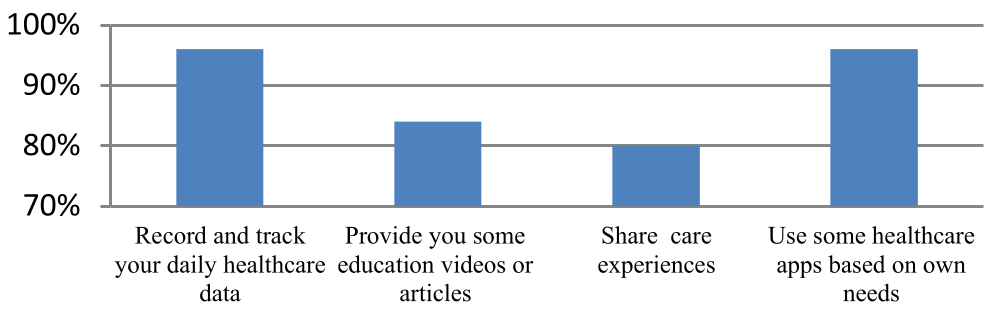 Fig 1. High user demand for diverse community functions ranging from diagnosis to peer sharing.
System Architecture & Prototyping
The prototype utilizes a horizontal prototyping approach, focusing on the breadth of user interaction. A key technical consideration is the role-based access control (RBAC). Depending on whether the user is a Recipient, Provider, or Researcher, the interface dynamically reconfigures to show relevant data and tools.
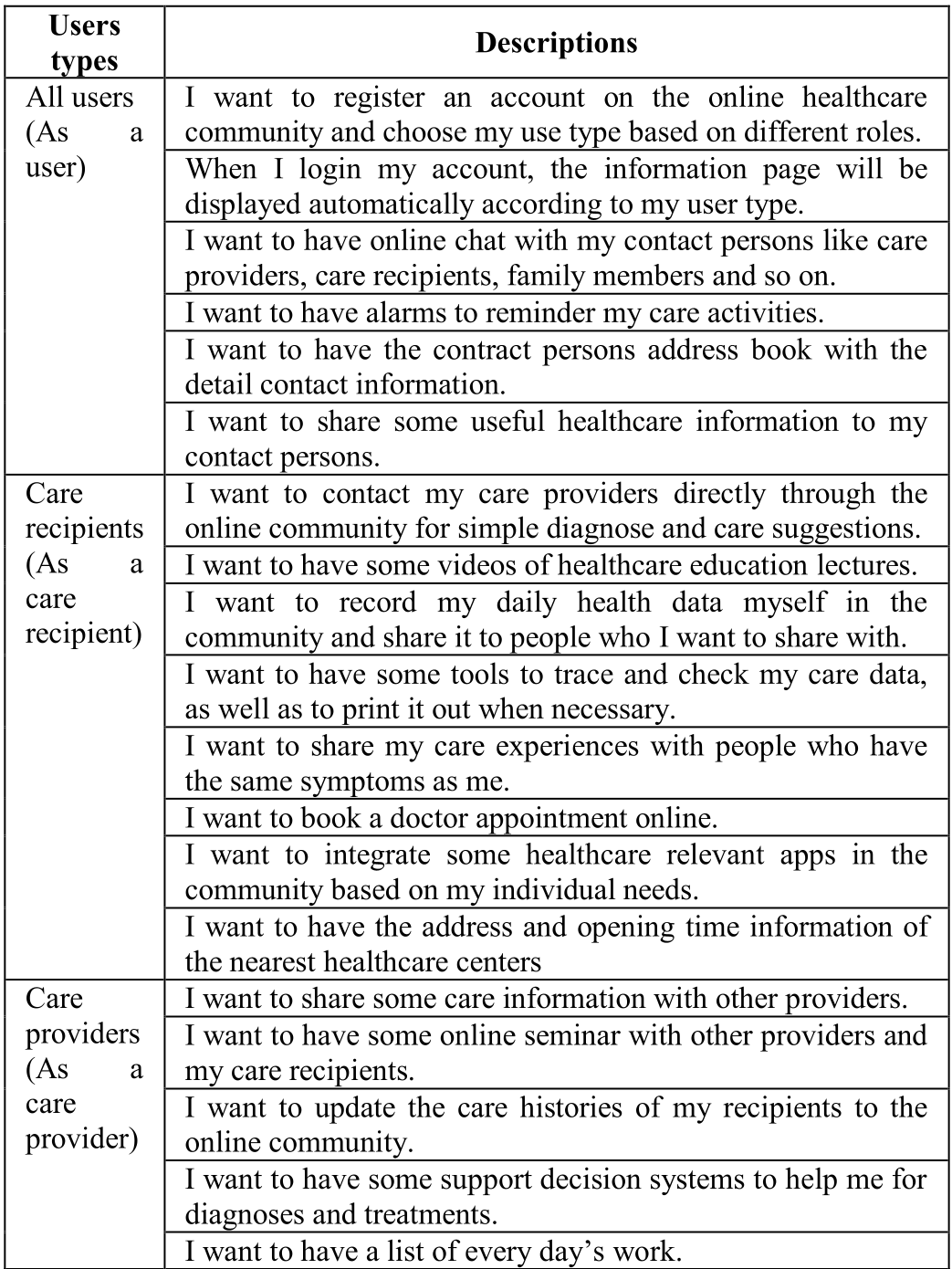 Table 1. The translation of user needs into specific functional descriptions (User Stories).
Critical Technical Insight: Data Segmentation
A major hurdle in healthcare IT is the tension between Privacy and Utility. The authors advocate for Data Segmentation, allowing patients to decide which sections of their medical history are visible to whom. For example, a doctor might see metabolic data, while a peer support group only sees symptom summaries.
Results: A Patient-Centered Interface
The resulting prototype (Fig 3 & 4) simplifies complex medical tracking into a social-media-like dashboard.
- Real-time Alerts: Reminders for care activities and appointments.
- Geospatial Integration: Automatically finding the nearest care centers.
- Longitudinal Tracking: Turning daily logs into printable reports for official doctor consultations.
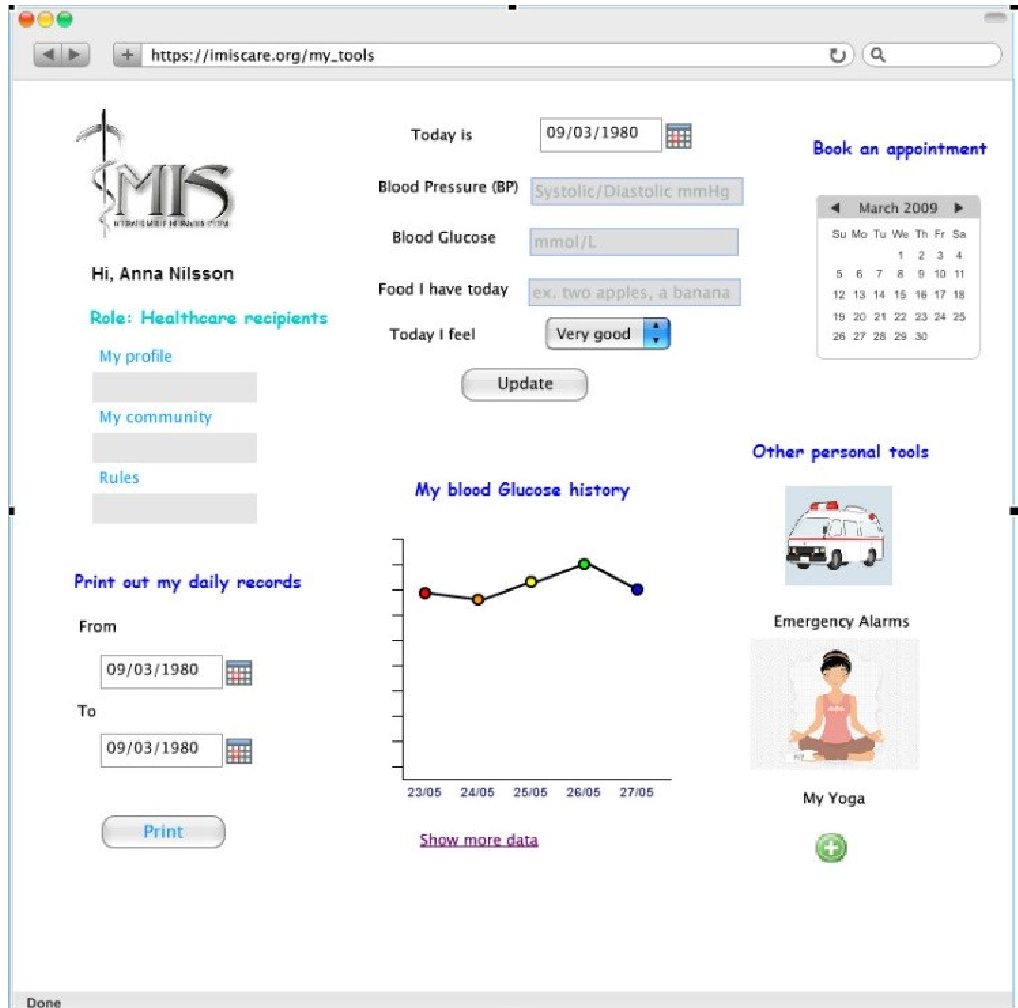 Fig 2. The recipient tool page enabling daily self-tracking of physiological parameters.
Critical Analysis & Future Outlook
While the study is small (N=25), it touches on the inevitable transition of healthcare toward Cloud Computing. Cloud technology effectively eliminates the need for massive local IT infrastructure and provides the scalability required for big data management in health.
Limitations:
- Provider Input: The study heavily weights patient needs; however, the clinical workflow of doctors needs more rigorous integration to ensure adoption.
- Security Complexity: While "Data Segmentation" is mentioned, the underlying cryptographic implementation remains a future challenge.
The Takeaway: The "Socialization" of healthcare is not just a convenience—it is a technical necessity to solve the interoperability and resource crisis in chronic disease management. Future iterations incorporating Cloud Computing will likely become the standard for the next generation of eHealth systems.