
VisioMIMEXT: Unifying the Social Web through Virtual Globes
A virtual globe tool for searching and visualizing geo-referenced media resources in social networks
The paper introduces VisioMIMEXT, a virtual globe-based application designed to search, visualize, and reproduce geo-referenced media resources across multiple social networks. It leverages an OpenSearch-based broker and a novel KML extension called MIMEXT to unify disparate Web 2.0 sources like Flickr, Twitter, and YouTube into a single geospatial interface.
TL;DR
VisioMIMEXT is a research tool that bridges the gap between fragmented social networks and geospatial visualization. By introducing a "Broker" architecture and a specialized KML extension called MIMEXT, the researchers created a system where users can search for tweets, videos, and photos across different platforms simultaneously and see them localized on a 3D Earth model.
Problem & Motivation: The Silo Effect of Web 2.0
In the era of user-generated content, location has become the primary anchor for metadata. However, we live in a world of "social silos." If you want to find media about a specific street corner, you currently have to visit Flickr for photos, YouTube for video, and Twitter for text—each with its own complex API.
The authors identified two major technical hurdles:
- Search Heterogeneity: No common query language exists to find media across disparate social services using a single "spatial" filter.
- Annotation Limits: Standard formats like KML (Keyhole Markup Language) are excellent for points on a map but struggle to handle a wide variety of MIME types (like raw audio or specific document formats) in a structured, reproducible way.
Methodology: The MIMEXT Architecture
The researchers proposed a "fusion platform" approach, centered around three core contributions:
1. The OpenSearch Broker
Instead of building a monolithic crawler, the team used OpenSearch with its Geo extension. The Broker acts as a mediator: when a user moves the virtual globe to Madrid and types "hotel," the Broker translates that single request into specific API calls for Flickr, YouTube, and Twitter, then merges the results.
2. MIMEXT (MIME Extension for KML)
To solve the data description problem, they developed MIMEXT. This is an "external annotation" technique. It doesn't modify the original file (like EXIF data in a JPG does) but creates a wrapper that tells the application exactly what the file is (MIME type) and where it belongs (KML Geometry).
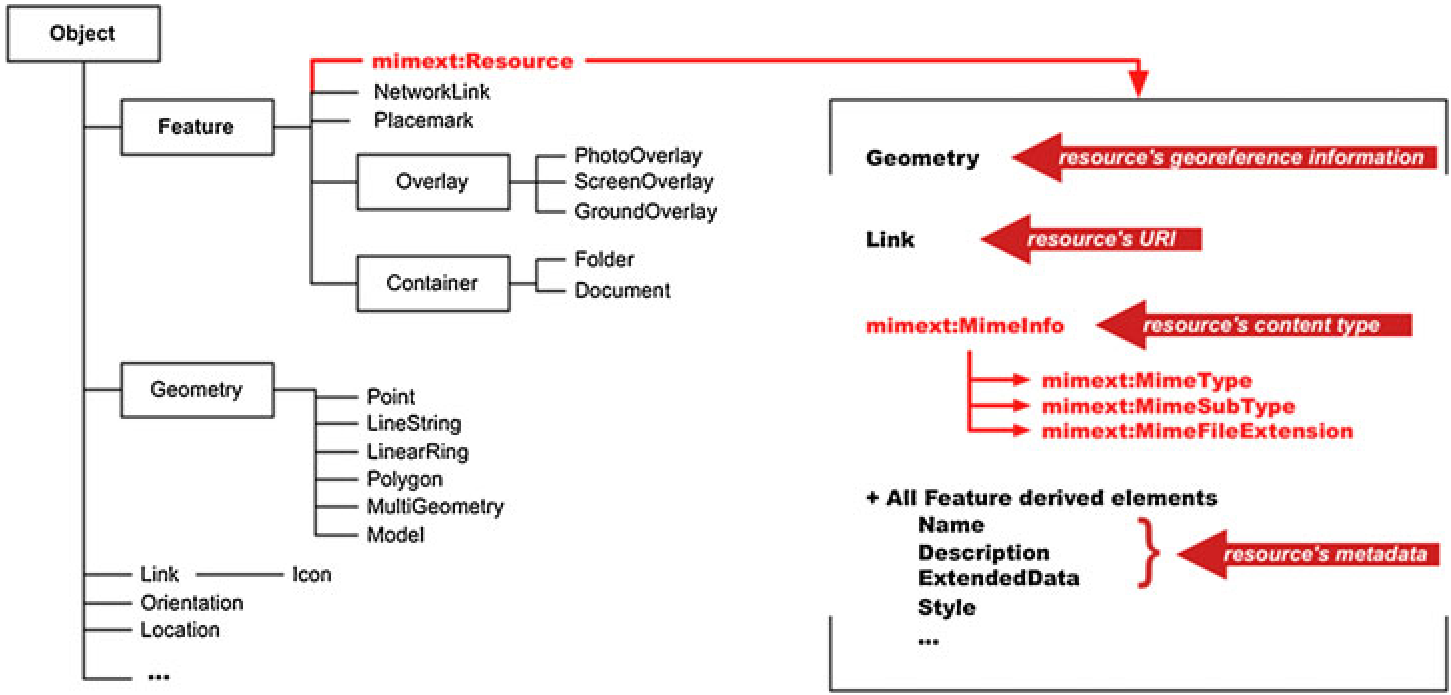 Figure: The hierarchy of MIMEXT showing how it inherits from KML's abstract features while adding MIME-specific metadata.
3. The VisioMIMEXT Application
Built on the NASA World Wind Java SDK, the application provides a 3D interface. Because standard OpenGL scenes (used by virtual globes) often struggle with direct video playback, the authors implemented a "Media View" using the GStreamer library to handle video rendering outside the 3D pipeline while keeping the UI synchronized.
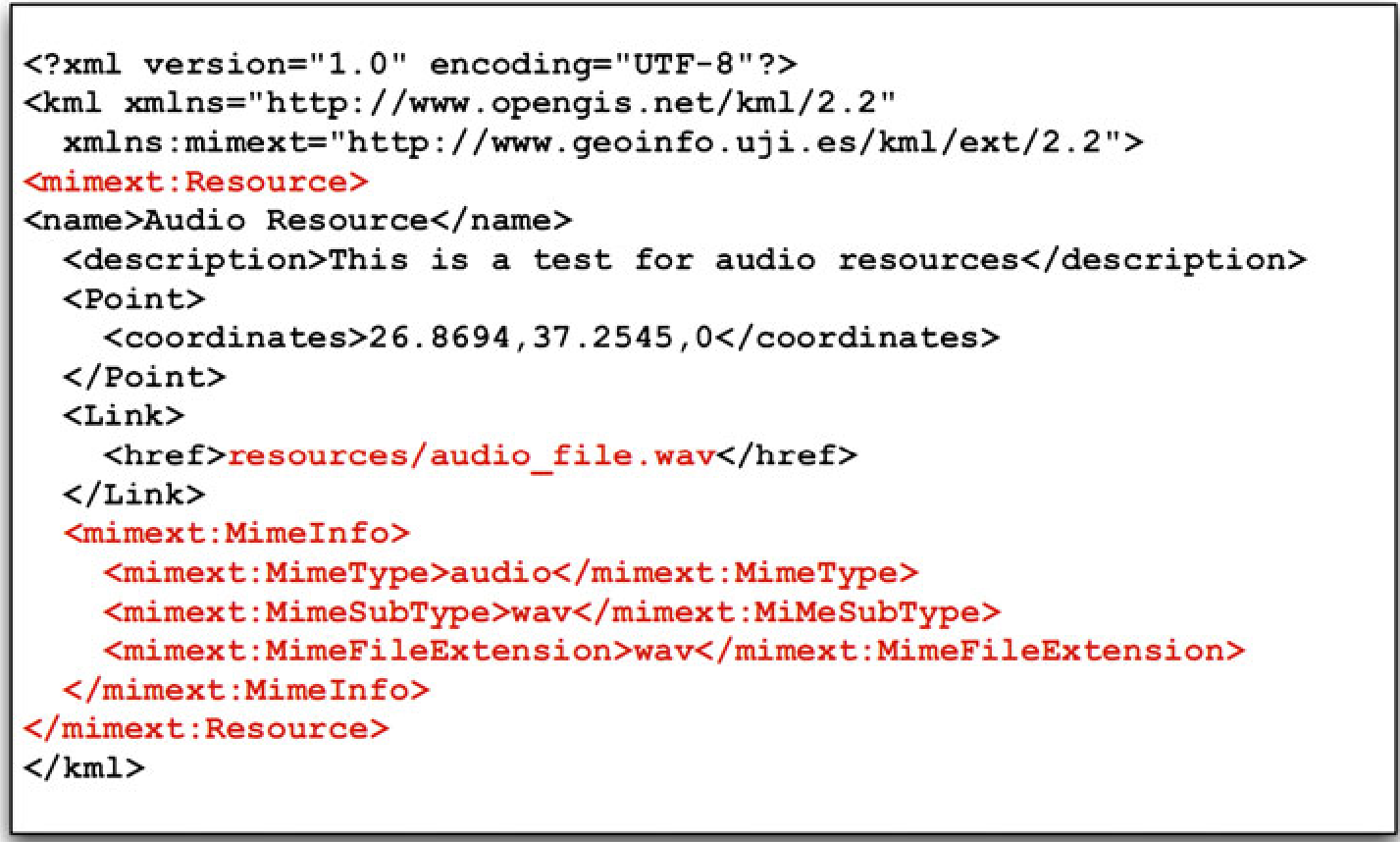 Figure: The detailed architecture of the VisioMIMEXT tool, showing the integration of the Search Manager and the Drawing Manager.
Experiments & Results: Real-World Social Mining
The system was tested by connecting to six major services. A key insight from the experiments was the implementation of "Spatial-based Discovery." The query is automatically bound to the active view of the virtual globe. As the user zooms in, the box parameter in the OpenSearch query shrinks, refining the media results in real-time.
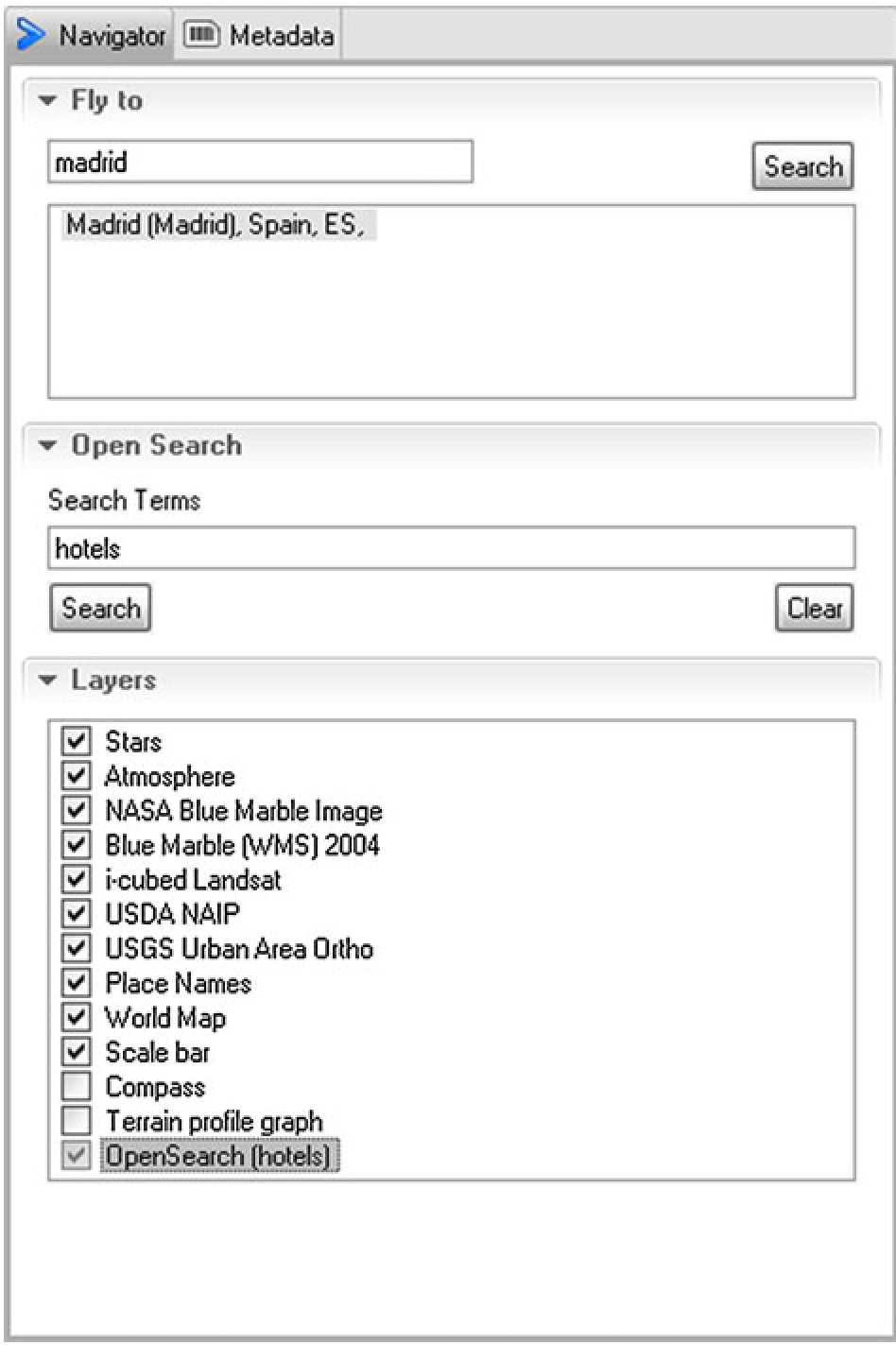 Figure: The VisioMIMEXT interface in action, displaying geo-referenced icons for different media types retrieved from the social broker.
The researchers noted that while the tool is powerful, it is still limited by the "ground truth" of social data—for example, many tweets are not geo-tagged by default, which remains a challenge for spatial discovery.
Critical Insight & Conclusion
The true value of this paper lies in its decoupling strategy. By using adapters and brokers, the system avoids the "API arms race" where changes in one platform break the whole application.
Takeaway: For future GIS and Social Media applications, the focus should shift from collecting data to harmonizing data through extensible languages like MIMEXT. While this 2012-era paper used desktop Java, the principles of using a uniform spatial broker are more relevant than ever in today's multi-modal AI and "Digital Twin" research.
Future Outlook
The authors suggest that the next evolution of this work involves adding the temporal dimension (searching by time) and semantic mining (understanding the content of the media beyond just keywords), paving the way for what we now call "Social Sensing."