
Virtual Presence e-Learning: Bridging the Isolation Gap with Collective Intelligence
Virtual presence e-Learning using learning history database of collective intelligence
This paper introduces a "Virtual Presence e-Learning" method and its implementation platform, iStudySpace, which integrates Semantic Web and Web 2.0 technologies. The system leverages a Learning History Database of collective intelligence to simulate a concurrent learning environment, boosting engagement for students studying asynchronously.
TL;DR
Web-based learning is often a lonely endeavor, leading to high dropout rates and low engagement. This paper proposes a Virtual Presence e-Learning method that uses a "Learning History Database" to simulate a live classroom environment. By integrating Semantic Web (machine-readable data) and Web 2.0 (user participation), the platform creates a sense of "being there" with others, even when studying alone at midnight.
The Motivation: The "Loneliness" of the Digital Learner
The fundamental paradox of e-learning is that while it offers total freedom of time and space, it sacrifices the social texture of classroom learning. Learners are often trapped in an "isolated space," where:
- Asynchronous Delays: Feedback from teachers or peers via email can take hours or days.
- Loss of Interest: Without the visual or digital presence of others, students (especially those struggling) quickly lose motivation.
- Wasted Intelligence: Questions asked and answered by previous students are often buried in deep forum threads, inaccessible to the current learner.
The authors' insight is to treat Learning History as Collective Intelligence. If we can surface the footprints of previous learners at the exact moment a new learner reaches a specific topic, we create a "virtual presence."
Methodology: The Semantic Web 2.0 Architecture
The authors move beyond the "page metaphor" of the early web to an "architecture of participation." The proposed platform, iStudySpace, rests on four pillars of Semantic Services:
- Semantic Board 2.0: A personalized RSS-based board that allows users to subscribe to specific learning history updates.
- Semantic Email 2.0: Uses automated tagging to analyze requests and provide instant replies by aggregating relevant data from the database.
- Semantic Scheduler & Search: Meta-tools that automate study planning and resource discovery using Open APIs and mashup technology.
The Virtual Presence Mechanism
The core innovation is how the system handles the Learning History Database. Instead of a static archive, it functions as a dynamic overlay:
- As a student views a specific chapter, the system queries the database for all historic questions and comments related to that page.
- Collaborative Filtering is used to show relevant social data based on student similarity.
- Presence Indicators: Even if no one is online now, the presence of historical activity makes the space feel inhabited.
 Fig 1. Automated reply and statistic functions within the semantic e-mail component.
Experiments: Evaluating Self-Initiative
To validate the system, the authors designed a comparative study at K University involving freshman students:
- Group G1: Studied using existing, traditional e-learning methods.
- Group G2: Used the iStudySpace platform with its virtual presence features.
The hypothesis is that the combination of personalized gadgets (weather, school news) and the "social footprint" of the learning history database results in higher self-initiative and achievement.
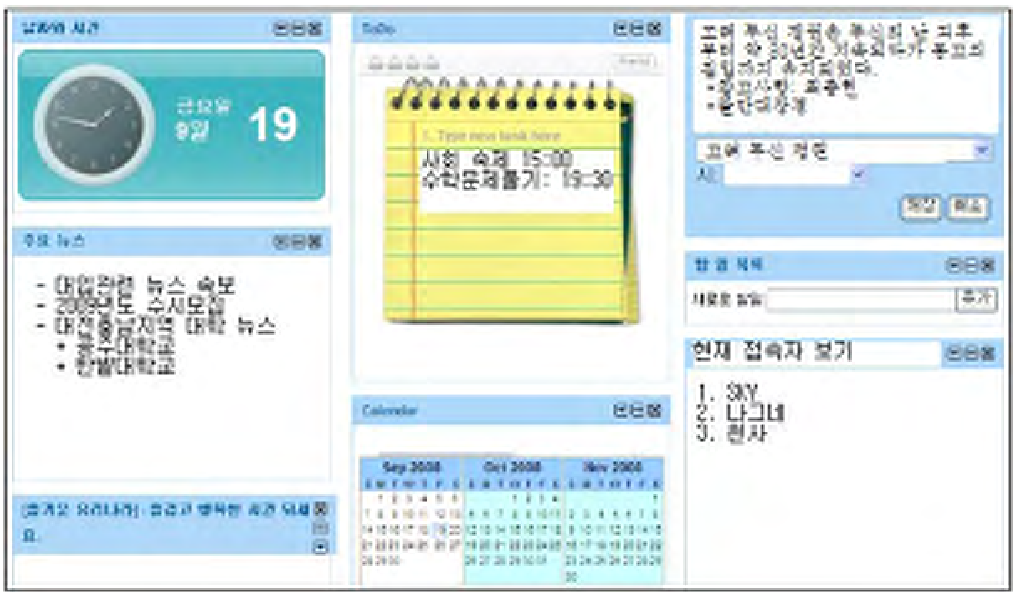 Fig 2. The iStudySpace interface demonstrating the integration of social feedback and automated status tracking.
Critical Analysis & Conclusion
The value of this work lies in its early recognition that content is not enough for e-learning; context and community are vital. By turning past interactions into "live" metadata, the authors effectively battle the "empty room" feeling of digital education.
Limitations:
- Cold Start Problem: The system relies on a rich history of data; initial users may still feel isolated.
- Noise vs. Signal: As the database grows, sophisticated filtering (beyond basic RSS) is required to prevent "comment overload."
Future Outlook: This 2009-era vision of "Collective Intelligence" serves as a precursor to today's AI-driven educational assistants. Moving forward, the "history" could be transformed by LLMs into active tutoring agents that represent the aggregated wisdom of thousands of previous students, providing 24/7 "virtual presence."
Takeaway: Effective e-learning platforms must move from being "Content Delivery Systems" to "Presence Delivery Systems."