
Beyond the Screen: How VR Presence and Embodiment are Redefining Technical Communication
Understanding Virtual Reality: Presence, Embodiment, and Professional Practice
This paper presents an experience report investigating the integration of Virtual Reality (VR) into Technical and Professional Communication (TPC) pedagogy. Through three concurrent case studies using Google Cardboard, Google Daydream View, and the HTC Vive, the authors demonstrate how VR-driven immersion achieves SOTA engagement levels compared to traditional 2D media.
TL;DR
As human-computer interaction shifts from screen-based to sensory-based interfaces, the field of Technical and Professional Communication (TPC) faces a paradigm shift. This study explores the deployment of Google Cardboard, Daydream, and HTC Vive in the classroom, proving that VR doesn't just display information—it creates a "felt experience" that bridges the gap between theory and professional practice.
The "Void" in Pedagogy
For decades, technical communication has been tethered to the 2D page. However, with industry giants like IKEA and The New York Times adopting VR to create immersive user experiences, educational frameworks have struggled to keep pace. The authors identify a critical gap: we have the hardware, but we lack the pedagogical guidelines to teach students how to compose and interact within these 3D spaces.
The Hardware Spectrum: From Cardboard to Room-Scale
The study categorizes VR into three tiers, each offering unique affordances for the TPC student:
- Low-End (Google Cardboard): A "viewer" rather than a full immersion tool. It excels at delivering 360-degree cultural narratives but is limited by a lack of physical interaction.
- Mid-Range (Google Daydream View): Introduces controllers and head straps, freeing the hands and reducing the "dissociating experience" of the physical body.
- High-End (HTC Vive): Offers "room-scale" tracking. It enables full-body immersion where the user can "lean on virtual tables," creating a realistic "virtual self."
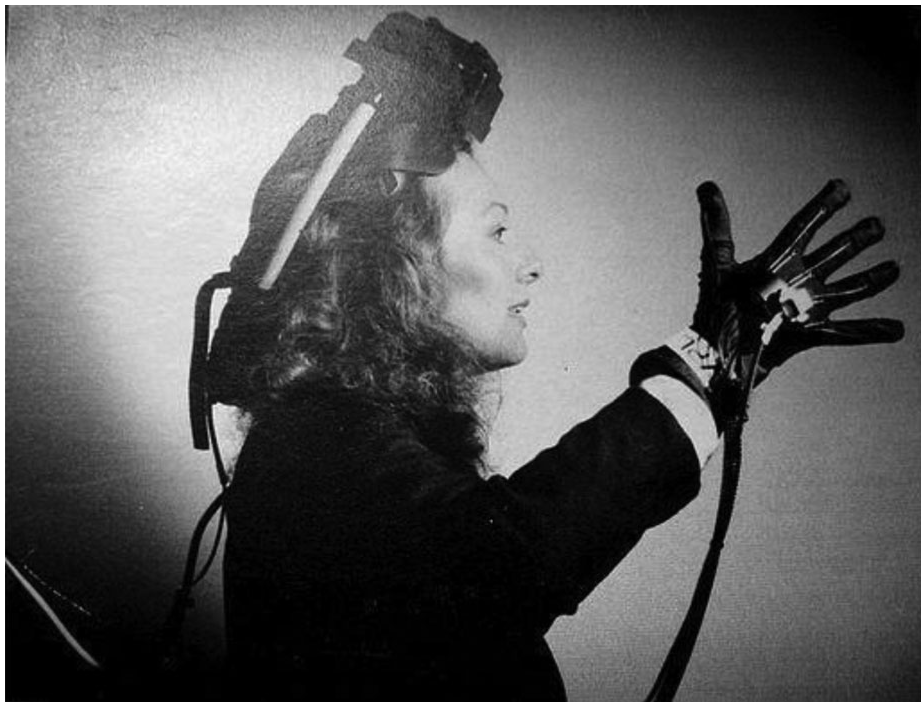 Fig 1. The spectrum of VR hardware analyzed in the case studies.
Methodology: The Physics of "Presence"
The core of the paper rests on two psychological pillars: Presence (the perception of being in a mediated environment) and Embodiment (the relationship between sociocultural dynamics and biological reality).
By using Google Tilt Brush on the HTC Vive, students were asked to "think in 3D" to map out presentations. This challenged the linear "bullet point" logic of traditional slides, forcing a cognitive shift toward spatial arrangement and shared awareness.
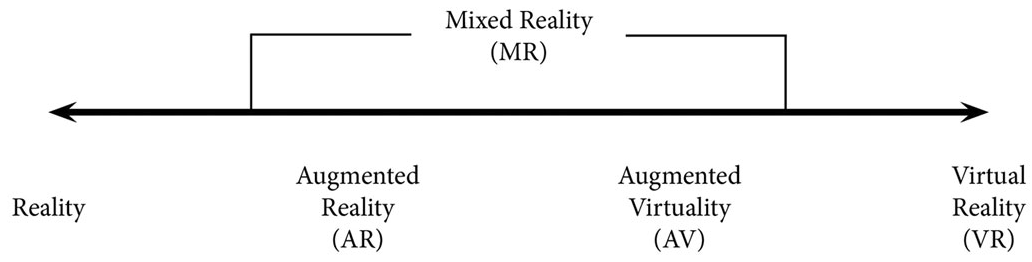 Fig 2. The Reality-Virtuality Continuum used to define the boundaries of the study.
Key Insights from the Field
- Culture via Immersion: Students using Google Cardboard to view cultural documentaries reported that the "power to experience it makes it that much more real" compared to reading a textbook.
- The "Page-less" Medium: In the HTC Vive case study, students marveled at being inside their own outlines. However, this freedom brought new challenges—specifically "cognitive dissonance" when trying to escape linear writing habits.
- Agency and Autonomy: Qualitative interviews highlighted that "control" is essential for immersion. When users felt they had the agency to navigate and interact, their sense of "presence" increased exponentially.
Critical Analysis & Professional Implications
The report concludes that VR is not just a tool for consumption but a new frontier for professional practice.
The Takeaway for TPC:
- Future Documentation: Technical descriptions will evolve into interactive 3D models where users "test" parts virtually before they exist physically.
- Limitations: High-end VR still faces "wall-bound" physical constraints and requires significant able-bodiedness, which poses accessibility challenges.
- The Design Challenge: The industry needs software that allows non-experts to create VR content. Until then, TPC practitioners must lead the way in translating complex 3D data for the end-user.
Conclusion
As we move toward a "hybrid space" where physical and virtual presence are suspended intermittently, the TPC curriculum must embrace VR as a foundational competency. The transition from "writing for a page" to "designing for a presence" is no longer science fiction—it is the new professional standard.