
SONNA: Bridging Social Networks and 3D Serious Games for Next-Gen Education
Virtual Worlds for Serious Applications ( VS-GAMES ' 12 ) Social Networks and Web-based Serious Games as Novel Educational Tools
This paper introduces SONNA, a research framework that integrates Social Networks (specifically Facebook), Web 2.0 tools, and 3D web-based Serious Games for education. The project explores the synergy between collaborative 3D environments and Digital Storytelling to enhance learning in citizenship education and bioethics.
TL;DR
The SONNA (SOcial Network and web-based serious games as Novel educational tools) project investigates how the ubiquitous nature of social networks and the immersion of 3D virtual environments can be fused to create a transformative educational experience. By integrating Facebook's social graph with custom-built serious games focused on Bioethics and Citizenship, the researchers aim to turn passive learning into a collaborative, data-driven social event.
Background Positioning
In the landscape of Technology-Enhanced Learning (TEL), the SONNA project positions itself as a strategic bridge. It isn't just a 3D game or a simple web portal; it is an integrated ecosystem. It leverages the "Web 2.0" revolution—where users are creators—and maps it onto the rigorous requirements of formal education through a multi-tier architecture.
Problem & Motivation: The Engagement Gap
Modern learners are "digital natives," yet educational tools often remain static. The authors argue that while social networks like Facebook have reshaped cultural interaction, their potential for deep learning remains untapped. The core challenge is: How do we move from simple information sharing to collaborative knowledge building in a virtual space?
The authors' insight lies in the "Social Virtual Environment"—a space where the narrative (Digital Storytelling) and the challenge (Serious Games) are intrinsically tied to the user's real-world social network.
Methodology: The Technical Backbone
The SONNA platform is a sophisticated stack designed for flexibility and data extraction.
1. The Multi-Tier Architecture
The system is divided into four distinct layers:
- Content Layer: Mix of validated provider content and user-generated data (YouTube, Google Warehouse).
- Authoring Layer: Built on Drupal CMS with custom plugins for quiz and storyboard creation.
- Logic Layer: XML-driven game engines that define levels, scenarios, and sequence trees.
- Interface Layer: Utilizing the XVR Framework to deliver high-performance 3D graphics directly within an HTML browser.
2. Social Integration via Graph API
Instead of building a new social network, SONNA plugs directly into Facebook. This allows the platform to:
- Facilitate easy login.
- Track "social activities" (collaborative documents, group decision-making).
- Analyze aggregate data to see how peer interaction influences the learning curve.
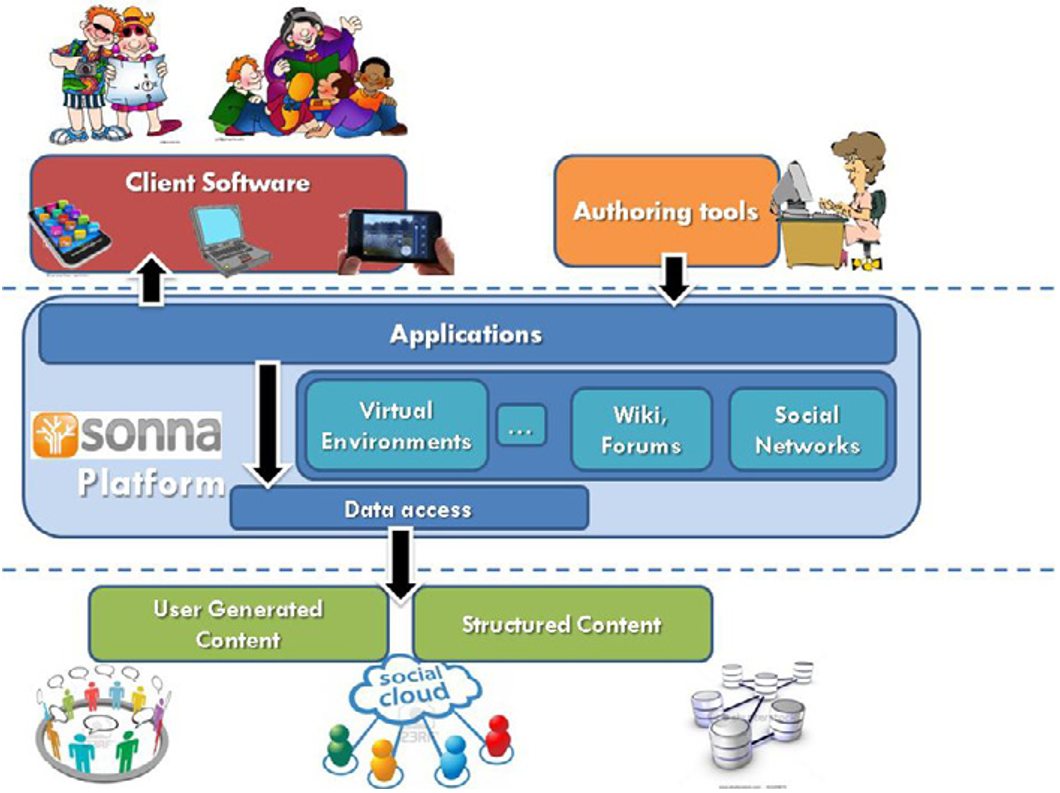 Figure 1: High-level overview of the SONNA software platform architecture and components.
Case Studies: Lawville and Beyond
The methodology is tested through two specific "storyboards":
- Lawville (Citizenship Education): Students act as a government cabinet in a fantasy scenario to learn about the Italian Constitution. It forces players to understand why certain political options are unconstitutional through cooperative problem-solving.
- A Day in the Hospital (Bioethics): A simulation where medical professionals and students navigate clinical cases. It features "Free Zones" (like virtual bars) where players must debate moral dilemmas to reach an agreement.
 Figure 2: Conceptual framework of the interactive web-based serious games integrated within SONNA.
Critical Analysis & Future Outlook
Takeaway
The strength of the SONNA project is its Hybrid Inductive Bias: it assumes that learning is inherently social and that 3D immersion provides the necessary "presence" for serious topics like ethics and law to resonate.
Limitations
As the paper describes "work in progress," extensive quantitative longitudinal data is still pending. Furthermore, relying heavily on a single platform like Facebook introduces privacy complexities and dependency risks (the "walled garden" problem).
Future Work
The next logical step for this research is the transition from Web 2.0 to Web 3D/Metaverse standards, where cross-platform interoperability and decentralized data might solve the dependency on a single social network's API.
Summary Context: This paper was presented at the 2012 International Conference on Virtual Worlds and Serious Applications (VS-GAMES), highlighting the early visionary efforts to institutionalize social gaming for professional and civic development.