
The Digital Backbone: How Virtualization Saved Backpacker Culture
The Virtualization of Backpacker Culture:
This study investigates "The Virtualization of Backpacker Culture," examining how the convergence of information and communications technology (ICT) and traditional backpacker ideology has stabilized its social structure. Utilizing evolutionary anthropology and systems theory, the research demonstrates how virtual communities (SNS and forums) have allowed the subculture to transcend spatial-temporal constraints, maintaining a "sustained state of co-presence" for a globally diverse and mainstreamed market.
TL;DR
Backpacking has long been viewed as a fleeting "rite of passage" that vanishes once the traveler returns to a 9-to-5 job. However, Cody Paris’s research argues that technology—specifically Social Networking Sites (SNS) and forums—has "virtualized" this subculture. By providing a permanent social structure, the internet allows the backpacker ideology (freedom, budget travel, independence) to persist regardless of physical location, effectively stabilizing a culture that was once considered too mainstream to define.
Problem & Motivation: The Mainstreaming Dilemma
For decades, sociologists struggled to classify backpacking. Is it a "neo-tribe"? A "scene"? Or just a "type of tourism"? The problem was temporality. Traditional backpacking was tied to the "road." Once you left the trail, you left the culture. Furthermore, as backpacking became mainstream (standardized trails, hostels, and global infrastructure), the lines between a "hardcore" backpacker and a standard budget tourist blurred.
The author’s research intuition is that technology serves as the missing sociological glue. If culture is a system, then the technological shift (the internet) must have forced the social system to adapt, allowing the ideology to survive the transition from the road back to the home environment.
Methodology: The "Layer Cake" of Culture
Paris employs a framework from evolutionary anthropology, treating culture as a three-layered system:
- Technological Subsystem (The Base): The tools and techniques (now the Internet, Wi-Fi, and smartphones).
- Sociological Subsystem (The Middle): Interpersonal relations and patterns of behavior.
- Ideological Subsystem (The Top): The organization of beliefs (Freedom, Independence, Low Budget).
The study used an online survey to track these layers across four age cohorts (18-24, 25-30, 31-40, and 41+), analyzing their behavior before, during, and after their travels.
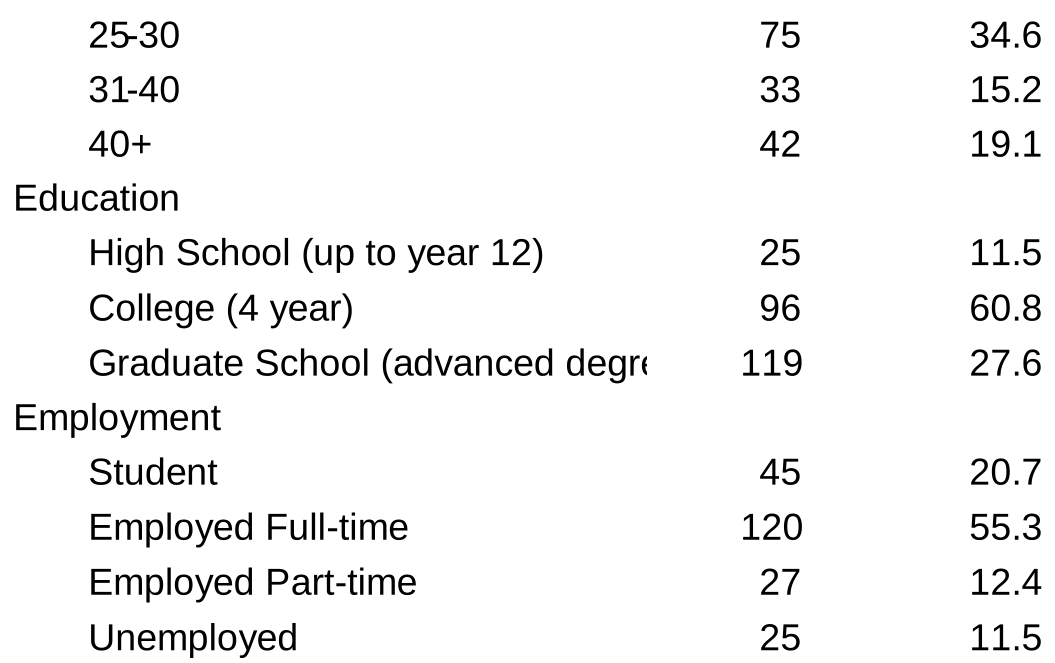 Table 1: The diverse demographic profile of the sampled backpacker community.
The Core Finding: Generational Techno-Sociality
The results highlight a fascinating generational split in how this virtualization manifest:
- The "Digital Natives" (18-24): This group uses SNS (Facebook, etc.) to maintain a "constant state of co-presence." For them, an email or SNS profile is their "only real address" while traveling. They use technology to bridge the gap between their "travel self" and "home self" in real-time.
- The "Digital Veterans" (41+): While they shy away from SNS, they are the backbone of information exchange. They dominate forums (like Thorn Tree), acting as the "elders" of the culture by passing down knowledge.
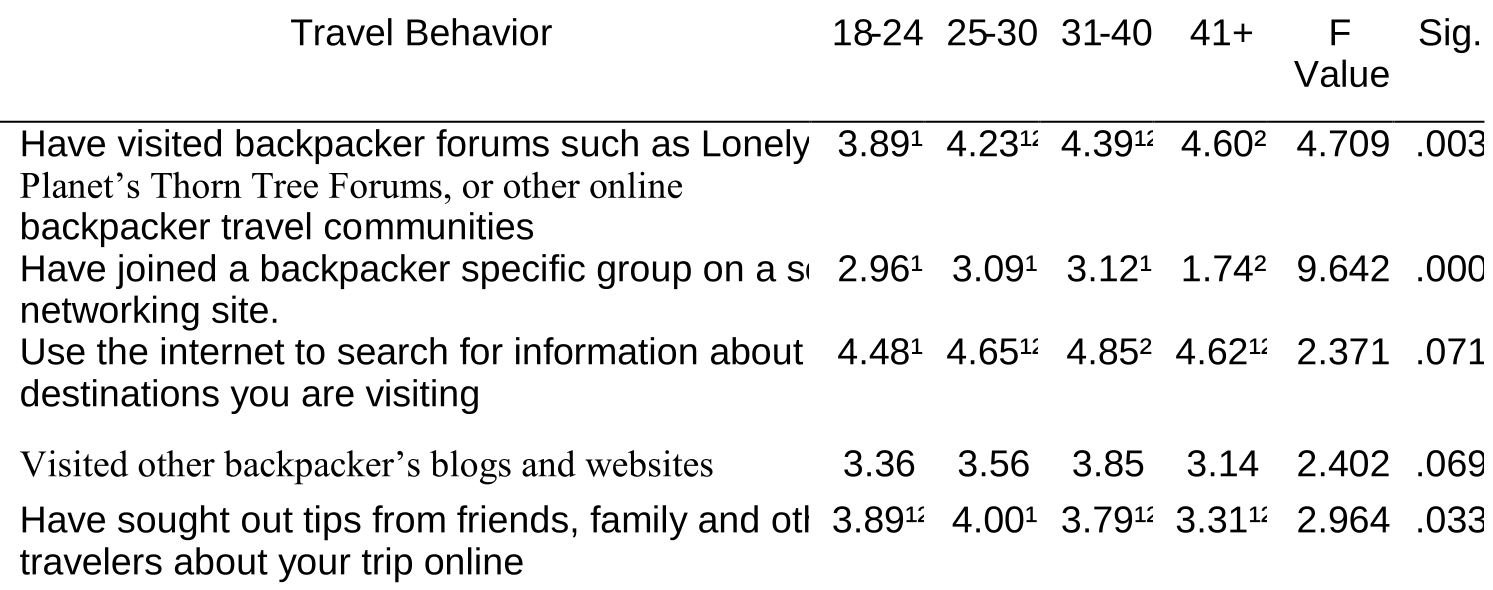 Table 4: Pre-trip results showing the significant reliance on online forums and information searches across all age groups.
The Evolution of the "Guidebook"
Historically, the Lonely Planet guidebook was the "Backpacker’s Bible," providing a fixed structure. The study shows a pivotal shift: while guidebooks remain important, Internet information search has surpassed them (p < .05). Information is no longer a static book; it is a dynamic, "just-in-time" resource that allows for greater intra-trip flexibility—actually fulfilling the "freedom" and "independence" pillars of backpacker ideology more effectively than ever before.
Critical Analysis & Conclusion
Paris successfully argues that the virtualization of the backpacker culture has resolved the "mainstreaming" crisis. By moving the social structure into the virtual realm, the culture is no longer dependent on physical "enclaves" or "trails."
The Takeaway: Technology didn't "kill" the authentic backpacker experience; it provided the social scaffolding to sustain it. However, a potential limitation noted is the "echo-chamber" effect of virtual communities—where travelers might only interact with other travelers online, potentially reducing the very "local interaction" that the ideology claims to value.
As we look toward the future (and the 2020s), this virtualization has only accelerated. The "backpacker" has evolved into the "digital nomad," where the virtualization of culture has translated into the virtualization of labor itself.
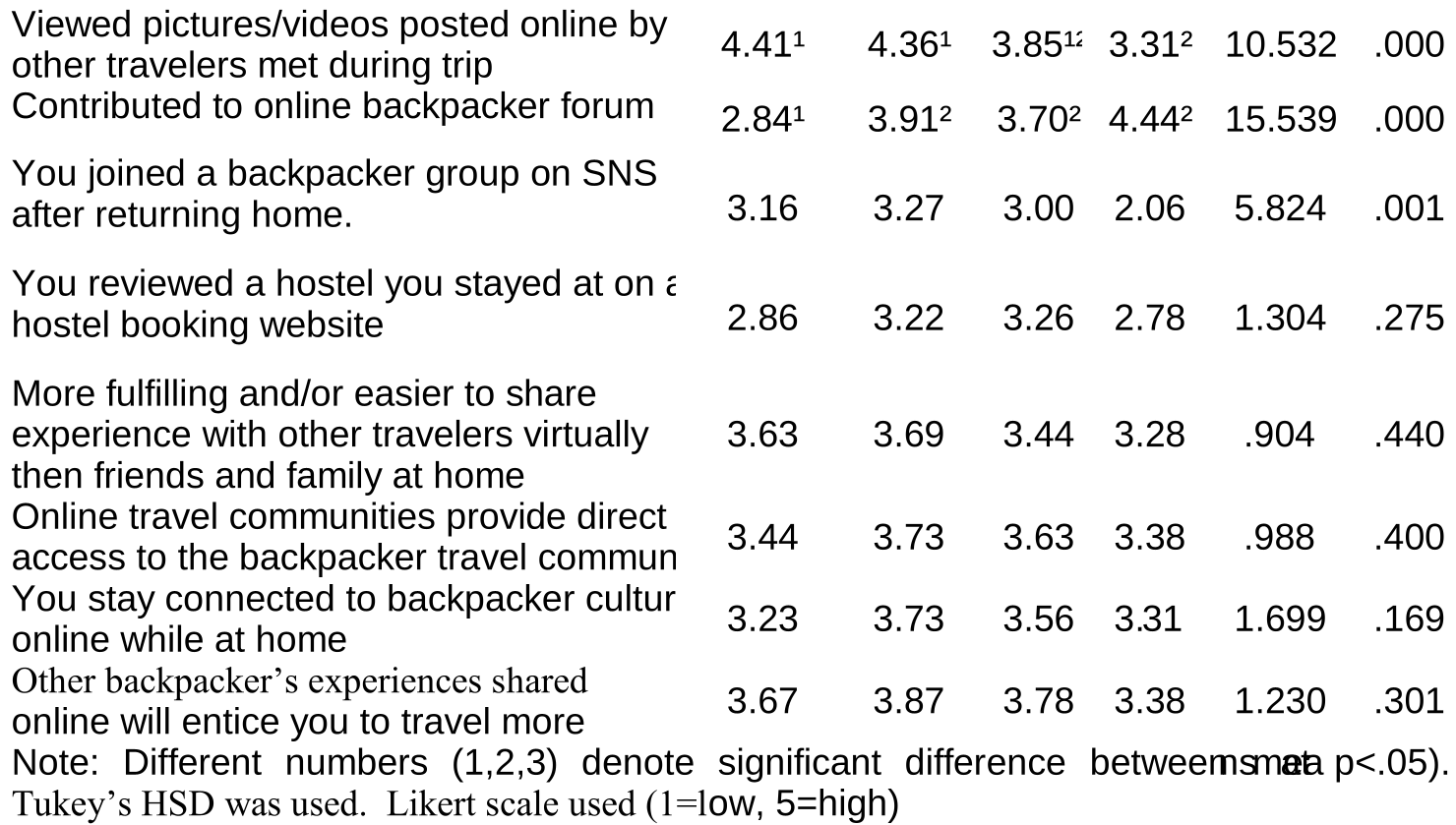 Table 6: Evidence that the virtual connection to backpacker culture persists even after returning home.