
Efficient Edge Intelligence: Parking Detection with Embedded AI Processors
VISION BASED PARKING OCCUPATION DETECTING WITH EMBEDDED AI PROCESSOR
This paper presents an embedded vision-based parking occupation detection system using a fisheye lens camera and a specialized AI processor. By shifting classification logic from a central server to an edge device, the authors achieve high-accuracy detection (94.48% in simulation) with significantly reduced network load.
Executive Summary
TL;DR: This paper introduces an embedded system capable of detecting parking slot occupancy directly at the camera level. By combining a wide-angle fisheye lens with a specialized hardware AI processor (FPGA-based), the system achieves up to 94.48% simulation accuracy while eliminating the need to stream raw video to a central server.
Positioning: This work belongs to the Edge AI & IoT domain, focusing on the practical "Hardware-Software Co-design" for smart city applications. It moves away from heavy Deep Learning models (like U-Net) towards memory-efficient, cell-based hardware classifiers.
Problem & Motivation: The Heavy Burden of "Smart" Parking
Modern parking guidance systems usually choose between two evils:
- Sensor Overkill: Installing ultrasonic/magnetic sensors in every single slot, which is expensive to maintain and prone to interference.
- Server Overload: Using standard cameras but streaming all video data to a central server. This creates a massive bandwidth bottleneck and requires expensive server-side GPUs.
The authors' insight is to use a Fisheye Lens to see more with less hardware, and an Embedded AI Processor to process images locally, sending only a few bytes of "Occupied/Free" status over the network.
Methodology: Distance-Based Edge Classification
The system follows a streamlined pipeline designed for resource-constrained environments:
- Pre-processing: The fisheye camera captures a wide view. Regions of interest (individual slots) are extracted, converted to grayscale, and resized to fit the hardware's input buffer.
- The AI Processor (Intellino): Unlike a standard CPU/GPU, this processor uses a "Cell" architecture. Each cell stores a "feature template" of a free or occupied slot.
- Classification Logic: When a new image arrives, the hardware calculates the distance (similarity) between the input and all stored templates in parallel. The category of the nearest cell is selected as the result.
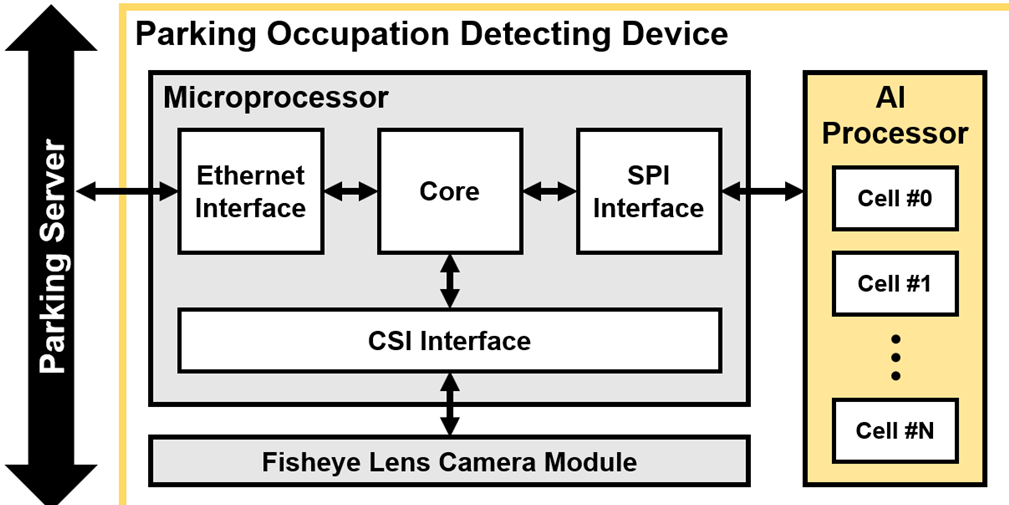 Fig 1: The hardware architecture showing the SPI interface between the Microprocessor and the AI Processor.
Experiments & Results
The researchers conducted extensive simulations to find the "Sweet Spot" between memory usage and accuracy, limiting the total cell memory to 16KB.
- Optimal Config: 64 cells with 256-byte vectors.
- Simulation Performance: 94.48%.
- Hardware Implementation: Realized on an FPGA, the system achieved 80.36% in an experimental environment.
The drop in hardware accuracy (from 94.48% to 80.36%) suggests that real-world lighting and the physical layout of the "experimental parking model" introduce complexities not fully captured in the randomized simulation.
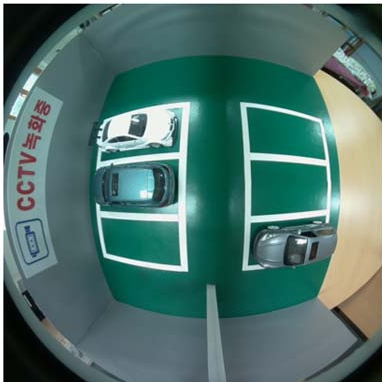 Fig 2: Optimization results for memory size vs. number of cells.
Critical Analysis & Conclusion
Takeaway
The paper successfully validates that a low-power, distance-based AI processor can handle tasks traditionally reserved for much larger systems. The use of a fisheye lens is a clever way to increase the "surface area" per device, improving ROI.
Limitations
- Fixed Lighting: The paper doesn't deeply explore performance under varying weather conditions (rain, snow) or nighttime lighting, which are critical for outdoor parking.
- Resolution Constraints: Resizing images to 256 bytes (roughly 16x16 pixels) might lose fine details necessary for distinguishing between a car and, for example, a motorcycle or a large shadow.
Future Outlook
This approach could be extended into Multi-modal Edge Sensing, where acoustics or infrared data is fed into the same cell-based AI processor to provide even higher reliability without increasing the data footprint.