
AI Unmasks the Face: Quantifying the Fine Line Between Fear, Pain, and Pleasure
Visual Analysis of Emotions Using AI Image-Processing Software: Possible Male/Female Differences between the Emotion Pairs “Neutral”–“Fear” and “Pleasure”–“Pain”
2021-06-29
Summary
Problem
Method
Results
Takeaways
Abstract
This research utilizes AI-driven image processing and 7-layer auto-encoder neural networks to quantify facial expression shifts between emotion pairs ("Neutral"–"Fear" and "Pleasure"–"Pain"). By mapping high-dimensional feature vectors onto a 2D manifold, the study identifies that these emotional transitions follow Gamma distributions with significant gender-based dimorphism in expression intensity.
## TL;DR
Researchers have developed an AI-driven methodology to mathematically distinguish between emotional shifts that the human eye often confuses. By analyzing facial "grimaces" through a 7-layer auto-encoder and Maximum Likelihood (ML) statistics, the study reveals that women and men express intense fear and pleasure with fundamentally different facial "distances," providing a new blueprint for behavioral monitoring and ethical verification in digital media.
## The Ambiguity of Intensity: Why Human Perception Fails
In the realm of extreme emotions, the human face often hits a "saturation point." Psychologists have long noted the "grimace issue"—where the facial muscle contractions (Action Units) for intense pain and intense sexual pleasure become nearly indistinguishable to external raters. This ambiguity is not just a psychological curiosity; it has profound implications for safety monitoring, legal verification of consent, and the development of responsive AI.
The authors argue that traditional methods, like human-led FACS coding, are too subjective. Instead, they propose a manifold-based approach to see "hidden" differences in how facial geometry shifts when transitioning from a neutral state to fear, or from pain to pleasure.
## Methodology: Mapping the Emotional Manifold
The researchers leveraged a dataset of professional actors in high-intensity (BDSM) scenarios to ensure the presence of clear, intentional "grimaces." The pipeline involved four critical steps:
1. **AI Detection & Alignment**: Extracting the face and normalizing its orientation.
2. **Feature Extraction**: Generating high-dimensional 4D feature vectors representing facial geometry.
3. **Dimension Reduction**: Using a **7-layer Auto-encoder Neural Network** to map these vectors onto a 2D manifold (a simplified version of the "emotional space").
4. **Displacement Analysis**: Calculating the Euclidean distance—the "normed displacement"—between points like "Neutral" and "Fear."
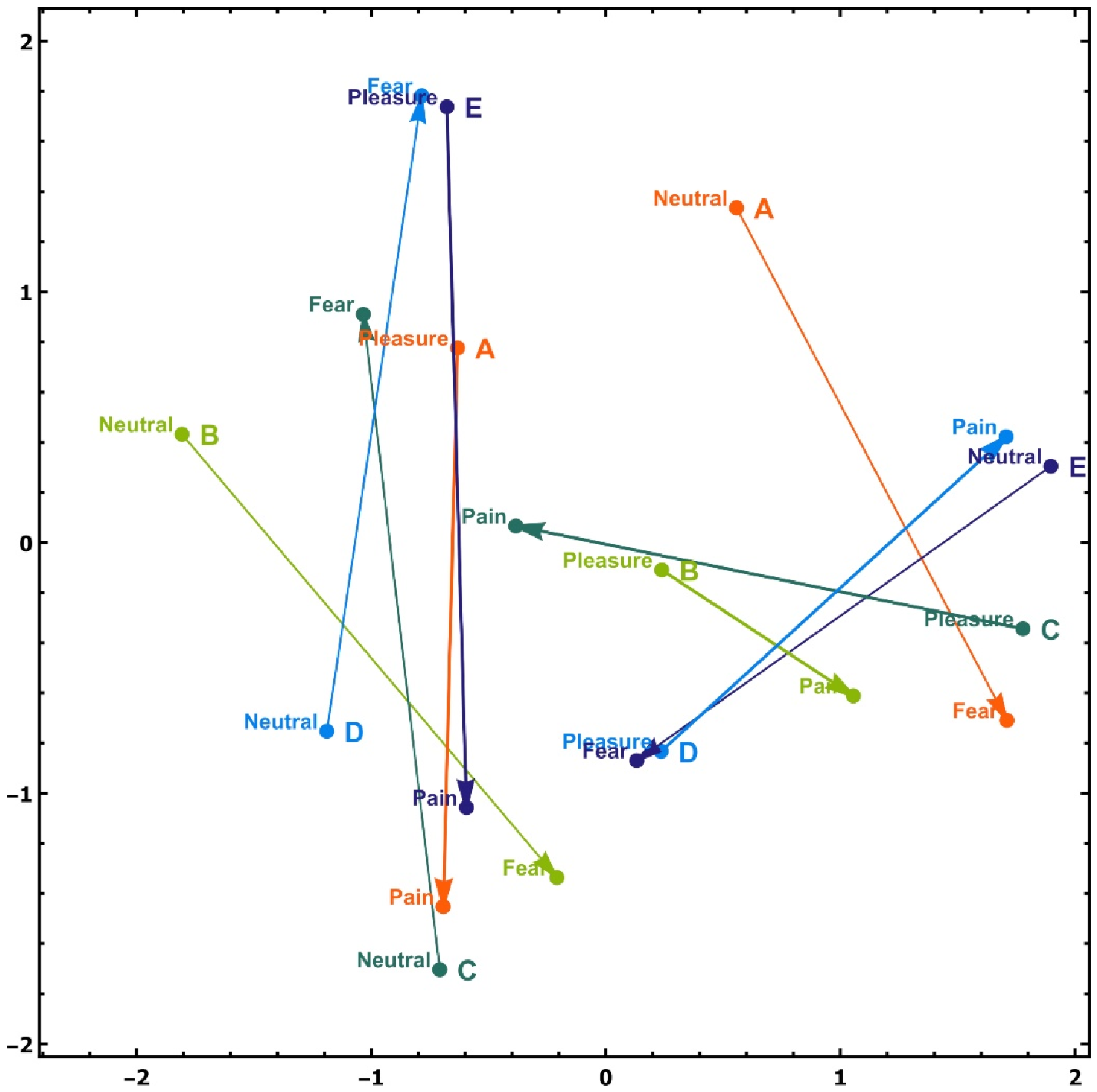
*Figure 1: Visual mapping of emotional shifts for female subjects. The arrows represent the "velocity" and "direction" of facial change.*
## Key Insights: Do Men and Women Express Intensity Differently?
The study’s most striking find was the statistical divergence between genders. By applying **Maximum Likelihood (ML) Gamma distributions**, the team found:
* **Female Sensitivity**: For women, the shift from "Neutral" to "Fear" was significantly larger (Mode 1.177) than the shift from "Pain" to "Pleasure" (Mode 0.791). The AI could successfully distinguish these two populations with 95% confidence.
* **Male Ambiguity**: For men, the shifts were statistically "insignificantly different." The male face appears to use similar geometric displacements for both fear and pleasure-pain transitions, making them harder to categorize even for an AI.
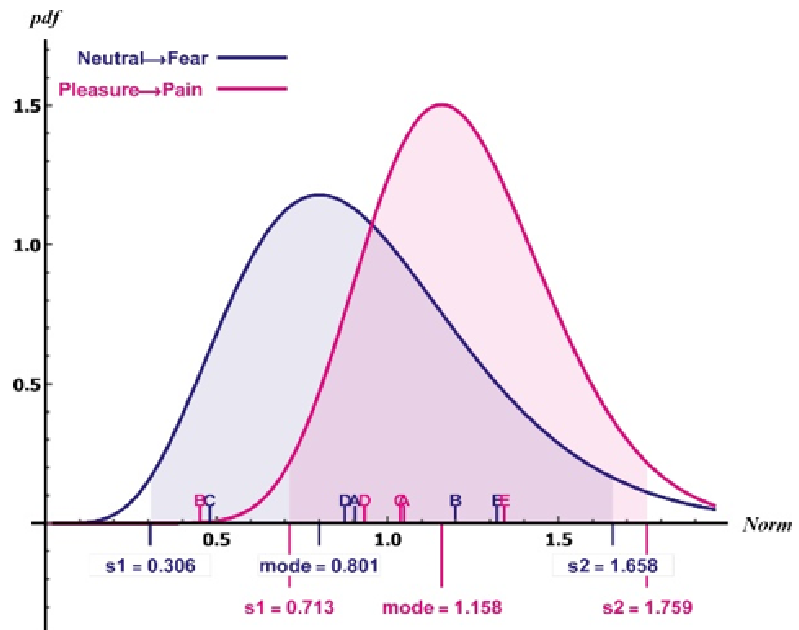
*Figure 3: ML Gamma Distributions. Note how the female curves (top left) are more distinct compared to the overlapping male curves (top right).*
## Why This Characterizes the Future of AI Safety
This research moves beyond simple "sentiment analysis" (is the user happy or sad?) and into the territory of **high-stakes behavioral monitoring**.
### 1. The "Safety Fuse" for Immersive Media
As VR and XR horror games become more immersive, AI can act as a real-time "fuse." If the system detects a "Fear Displacement Vector" that exceeds a safe threshold, it can automatically dampen the intensity to prevent psychological trauma.
### 2. Ethical Forensics
In the digital age, verifying the "voluntary nature" of participation in sensitive content is a major legal hurdle. This AI methodology provides a non-invasive way to retrospectively evaluate videos to determine if the facial markers align with "voluntary pleasure/pain" or "authentic criminal distress."
## Critical Analysis & Conclusion
The takeaway is clear: **Emotions are vectors, not just labels.** By treating emotional change as a movement across a mathematical manifold, we can quantify states that human intuition struggles to separate.
**Limitations**: The study relies on a small sample size (10 actors) and professional actors, which may differ from "spontaneous" real-world expressions. Furthermore, the reliance on single frames rather than temporal video sequences might miss some dynamic nuances.
**Future Outlook**: The integration of these Gamma-distributed models into Human-Robot Interaction (HRI) could allow future robots to better empathize with human discomfort, even when the human tries to maintain a "poker face."