
Decoding Rumors: A Multimodal Visual Framework for Meme Clustering on Reddit
A Visual Framework for Clustering Memes in Social Media
The paper introduces a visual framework for clustering memes on Reddit to detect the spread of rumors. It utilizes the Google Tri-gram Method (GTM) for semantic similarity and proposes a novel Internal Centrality-Based Weighting (ICW) strategy along with a semi-supervised visualization tool (SSR) to improve clustering accuracy.
TL;DR
Researchers have developed a sophisticated framework to track the evolution of "memes" (units of information) on Reddit by moving past simple text matching. By combining semantic analysis of titles, comments, and even external URL/image content with a human-in-the-loop visualization system, they achieved superior accuracy in identifying related information clusters, providing a powerful tool for rumor detection.
Context & Motivation: The Sparsity Problem
Online Social Networks (OSNs) are breeding grounds for rumors—unverifiable statements that can go viral in hours. Detecting these rumors starts with meme clustering. However, Reddit poses a unique challenge:
- Text Sparsity: Titles are often too short for traditional algorithms to understand.
- Heterogeneity: A single post contains text, links, images, and hundreds of nested comments.
- Lexical Gap: Two posts might talk about the same rumor using entirely different words, rendering "Keyword matching" or "TF-IDF" ineffective.
Methodology: Beyond Simple Word Matching
The core of this framework is the Google Tri-gram Method (GTM). Unlike standard models that only see if words are the same, GTM uses a massive corpus (1 trillion words) to determine how words are semantically related based on their typical neighbors.
The Multi-Channel Approach
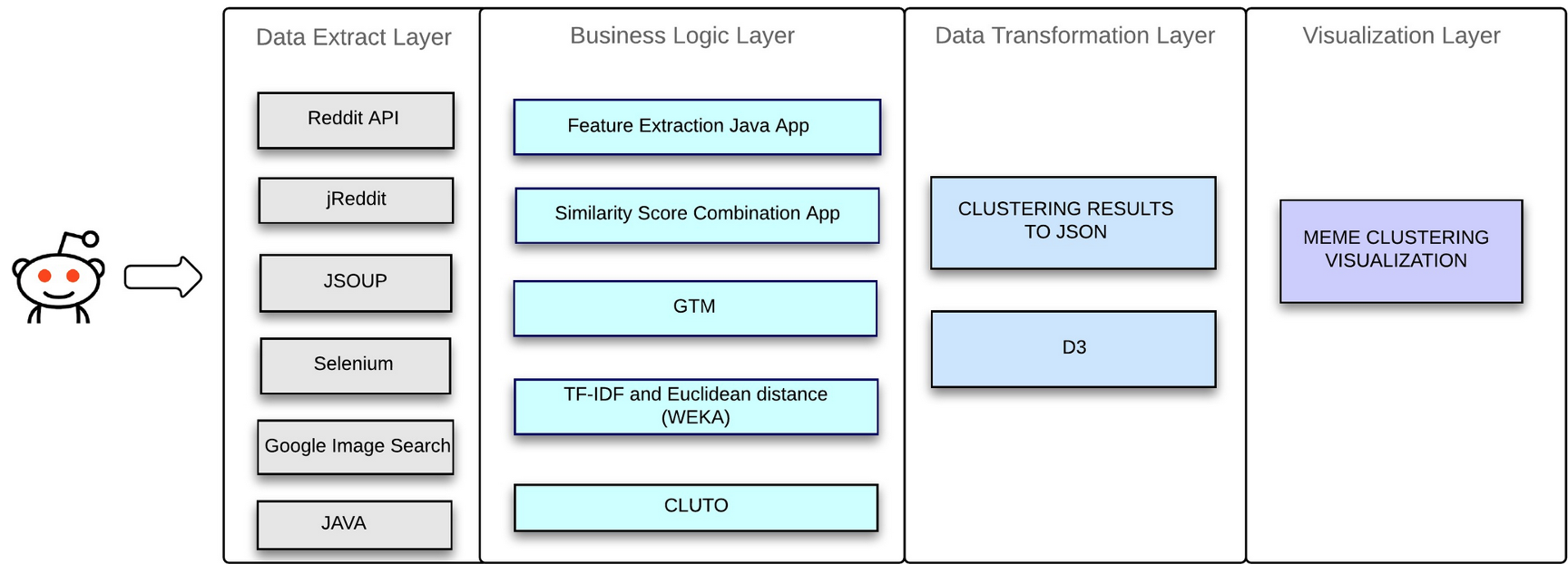
The framework doesn't just look at the post title. It extracts data from four distinct channels:
- Titles: The concise summary.
- Comments: The community's discussion.
- URLs: Scraped content from external news articles linked in the post.
- Images: Processed via Google Reverse Image Search to extract descriptive text.
Architecture Insight: Internal Centrality-Based Weighting (ICW)
How do you merge these four scores? A simple average (AVG) might be diluted by a noisy comment section. The authors proposed ICW, which calculates the "centrality" of each element. If a URL's content aligns strongly with the title and images, it is assigned a higher weight in the final similarity calculation.
Interactive Refinement: The SSR Strategy
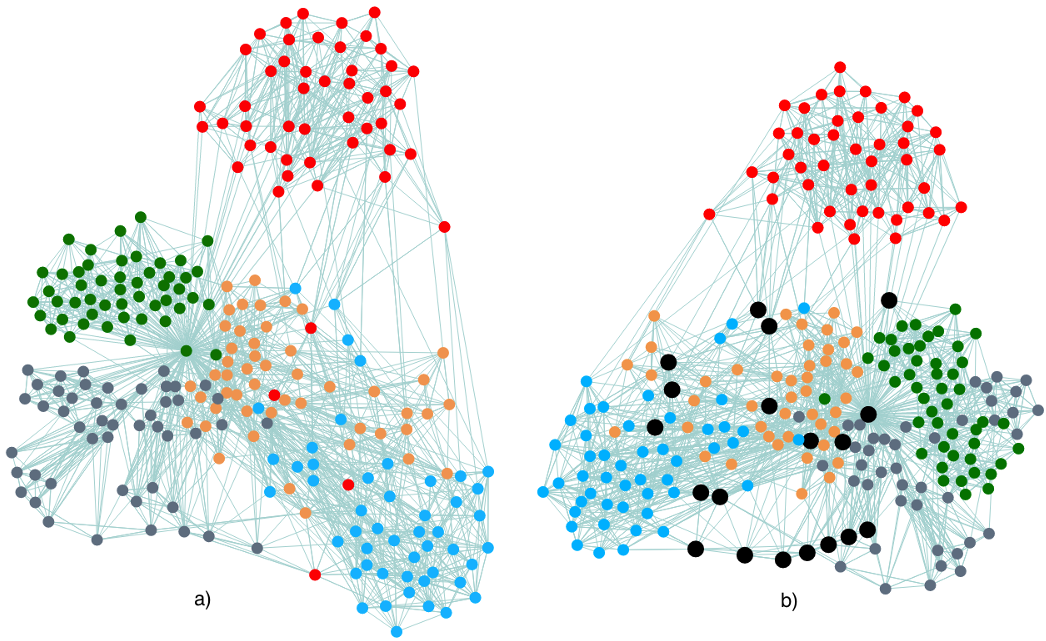
No algorithm is perfect in the chaotic world of social media. The Similarity Score Reweighting with Relevance User Feedback (SSR) allows a human analyst to interact with a force-directed graph (where nodes are posts and edges are similarity scores).
- Outlier Removal: Users can spot "islands" that don't belong and prune them.
- Label Correction: If the algorithm puts an "Ebola" post in an "ISIS" cluster, a human can manually override the class.
Experimental Performance
The researchers tested their framework on five high-stakes topics: Ebola, Ferguson, ISIS, Obama, and Trayvon Martin.
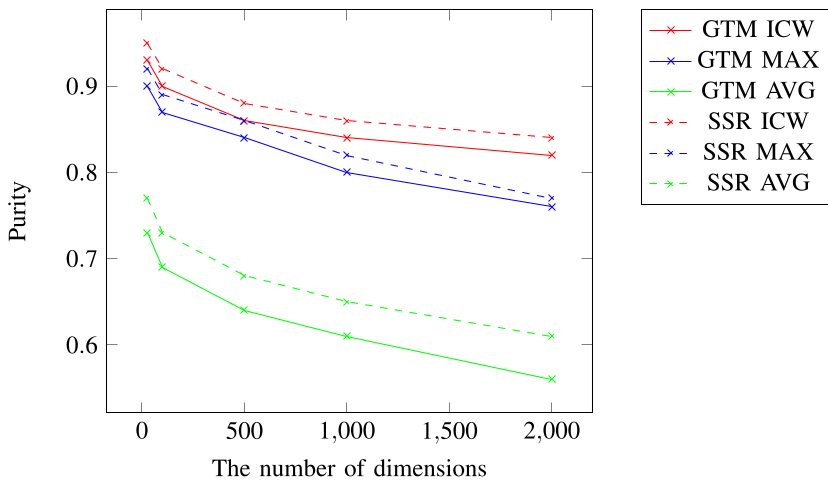
- Semantic > Lexical: GTM significantly beat TF-IDF across all categories.
- Winning Strategy: The ICW strategy consistently outperformed the "Maximum" (MAX) or "Average" (AVG) heuristics.
- Human-AI Synergy: The SSR (interactive) version achieved the highest purity scores, proving that a semi-supervised approach is the "Gold Standard" for social media data.
Critical Insight & Future Outlook
The genius of this work lies in its "Inductive Bias"—it assumes that no single source of information on Reddit is perfect. By treating a social media post as a multimodal entity (Title + Link + Image + Social Feedback), the framework mirrors how humans actually consume content.
Limitations: The system currently relies on the Google 1T N-gram corpus, which may not capture modern internet slang or deep-fried memes as effectively as dynamic word embeddings (like BERT or modern LLM embeddings).
Next Steps: Future research will likely port this framework to Twitter and Facebook, focusing specifically on the temporal propagation of rumors—tracking not just what the clusters are, but how they grow over minutes and hours.