
AI-Driven Visual Learning: Empowering Children with Mental Disorders through Object Recognition
Visual learning as Object Recognition to Recognize Image for Mental Disorder Children
The paper introduces a specialized mobile assistive application designed for children with mental disorders, utilizing Artificial Intelligence and Object Recognition to facilitate visual learning. By integrating Feedforward Neural Networks (FNN) and multimedia features like vocalization and tracing, the system aims to improve cognitive retention and vocabulary acquisition for neurodivergent learners.
TL;DR
Bridging the gap between advanced technology and special education, this paper proposes an AI-powered mobile application designed specifically for children with mental disorders. By leveraging Object Recognition and Feedforward Neural Networks (FNN), the app transforms the physical world into an interactive classroom, providing vocalized labels, simplified descriptions, and gamified tracing exercises to enhance cognitive development.
Problem & Motivation: The Accessibility Gap in Special Education
Mental disorders often affect an individual's ability to relate to or process complex information. While the internet is an infinite library, its content is rarely optimized for children who require simplified vocabulary and heavy visual stimulus.
The authors identify a critical "delivery gap":
- Complexity: Current AI tools are not designed for pedagogical interaction.
- Engagement: Static images or text-heavy reports fail to hold the attention of learners with cognitive delays.
- Scarcity: There is a distinct lack of applications that combine real-time detection with specific therapeutic features like motor-skill tracing or simplified vocalization.
Methodology: From Pixels to Pedagogy
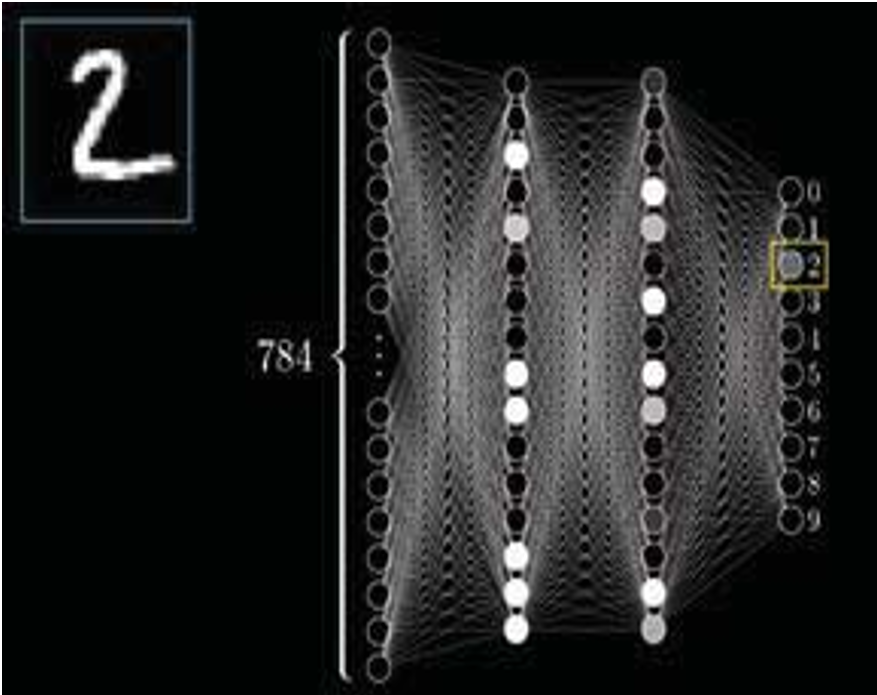
The proposed system relies on a classic but effective AI pipeline. The core engine uses an image recognition algorithm that processes inputs through multiple layers of neurons to classify objects.
1. The Neural Architecture
The system utilizes a Feedforward Neural Network (FNN) structure. As shown in the provided architecture, an image is broken down into pixels (e.g., nodes), passed through hidden layers that extract features, and finally activated in the output layer to identify the object with a specific confidence score.
2. The Recognition Pipeline
The application follows a rigorous data flow:
- Preprocessing: Resizing and normalizing the camera input into a "blob."
- Filtering: Looping through detections to eliminate "weak" screenings (low probability) to ensure the learner isn't confused by incorrect labels.
- Interaction: Once an object (e.g., an airplane) is identified, the app triggers specialized sub-routines.

Transforming Recognition into Education
The true value of this work lies in how it translates a raw "Label" (e.g., "Banana") into a learning experience:
- Vocalized Memory: The app speaks the name of the object. This audio-visual pairing is crucial for children who may struggle with reading but can process phonetics.
- Simplified Semantics: Instead of a Wikipedia definition, the app provides "Easy-to-Understand" facts (e.g., "Banana is good for your body, it has vitamins").
- Kinesthetic Features: Using edge detection, the app creates a "Trace the Line" feature, allowing children to draw over the detected object, combining visual recognition with fine motor skill development.
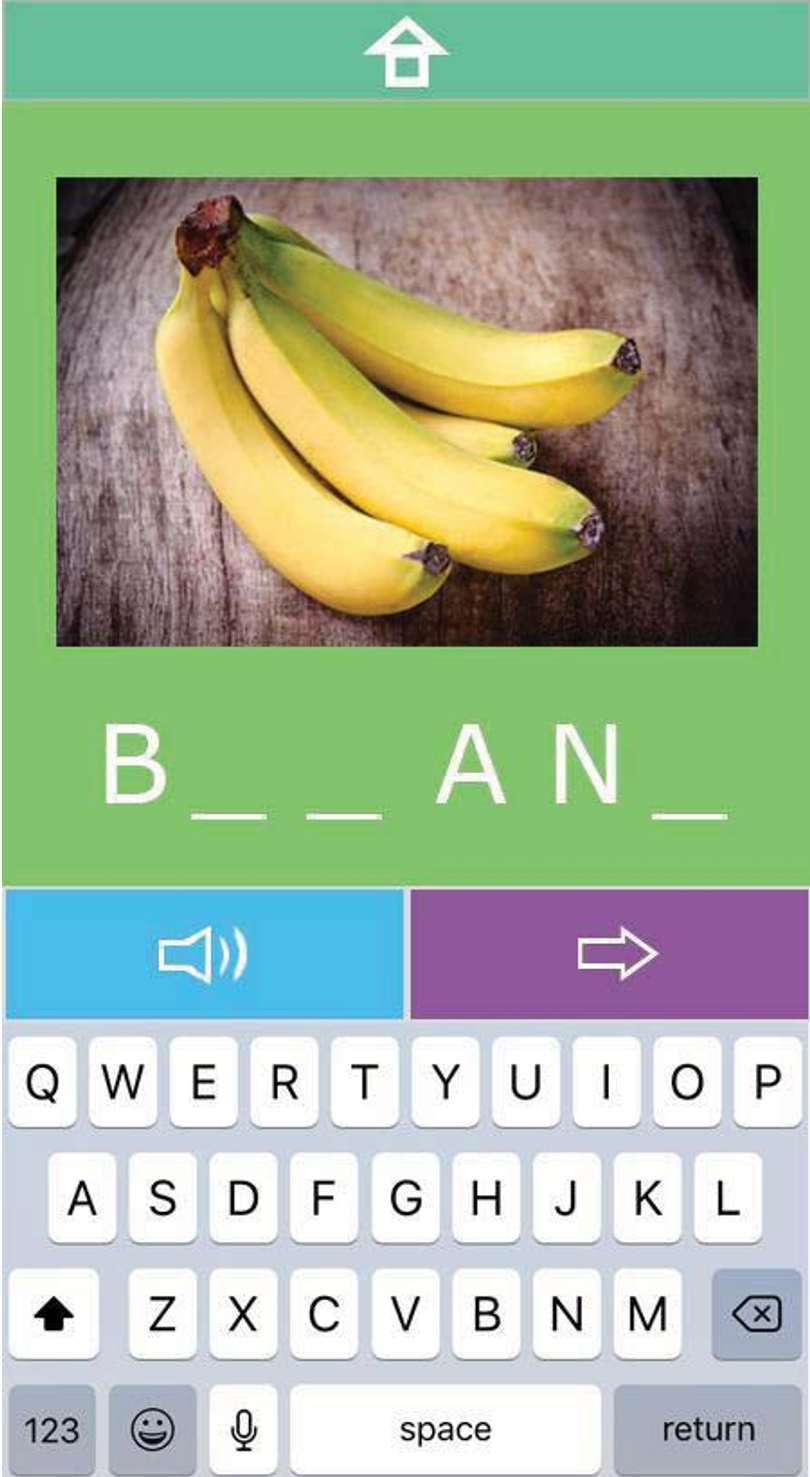 Figure: The "Guess the Word" module reinforces spelling and vocabulary through active recall.
Experiments & Core Insights
The authors implemented the prototype using Python and TensorFlow, demonstrating that modern libraries can return high-accuracy results even in real-time mobile environments.
- Visual Superiority: The study confirms that children with mental disorders respond significantly better to multimedia elements (images + audio) compared to traditional rote learning.
- Interactivity: The "Guess the Word" and drawing features were shown to improve the interactivity of the learning process, which is a key predictor of educational success in special needs contexts.
Critical Analysis & Conclusion
Takeaway
This paper successfully moves AI from a "black box" of classification into a functional assistive tool. By focusing on the User Interface (UI) and Interaction Design specifically for neurodivergent children, the researchers have created a blueprint for future inclusive EdTech.
Limitations & Future Work
While the FNN approach is robust, future iterations could benefit from Transformer-based models (ViT) for even higher accuracy in cluttered environments. Furthermore, incorporating Reinforcement Learning could allow the app to adapt the difficulty of "Guess the Word" games based on the individual progress of each child, creating a truly personalized AI tutor.
In conclusion, the integration of Object Recognition into visual learning represents a significant step forward in making technology serve the most vulnerable segments of the student population.