
Mapping the Influence: A Deep Dive into the Academic Social Networks of China’s Top Art Universities
Visualization Analysis of Academic Social Network Based on Three Art Universities
The paper presents a visualization and complex network analysis of Academic Social Networks (ASNS) focusing on three prestigious Chinese art universities: CUC, BFA, and CAD. By leveraging CNKI data and NetworkX, the authors map publication patterns, high-productivity authors, and collaborative interconnections within these institutions.
TL;DR
This study utilizes complex network analysis to visualize the collaboration patterns of three leading Chinese art institutions: Communication University of China (CUC), Beijing Film Academy (BFA), and The Central Academy of Drama (CAD). By examining five years of CNKI journal data, the researchers identify high-influence scholars and reveal how different institutional cultures result in vastly different collaborative landscapes.
Background & Motivation: Beyond Citations
In the digital age, a scholar's impact isn't just about how many times they are cited, but where they sit in the web of academic exchange. For art and media institutions, which drive national cultural narratives, understanding these "Academic Social Networks (ASNS)" is crucial. Prior work often ignores the nuances of art disciplines, where collaboration might be more personality-driven than in large-scale laboratory sciences. This paper seeks to reveal the hidden social structure of the film and television academia in Beijing.
Methodology: The Anatomy of Collaboration
The researchers treated each university as a social network model. Using Graph Theory, they defined:
- Nodes: Individual teachers/researchers.
- Edges: Co-authored publications, where the "thickness" represents the frequency of collaboration.
- Metrics: They utilized Clustering Coefficients (group cohesion), Degree Centrality (popularity), and Closeness Centrality (efficiency of influence).
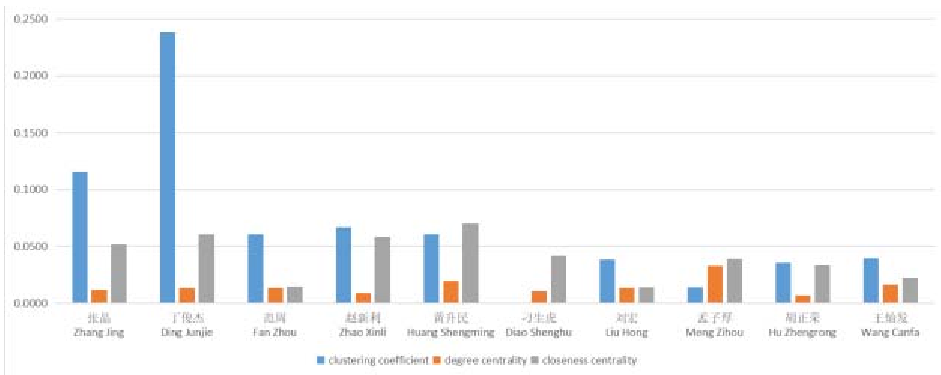 Fig 1: The dense collaborative network of CUC, showing a highly interconnected faculty structure.
Visualizing Research Hubs
The study highlights fascinating differences between the three schools:
1. Communication University of China (CUC)
CUC exhibits a dense, mature network. High-productivity authors like Huang Shengmin and Liu Jun serve as central hubs. The data shows a strong tendency toward "triangular relationships," where collaborators of a scholar often work with each other, creating a robust and resilient research community.
2. Beijing Film Academy (BFA)
BFA’s network is characterized by "weak ties" mixed with strong core clusters. Scholars like Hou Guangming play pivotal roles, but many other relationships are transient (only one shared paper). This suggests a project-based collaboration style typical of the film industry.
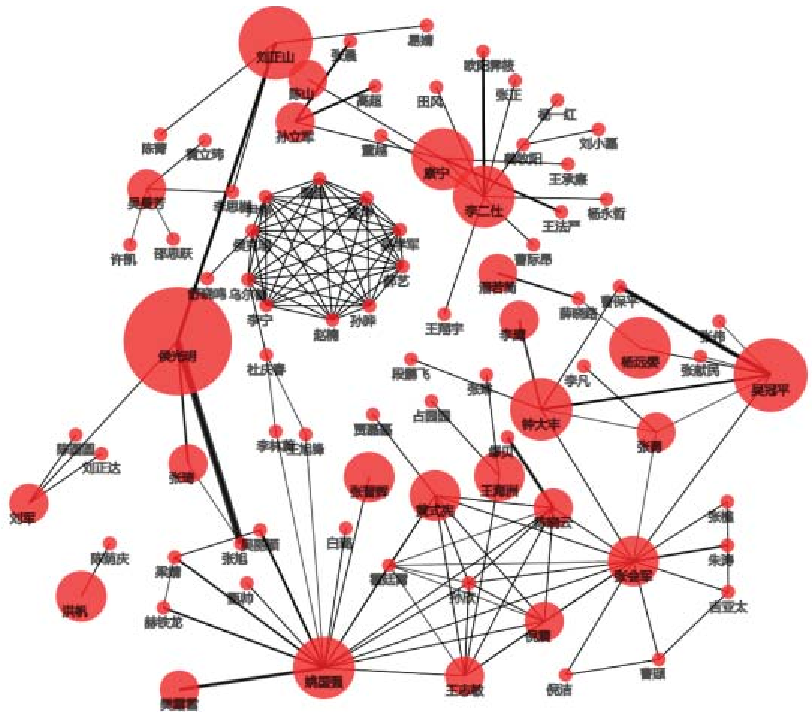 Fig 2: BFA's network structure, indicating a mix of high-centrality leaders and isolated clusters.
3. The Central Academy of Drama (CAD)
Interestingly, CAD demonstrated the most fragmented network (only 29 authors in the core network). Many teachers prefer publishing independently. However, "gatekeeper" figures like Dai Jinyi and Ni Jun are essential for the few collaborative bridges that do exist.
Key Quantitative Findings
By applying NetworkX for parameter calculation, the authors quantified the "power" of specific scholars.
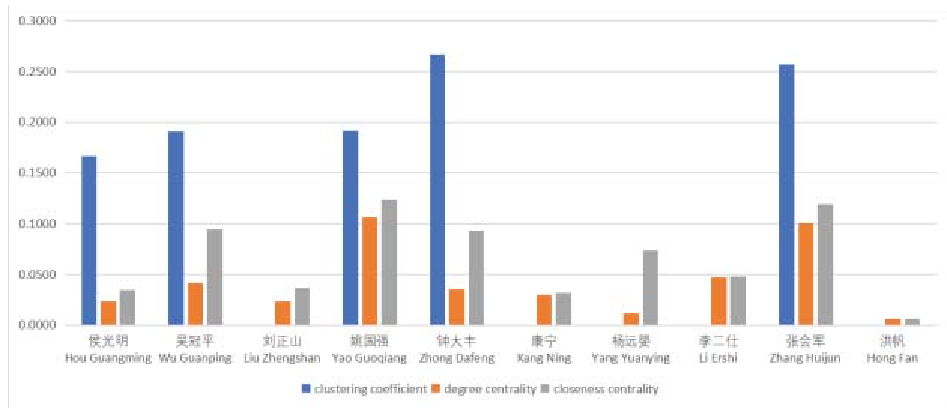 Fig 3: Comparative metrics for CUC faculty, highlighting leaders in central influence.
- CUC Top Influencers: Ding Junjie and Zhao Xinli score highest in closeness, meaning they are the most "efficient" at spreading ideas throughout the university.
- BFA Key Bridges: Yao Guoqiang and Zhang Huijun hold the highest degree centrality, indicating they are the most sought-after collaborators.
Critical Insight & Conclusion
The study proves that academic collaboration is not uniform. While CUC thrives on a "small world" network where everyone is closely connected, CAD relies on independent excellence with rare but vital collaborative links.
Takeaway for the Future: For art universities to increase their global academic footprint, they should focus on supporting "Centrality Leaders"—those scholars who naturally bridge different research groups. Cooperation doesn't just produce more papers; it bridges "Inductive Biases" between different media disciplines, leading to more creative and interdisciplinary breakthroughs.
Limitations: The data is restricted to CNKI (Chinese-language) databases. Future research could incorporate international databases like Web of Science to see how these Chinese art scholars interact on the global stage.