
Deciphering the "Song Dynasty Influencer" Network: A PageRank Approach to Chinese History
Visualization Analysis of Social Networks of Chinese Historical Figures : Take the Study of Literati of Song Dynasty as an Example
This paper presents a digital humanities framework for visualizing and analyzing the social networks of historical Chinese figures using the China Biographical Database (CBDB). By focusing on Song Dynasty literati, the study constructs a complex social graph and applies the PageRank algorithm to quantitatively rank the historical influence of individuals like Su Shi.
TL;DR
History is more than a list of names; it is a complex web of relationships. This paper leverages the China Biographical Database (CBDB) to reconstruct the social networks of Song Dynasty literati. By applying the PageRank algorithm to these networks and visualizing them with Force-Directed Graphs, the researchers successfully quantified the "social capital" of historical figures, proving that Su Shi was not just a literary titan but the central hub of his era's social and political graph.
Background & Motivation: Moving Beyond Text
Historical research has long been a domain of qualitative deep dives. However, when dealing with hundreds of thousands of biographies—like those stored in the CBDB (representing over 422,600 individuals)—the human brain struggles to identify overarching patterns.
The authors identify a clear gap: How can we objectively measure a person's importance in a network? While we know Su Shi was influential, can we prove his centrality using the same logic Google uses to rank web pages? The motivation here is to provide a computational "lens" for historians to see the invisible structure of ancient power and friendship.
Methodology: Physics and Matrices
The study employs a two-pronged technical approach:
1. The Force-Directed Graph (The Visualization)
To make the data intuitive, the authors used a physical simulation model. In this model, every historical figure is a particle. Connections (edges) act like springs, pulling people together, while all nodes exert a "Coulomb repulsion" to keep the graph readable.
- Goal: Reach a stable equilibrium where the layout reflects the natural clusters of historical cliques.
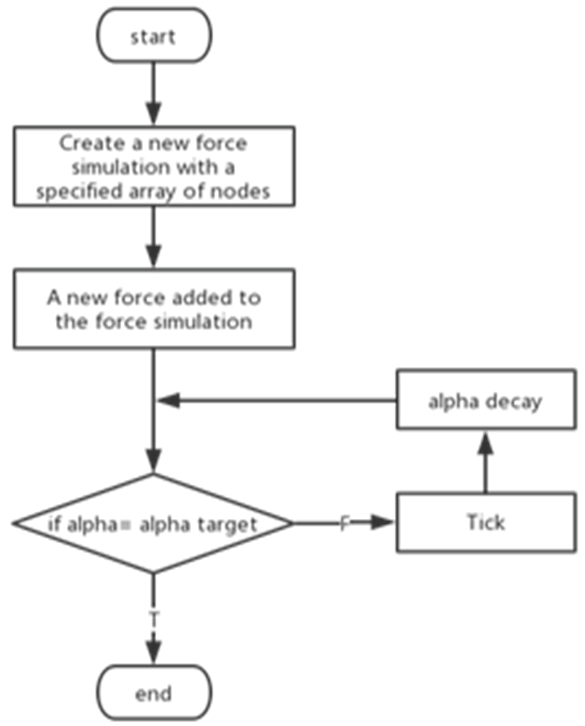 Fig 1. The workflow from SQLite data retrieval to D3.js front-end rendering.
2. PageRank (The Quantitative Ranking)
The core insight is that a "link" in history—whether a letter, a student-teacher relationship, or a political alliance—is a transfer of importance. The algorithm solves the eigenvector problem: Where is the damping factor. This ensures that a person is considered important not just because they have many friends, but because they are connected to other important people.
Experiments & Social Insights
By querying specific Song Dynasty literati, the authors visualized the "social circle of Su Shi" and compared it with other giants like Zhu Xi and Huang Tingjian.
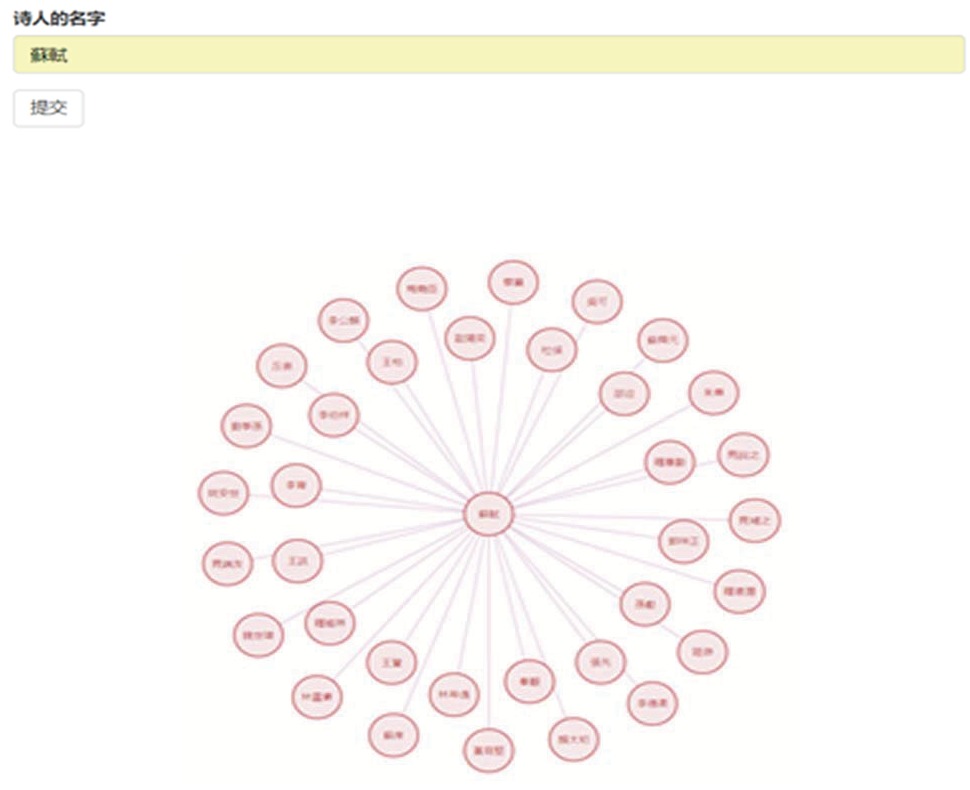 Fig 2. Visualization of Su Shi's expansive network, showing both direct and indirect ties.
Key Results:
- Scientific Validation: The PageRank results perfectly matched historical consensus. Su Shi topped the list, followed by his major disciples (the "Four Scholars of Su Gate").
- Cross-Era Connections: The visualization of Su Shi, Huang Tingjian, and Zhu Xi (Fig. 4 in the paper) reveals the "common acquaintances" that linked different intellectual schools, something a mere list of names would obscure.
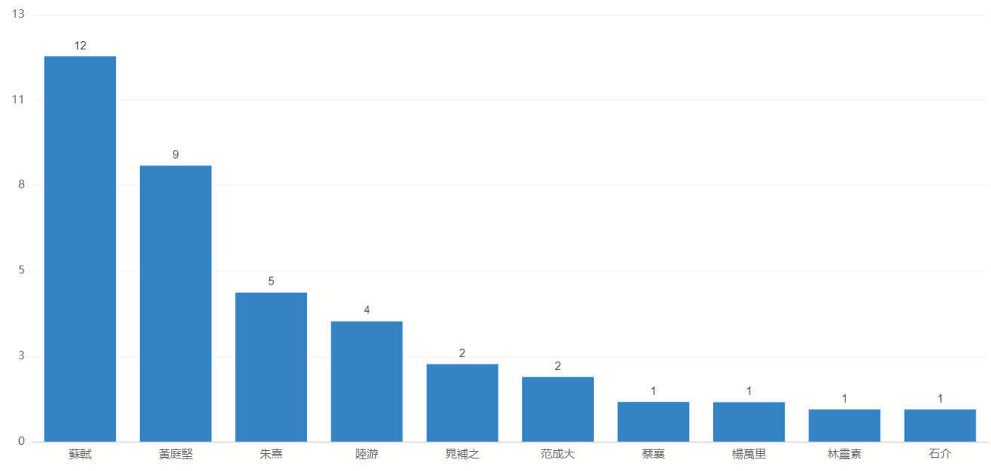 Fig 3. The Top 10 influential figures as ranked by the PageRank algorithm.
Critical Analysis & Conclusion
This paper is a significant step in Digital Humanities. It successfully transitions from "storing data" to "extracting knowledge."
Takeaway: The study proves that PageRank is a highly portable tool for social network analysis beyond the modern internet. It validates the "SOTA" status of Su Shi as a cultural node.
Limitations & Future Work:
- Relationship Weighting: Currently, the model treats "friendship" and "hostility" similarly by counting links. Future iterations should add negative weights for political enemies (e.g., Wang Anshi vs. Su Shi).
- Spatio-Temporal Dynamics: History happens in time and space. Integrating GPS data from the CBDB to see how these networks migrated geographically would be the next logical step.
In conclusion, through the marriage of 12th-century biographical data and 21st-century graph algorithms, we gain a clearer, quantifiable view of how a few key figures shaped the cultural trajectory of China.