
Bridging the Epistemological Divide: 3D Visualization as a Vessel for Indigenous Knowledge
A New Visualization Approach to Re-Contextualize Indigenous Knowledge in Rural Africa
This paper introduces a scenario-based 3D visualization prototype designed to re-contextualize Indigenous Knowledge (IK) for rural Herero communities in Namibia. By embedding user-generated videos within a simulated 3D village environment, the method bridges the gap between Elder knowledge holders and younger "assimilators" who are increasingly detached from traditional rural life.
TL;DR
Researchers have developed a 3D simulated village environment to help rural Namibian communities preserve their traditional wisdom. By replacing abstract text folders with a recognizable 3D space, they enable Elders to "anchor" videos of oral traditions to specific virtual locations, allowing the younger generation to learn in a context that respects their cultural logic.
The Problem: Literacy vs. Orality in a Digital World
Modern technology is built on a foundation of Western logic: we organize files in folders, use search engines based on text keywords, and view maps from a "God's eye" aerial perspective. However, for the Herero people of Namibia, knowledge is not a static file; it is a performance tied to place and people.
The "digital divide" here isn't just about a lack of hardware; it’s an epistemological gap. When traditional knowledge (IK) is recorded into a video and tagged with text, it becomes "de-contextualized." Without the social protocols—who is speaking, where are they standing, and what season is it—the knowledge loses its meaning and authority.
Methodology: Designing from the Ground Up
The authors didn't just build a database; they built a world. Using the Unity 3D engine, they reconstructed a rural village in the Omaheke region.
1. Spatial Anchoring
Instead of a list of videos, users navigate a 3D village. A video about milking a cow is located at the virtual cattle kraal (corral). This leverages the community's "First-Person Point-of-View," where navigation is guided by landmarks and social relationships rather than GPS coordinates.
2. Scenario-Based Triggers
The system uses "scenarios"—animated 3D figures engaged in activities—to serve as the interface. If a user sees a 3D model of a man pointing toward a fire, they intuitively understand that clicking him will trigger a story or a demonstration of a ritual.
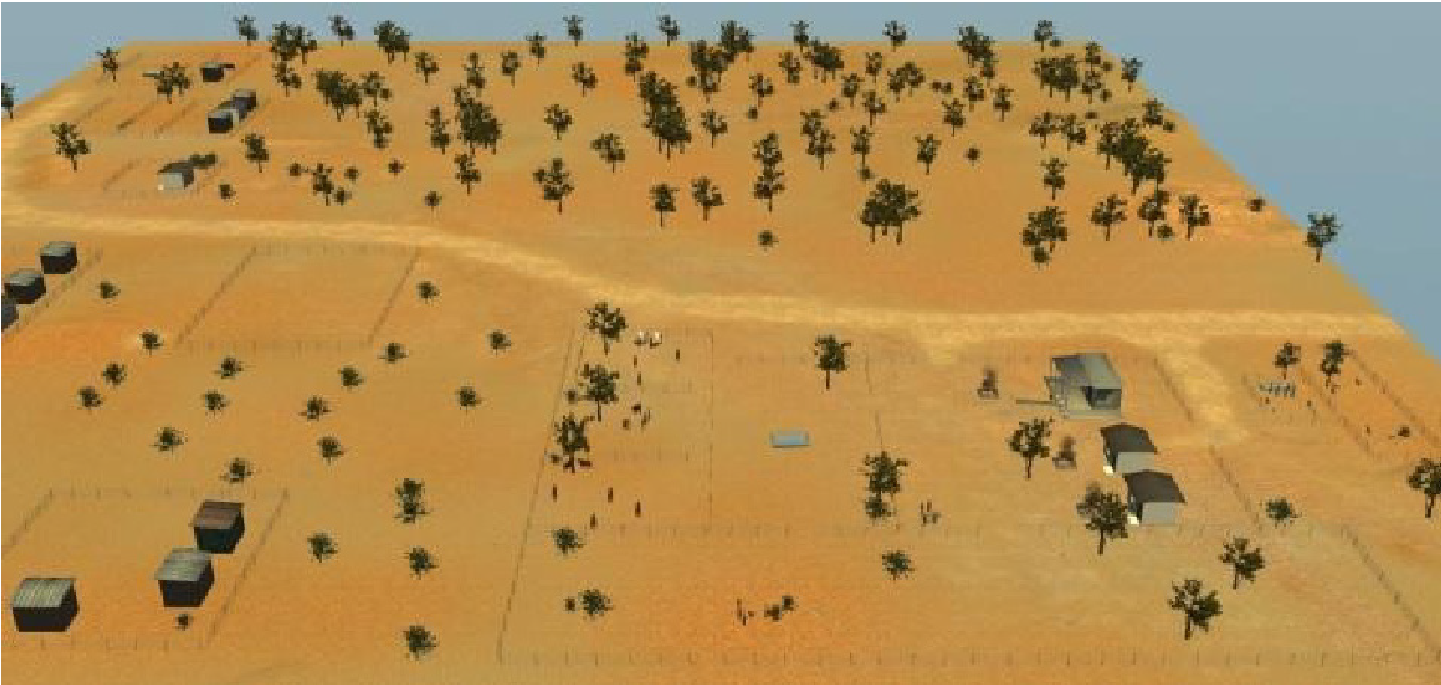 Fig 1. Overlaid comparison of the real-world huts (right) and the 3D reconstructed models (left).
Experimental Insights: The Importance of "Ecological Legibility"
The evaluation provided a fascinating look at how different cultures perceive 3D graphics.
- The Power of Recognition: Youth who spent most of their lives in the city were able to immediately identify their family homes by looking at the 3D model's walls and fire pits, proving the interface was intuitive even for those with limited computer experience.
- The "Uncanny Valley" of Nature: Interestingly, Elders were less concerned with the color of the houses and more concerned with the trees. They pointed out that developers used "generic" trees inside a cattle kraal where only "wild trees" (Otjindanda) would naturally grow. This highlights that for indigenous users, specific botanical details are not just "background art"—they are essential markers of seasonal and agricultural reality.
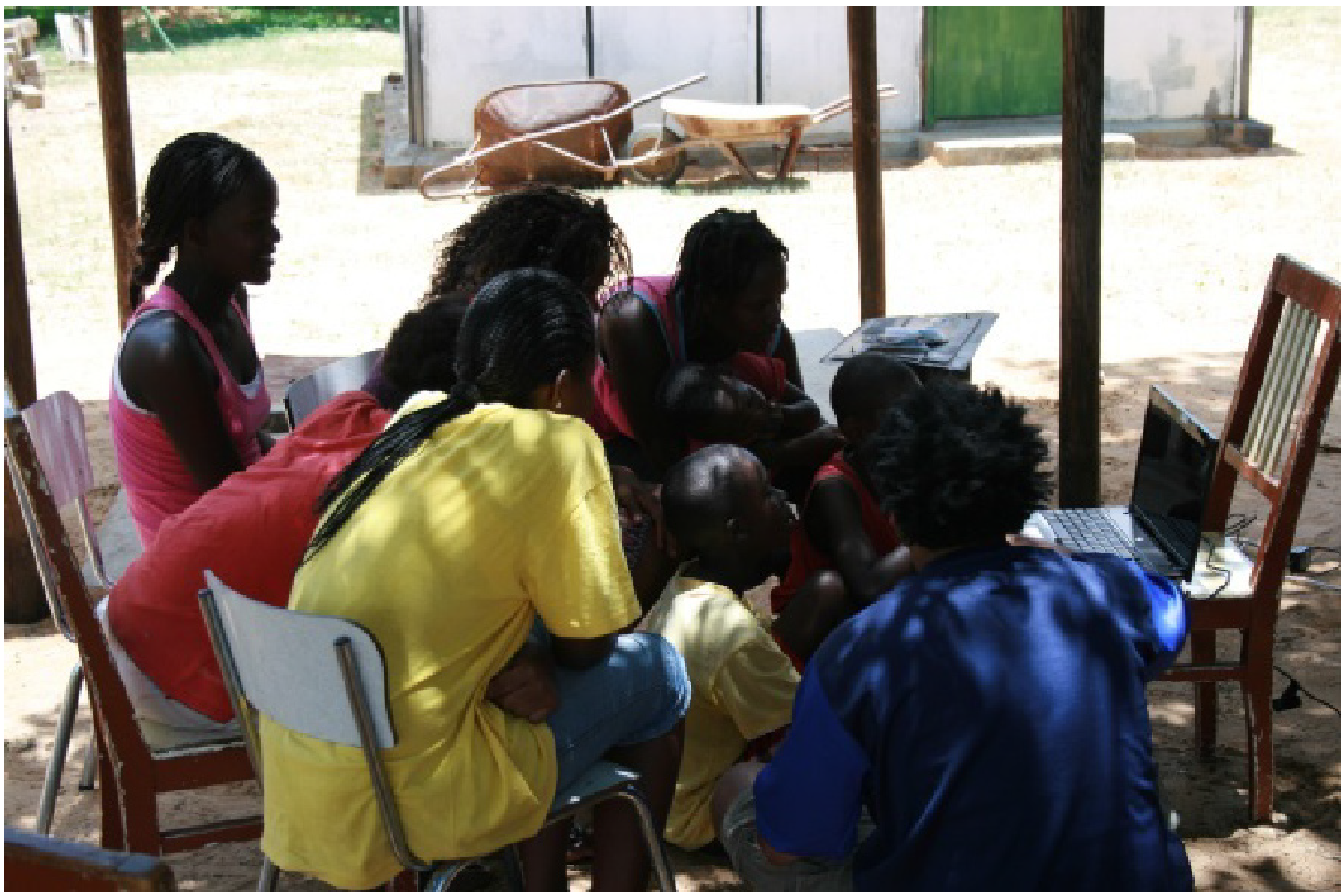 Fig 2. Youth participants interacting with the prototype in the village settings.
Critical Analysis: Beyond the Prototype
This work demonstrates that visualization is more than just "eye candy." It is a cognitive bridge. By moving away from "folders and files" and toward "places and scenarios," the system aligns with how oral societies process information.
Limitations & Future Path:
- High-Fidelity Biology: Future iterations must prioritize the accurate modeling of flora and fauna, as these are the primary signifiers of knowledge for rural users.
- Adaptive Access: Traditional knowledge is often restricted by gender or age. The system needs "social filters" to ensure information is only accessed by those culturally permitted to see it.
- Transferability: While highly effective for one village, creating bespoke 3D worlds for every community is labor-intensive. The next step is a "modular" system where communities can assemble their own 3D environments.
Conclusion
The project successfully moved the needle from "designing for the community" to "designing with the community." It proves that the most advanced technology (3D game engines) can be used to protect the oldest forms of human wisdom, provided we are willing to let go of our Western design biases.