
VITAL-ECG: Bridging the Gender Gap in Cardiovascular Wearables through De-biased AI
VITAL-ECG: a de-bias algorithm embedded in a gender-immune device
VITAL-ECG is a gender-immune wearable smartwatch system designed for fair cardiovascular monitoring, integrating a de-biased multilayer perceptron (MLP) to estimate Arterial Blood Pressure (ABP) from ECG and PPG signals. Utilizing the AIF360 toolkit and reweighting techniques, it achieves high regression coefficients (0.97 for systolic, 0.93 for diastolic) while correcting for historical gender imbalances in medical datasets.
TL;DR
Cardiovascular disease is the leading killer for both men and women, yet medical algorithms are often trained on male-heavy data. VITAL-ECG is a revolutionary smartwatch system that combines a "gender-immune" physical design with a de-biased Deep Learning model to provide fair, accurate blood pressure monitoring for everyone, achieving a regression accuracy of up to 0.97.
The "Invisible" Gender Bias in Medical Tech
The medical community is waking up to a harsh reality: gender bias isn't just a social issue; it's a data science and engineering failure.
- Physical Bias: Many ECG straps are designed for flat chests, leading to signal interference for women.
- Data Bias: Standard datasets like MIMIC II are often numerically imbalanced toward men, causing AI models to learn "male-centric" physiological patterns as the default norm.
The authors of VITAL-ECG argue that for a device to be truly medical-grade, it must be fair.
Hardware: Designing for Anatomical Neutrality
Unlike chest-worn belts or bulky clinical monitors, VITAL-ECG resides on the wrist. By moving the point of contact, the device avoids disturbances caused by breast tissue or differing body fat distributions.
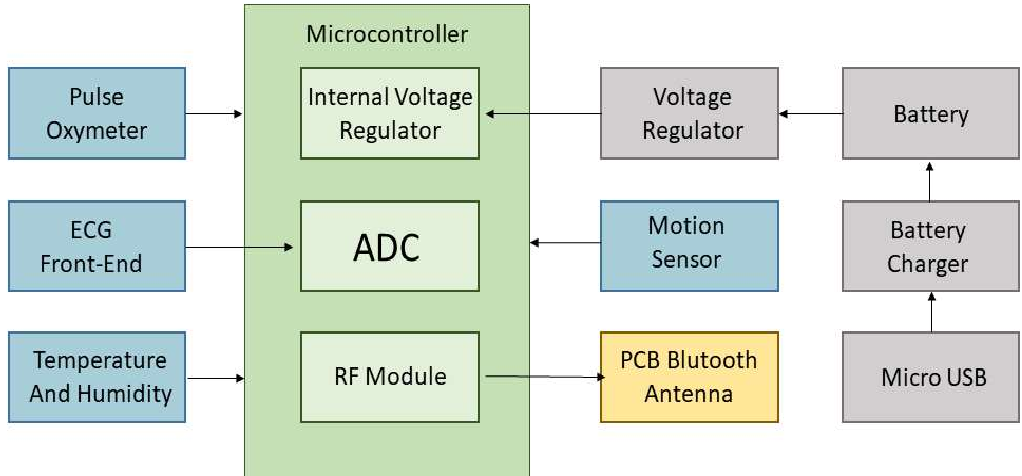 Fig 1. The VITAL-ECG block diagram showing the integration of ECG and PPG sensors into a wrist-based architecture.
Methodology: The De-bias Algorithm
The core of VITAL-ECG’s intelligence is a Multilayer Perceptron (MLP) trained to detect Arterial Blood Pressure (ABP).
The Fairness Pipeline
To prevent the model from favoring the male majority in the training set (approximately 60% male), the researchers used the AIF360 toolkit. They implemented a Reweighting technique:
- The Intuition: Instead of simply oversampling the minority (women), reweighting assigns different "importance" values to training examples based on their gender and the target output.
- The Result: The cost function is forced to treat errors in the female group with equal weight to those in the male group, neutralizing the numerical advantage of the majority.
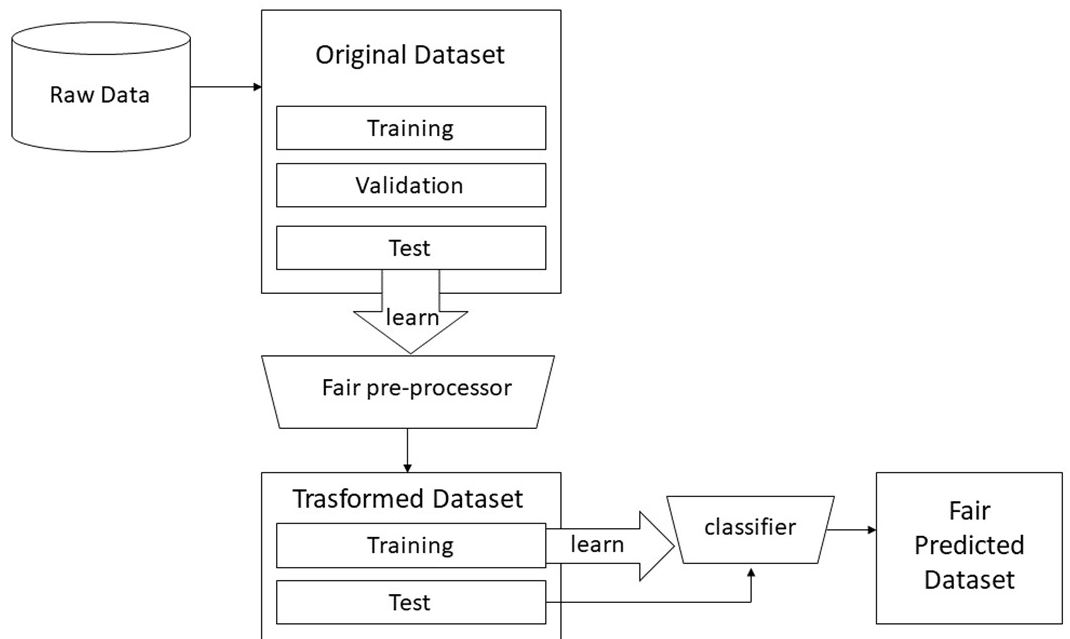 Fig 2. The 15-8-1 MLP architecture used for blood pressure regression.
Experimental Results
The model was validated using a split of 70% training, 15% validation, and 15% testing. Despite the inherent complexity of cuffless blood pressure estimation, the de-biased algorithm performed remarkably well:
- Systolic BP Detection: Regression coefficient
- Diastolic BP Detection: Regression coefficient
These results suggest that removing bias does not necessarily degrade performance; in many cases, it makes the model more robust by forcing it to learn features that generalize better across the entire population.
Critical Analysis & Conclusion
VITAL-ECG sets a high bar for "Gender Medicine" in the IoT era. By addressing both the physical ergonomics and the mathematical fairness, it provides a blueprint for future biocompatible wearables.
Limitations:
- The sample size (46 individuals) is relatively small for a deep learning task.
- The study primarily focuses on pre-processing de-biasing.
Future Outlook: Future research should explore in-processing (regularization) and post-processing fairness techniques to ensure accuracy remains stable as the user base scales to millions. VITAL-ECG proves that in the future of healthcare, "one size fits all" must be replaced by "fairness for all."