
Beyond the Silo: Reconstructing IT Governance for Collaborative Healthcare
Formation of voluntary inter-organizational IT governance for healthcare and social welfare IT: theoretical background and empirical evaluation
This study investigates the formation of voluntary inter-organizational IT governance for healthcare and social welfare in Finland. It proposes a multi-disciplinary framework combining Resource-Based View (RBV), Transaction Cost Economics (TCE), and Social Network Theory to move beyond single-organization IT governance models.
TL;DR
Healthcare systems globally face a demographic "perfect storm"—aging populations and shrinking workforces. This paper argues that the solution lies in voluntary inter-organizational IT governance. By moving beyond traditional single-firm models and adopting insights from economics and sociology (RBV, TCE, and Social Network Theory), the authors demonstrate how 100+ independent organizations in Finland successfully formed a shared IT management model to solve the interoperability crisis.
The Problem: The "Departmentalization" Trap
In most countries, specialized medical care, basic healthcare, and social welfare are organized into separate legal and administrative silos. This leads to what the authors call the "Inconsistency Norm":
- Data Fragmentation: Patient history is trapped in organization-specific databases.
- Manual Transfer: Data moves via paper or manual entry when a citizen moves between providers.
- Resource Inefficiency: Small municipalities lack the "joint pooled power" to negotiate with IT vendors or recruit top-tier specialists.
Traditional IT governance (like early versions of COBIT) focuses on internal decision rights. This paper identifies that when organizations are legally independent and "voluntary" participants, traditional "command-and-control" governance fails.
Methodology: The Theoretical Triad
The authors synthesize a new framework for inter-organizational governance by looking through three different lenses:
1. Resource-Based View (RBV): The "Why"
RBV views organizations as bundles of resources. In this case, IT is a complementary resource that enables healthcare services. The motivation for an alliance is "win-win" value creation—pooling rare human experts and technical assets that no single municipality could afford alone.
2. Transaction Cost Economics (TCE): The "How"
The choice to "Ally" (rather than "Make" or "Buy") is driven by the need to reduce uncertainty—specifically technological and behavioral uncertainty. By creating a relational hierarchy, organizations reduce the costs of repetitive exchanges (like sharing radiology data).
3. Social Network Theory: The "Glue"
Since the arrangement is voluntary (unbinding legally), relational trust and social memory act as the governance mechanisms. The network provides the "structural holes" filler, connecting distant nodes in the healthcare system.
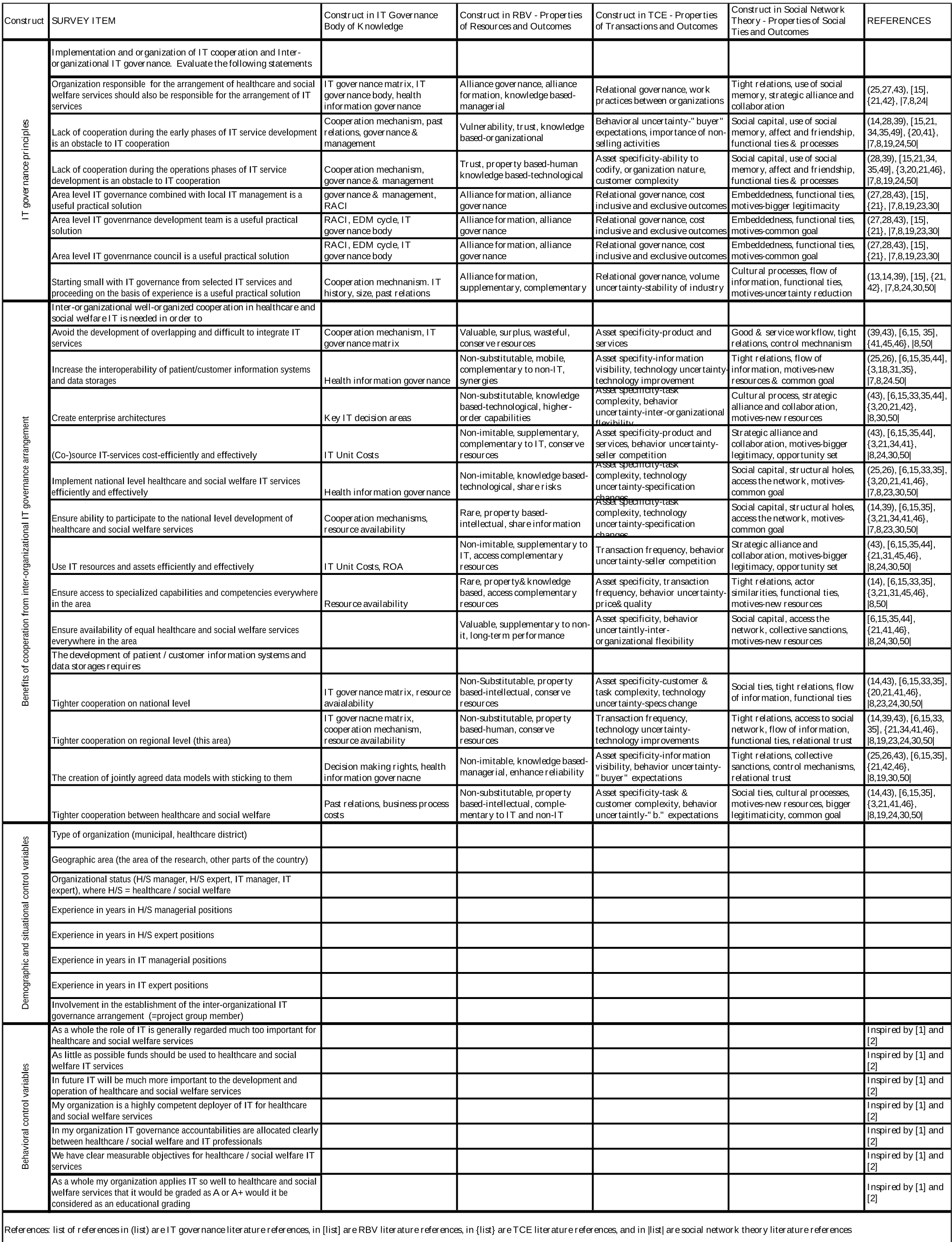 Figure 1: The mapping of IT Governance principles to RBV, TCE, and Social Network Theory.
Experiments & Results: The Experts' Verdict
The authors didn't just theorize; they applied this to 100 organizations in a Finnish "Special Catchment Area." An expert survey (n=68) validated that the proposed principles were not just theoretically sound but practically urgent.
Key Findings:
- Top Priority: Avoiding overlapping, difficult-to-integrate IT services (Mean 6.4/7.0).
- Consensus: All demographic groups (executives vs. experts, IT vs. Medical) agreed on the importance of the principles.
- The "Starting Small" Strategy: Experts favored beginning with selected IT services and scaling based on experience (Mean 5.7).
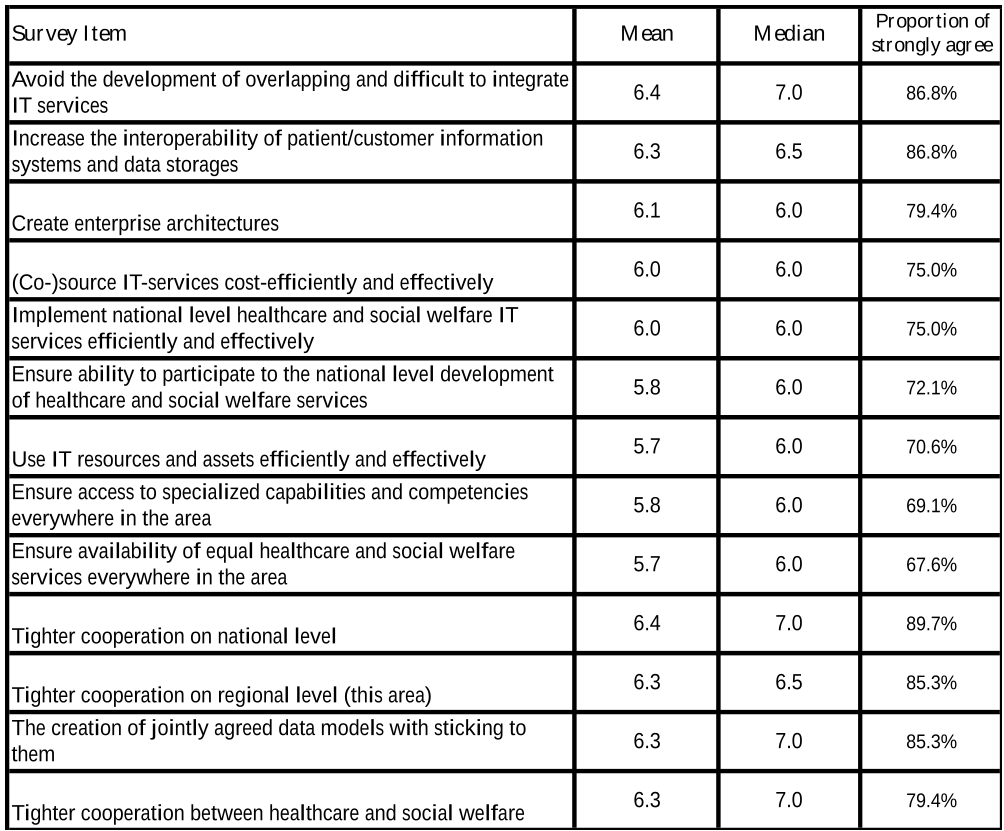 Figure 2: Perceived benefits of inter-organizational IT cooperation.
Critical Insight: It's About the Citizen, Not the Server
The most striking takeaway is that "IT performance" in this context is defined by Service Equality and Data Interoperability. The success of the "Model of Shared Management" was attributed to its focus on healthcare outcomes (better patient data flow) rather than just technical KPIs.
Limitations & Future Work
The study is localized to the Finnish context, where public sectors have high legal autonomy. Future research should investigate how this "Relational Governance" behaves in more competitive, private-sector-heavy healthcare markets (like the US).
Conclusion
This paper serves as a blueprint for any sector—not just healthcare—where fragmented, independent entities must cooperate on a shared digital backbone. By treating IT governance as a social and economic alliance rather than just a technical process, we can finally break down the silos of the "Information Age."