
When Fake News Turns Off the Lights: Vulnerability of the Social-Smart Grid
Vulnerability Assessment of Social-Smart Grids: An Algorithmic Approach
The paper investigates the "Social-Smart Grid" (SSM) vulnerability by introducing the Misinformation Attack on the Social Smart-Grid (MASS) problem. It proposes two heuristic algorithms, SENO and SEBA, which demonstrate that spreading misinformation in social networks can trigger catastrophic cascading failures in power infrastructures, even when self-protection mechanisms like load shedding are active.
TL;DR
Utility providers are increasingly using social networks to encourage energy efficiency, but this "Social-Smart Grid" (SSM) integration introduces a terrifying risk: Misinformation Attacks. This paper proves that a strategic attacker can spread rumors (e.g., fake price discounts) to manipulate user demand, triggering a cascading failure that can cripple even the most advanced power grids. The authors demonstrate that current protections like "load shedding" might actually be gamed by attackers to maximize blackout coverage.
Problem & Motivation: The Danger of Interdependency
The modern Smart Grid is no longer just about wires and transformers; it involves a "social layer" where users react to real-time data. While this helps during peak hours, it creates a feedback loop.
The researchers identified a critical gap: existing security models assume load changes are independent or that the grid is a static physical system. In reality, the interdependency between social diffusion (how rumors spread) and power physics (how electricity flows) creates a non-linear system where a small push in the right social "node" can bring down a city's power.
Methodology: The Architecture of an Attack
The authors formalize the Misinformation Attack on the Social Smart-Grid (MASS). They treat the attacker as an optimizer trying to maximize failed buses subject to a social budget .
1. Modeling the Cascading Failure
The paper uses a linearized DC power model. When a line is overloaded, the system can either "shed load" (cut power to specific users) or allow the line to fail. This creates a chain reaction:
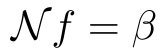
2. Attack Heuristics: SENO vs. SEBA
- SENO (Sequential Node Attack): A greedy approach. It simulates the social spread of a rumor starting from a single user and calculates the expected grid damage. It picks the "most dangerous" user and repeats.
- SEBA (Sequential Batch Attack): A more sophisticated strategy. It identifies critical "bottleneck" buses in the grid first, then works backward to find the minimal set of social users needed to blow those bottlenecks. It essentially uses the grid's own physics against itself.
(Author's Note: The SEBA method incorporates Integer Programming to solve for the minimal set of social users that triggers a power bus failure .)
Experiments & Results: Even Small Spikes are Fatal
The study tested these attacks on the Polish 3120-bus dataset, a massive representation of a real-world grid.
- The 10% Rule: Even if users only increase their load by 10% (a tiny shift compared to the usual "safety factor" of 2.0), cascading failures still occur.
- Load Shedding as a Double-Edged Sword: surprisingly, the researchers found that attacks were sometimes more destructive when load shedding was active. This is due to the Non-Monotonicity of the system—by triggering a "protective" load shed, an attacker can shift power flow in a way that overloads even more critical lines elsewhere.
 Table showing that even when users don't act simultaneously (No-sim) or some ignore the rumor (No-act), the blackout impact remains severe.
Critical Insight: The Non-Monotonicity Paradox
The most striking mathematical contribution is the proof that the MASS problem is non-monotone. In simple terms: Attacking more users doesn't always lead to a bigger blackout, but attacking the right users does. This makes defending the grid incredibly hard because traditional "more is safer" logic fails.
Limitations & Future Work
- Data Realism: The link between social users and power buses was randomly assigned in the study. Real-world mapping (e.g., using geolocation) might reveal even more specific vulnerabilities.
- Defense: The paper focuses on the attack. The next step for the industry is developing "social-aware" filters that can detect energy-related misinformation before it hits a critical mass.
Final Takeaway
As we make our infrastructure "smarter" by connecting it to our social lives, we move the front line of cyberwarfare into our Facebook feeds and WhatsApp groups. Security for the Smart Grid must now include "Information Integrity" as a core pillar of electrical engineering.