
Stable Selfish Routing: Bridging Game Theory and Time-Delay Control
11016_Wardrop Equilibrium in Discrete-Time Selfish Routing With Time-Varying Bounded Delays.
Summary
Problem
Method
Results
Takeaways
Abstract
This paper proposes a discrete-time, distributed routing algorithm for multicommodity networks that converges to a Wardrop equilibrium under heterogeneous and time-varying bounded delays. The method utilizes a modified "better response" migration policy and is rigorously proven using LaSalle's invariance principle for discrete-time nonlinear systems.
In the world of networked systems—whether we are talking about urban traffic or data packets on the internet—agents typically act "selfishly." Every driver wants the fastest route; every packet seeks the lowest latency. This leads to a **Wardrop Equilibrium**, a state where no agent can reduce their travel time by unilaterally changing paths. However, achieving this equilibrium in a digital, discrete-time world plagued by communication delays is notoriously difficult.
A recent paper by Alessandro Giuseppi and Antonio Pietrabissa addresses this head-on, providing a robust mathematical framework for **Multicommodity Selfish Routing** under unknown, time-varying, but bounded delays.
## The Problem: The Chaos of Stale Information
In a continuous-time world with perfect information, reaching a Wardrop equilibrium is a well-understood optimization problem. But real systems are **discrete** (decisions happen at intervals) and **delayed** (you only know how congested a road was a few minutes ago, not how it is *now*).
Prior research has shown that simply choosing the "better" path in discrete time can cause the system to overshoot the equilibrium, leading to permanent oscillations. When you add heterogeneous delays across different commodities, the stability of the entire network is at risk.
## Methodology: Controlled Migration and Augmented States
The authors approach the routing problem as a control engineering challenge. Their solution rests on three pillars:
### 1. The $(\epsilon, \delta)$-Wardrop Equilibrium
Instead of aiming for a perfect, single-point equilibrium (which is impossible under delay), they define a target set. In this set, latencies for all "heavily used" paths (those with flow $>\delta$) differ by no more than a tolerance $\epsilon$.
### 2. Delay-Aware Migration Policy
The algorithm dictates how "flow" migrates from high-latency path $p$ to low-latency path $q$. The migration rate is carefully scaled by a control gain $\sigma$ that is inversely proportional to the delay upper bound $\bar{h}$ and the network's Lipschitz constants. This "dampening" prevents the oscillations typical of aggressive updates.
### 3. Augmented State Representation
To prove stability, the authors used an augmented state vector $\pmb{z}[k]$, which includes not just current flows but a history of flows up to the maximum delay $\bar{h}$. This allows them to apply **LaSalle’s Invariance Principle**, proving that the system will inevitably "sink" into the desired equilibrium set.

*Fig 1: The conceptual model of multicommodity flow where agents make decentralized decisions based on delayed feedback.*
## Dynamic Tolerance: The Path to Precision
The most innovative part of the work is the "Control Law with Communications." While the basic algorithm uses a fixed tolerance $\epsilon$, the authors propose a version where $\epsilon[k]$ shrinks over time. By sharing the maximum measured latency mismatch between commodities, the network can start with high gains (for speed) and gradually reduce them (for precision), eventually reaching a $(0, \delta)$ equilibrium.
## Experimental Validation
The researchers tested their algorithm on a 17-edge network using MATLAB. The results confirmed their theoretical proofs:
* **Convergence**: Even with time-varying delays up to 20 samples, the latency mismatch successfully approached the tolerance $\epsilon$.
* **Efficiency**: The dynamic tolerance version proved significantly faster than the static version, as it could adapt its "aggression" level based on the current proximity to equilibrium.
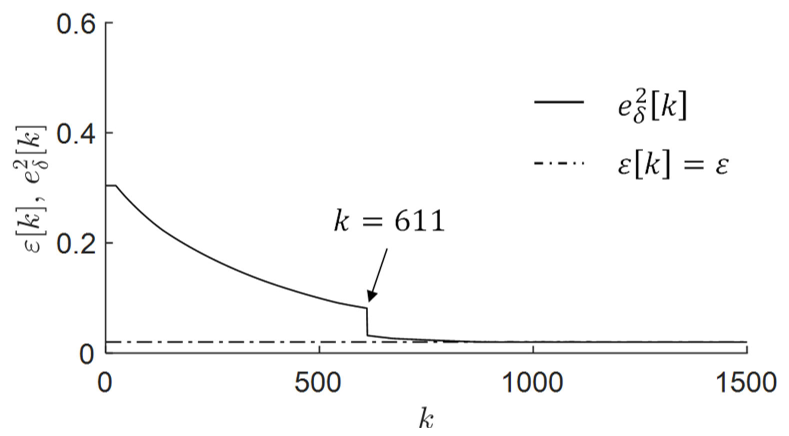
*Fig 2: Latency and Population dynamics. Note how the latency mismatch (lower plot) stabilizes despite the noisy, delayed environment.*
## Critical Analysis & Conclusion
This work is a significant step forward because it moves selfish routing from "ideal" theory to "practical" application in distributed systems.
**Limitations**: The current model assumes a constant traffic demand $d^i$. In a real-world scenario, demand is often as volatile as the delays themselves.
**Future Outlook**: The authors suggest extending this to **multirate systems**, where different agents update their routes at different frequencies—a common occurrence in heterogeneous IoT networks.
By elegantly combining Lyapunov stability theory with game-theoretic concepts, Giuseppi and Pietrabissa have provided a blueprint for more resilient, self-organizing networks.