
Simulating the Waterfall: Unpacking 24 Years of SDLC Modeling Research
Waterfall Model Simulation: A Systematic Mapping Study
This paper presents a Systematic Mapping Study (SMS) of research published between 2000 and 2024 that explicitly utilizes computer-run simulations to model the Waterfall SDLC. It identifies a small but persistent corpus of 5 studies where Discrete-Event Simulation (DES) is the dominant methodology and highlights a gap in reproducing Royce’s original high-fidelity model.
TL;DR
In an era dominated by Agile, the "obsolete" Waterfall model remains a critical benchmark for safety-critical systems and software engineering education. This systematic mapping study by Antonios Saravanos explores how researchers have used computational simulations (2000–2024) to analyze Waterfall, finding that while Discrete-Event Simulation (80%) is the gold standard, modern research often drifts away from the model's original historical "purity."
The "Waterfall" Paradox: Why Simulate a Legacy Model?
In the software engineering world, the Waterfall model is often treated as a historical relic. However, for industries like defense, aerospace, and medical devices, the sequential rigor of Waterfall isn't just a choice—it's a regulatory necessity for traceability.
The motivation behind this study is the realization that while we talk about Waterfall constantly, we rarely analyze it with modern computational tools. Simulation allows us to "play out" project scenarios—testing task durations, resource bottlenecks, and failure propagation—without the multi-million dollar risk of a real-world fail.
Methodology: The State of the Art in Modeling
The paper categorizes the simulation landscape into two primary technical camps:
- Discrete-Event Simulation (DES): Models the process as a sequence of distinct events (e.g., finishing a "Design" task). This is the preferred method for Waterfall because it aligns perfectly with the model's stage-gate structure.
- System Dynamics (SD): Focuses on the "flow" and feedback loops at a macro level, used primarily for comparative studies with Kanban or Scrum.
Key Insights on Tools and Fidelity
The study highlights a significant shift in the "Tech Stack" of academic simulation:
- Old Guard: Simphony.NET (historically dominant in construction and process management).
- New Wave: SimPy (a Python-based library), which represents a move toward open-source, reproducible, and scriptable research.
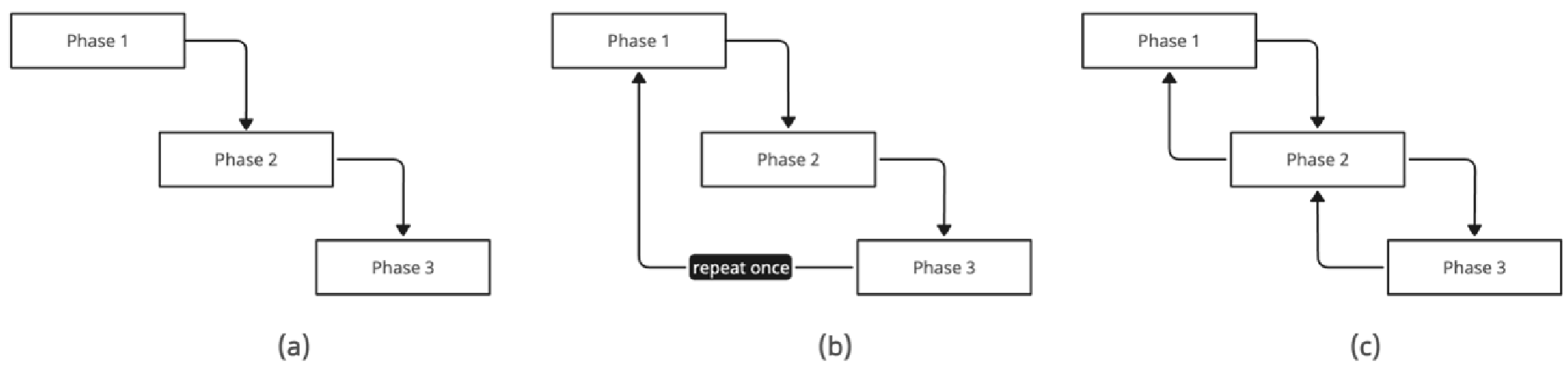 Figure 1: Royce’s original formulations—interestingly, the study found that modern simulations rarely follow the full 7-phase version (a).
Results: A Reality Check on "Pure" Waterfall
The most striking finding of Saravanos’s mapping is the Fidelity Gap.
- No "Pure" Waterfall: Every single study (100%) deviated from Winston Royce’s original 1970 specification.
- Simplified Phases: Researchers consistently merge the original seven phases (Requirements, Analysis, Design, etc.) into 4 or 5 blocks to reduce complexity.
- Feedback Loops: Despite Waterfall being labeled "linear," 80% of simulated models included "backflow" (rework loops), acknowledging that software errors always force us to look backward.
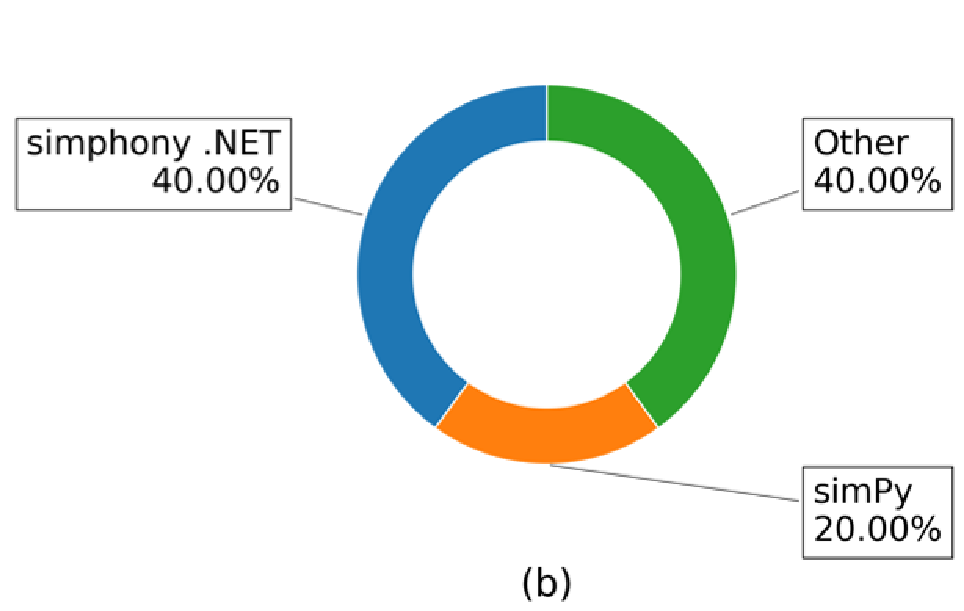 Figure 2: Distribution of simulation types and tools. Note the high "Not Specified" percentage (40%), which the author identifies as a major hurdle for scientific reproducibility.
Critical Analysis & Conclusion
This paper serves as a "call to arms" for software engineering researchers. It suggests that if we are to use the Waterfall model as a baseline for comparing new Agile or AI-driven methodologies, we need to be much more rigorous about how we model it.
Takeaways for the Industry:
- Transparency Matters: 40% of studies didn't mention their tool, making their results impossible to verify.
- Pedagogical Value: Simulation is becoming a powerful teaching tool, allowing students to see the "cascade effect" of a single error in the Requirements phase via a SimPy script.
- The Hybrid Future: The most valuable future research lies in simulating "Hybrid" models—using Waterfall for high-level planning while executing Sprints within the phases.
Ultimately, Saravanos proves that the Waterfall model is far from dead; it is evolving from a rigid management doctrine into a sophisticated, simulated framework for understanding project risk.