
Bridging the Chaos: How Wavelet-Hybrid ML Conquers Agricultural Price Volatility
Performance comparison of wavelets-based machine learning technique for forecasting agricultural commodity prices
The paper introduces a hybrid forecasting framework, WAVELET-ANN, designed for agricultural commodity price prediction. It combines the Maximal Overlap Discrete Wavelet Transform (MODWT) with Artificial Neural Networks (ANN), achieving significantly higher accuracy than traditional ARIMA, GARCH, and standalone LSTM models across major Indian tomato markets.
Executive Summary: Beyond Simple Stochastic Models
Forecasting agricultural commodity prices in India is notoriously difficult due to extreme volatility, seasonality, and non-linear patterns. While ARIMA has been the industry workhorse since the 1930s, it fails when faced with the "chaotic nature" of real-world markets. This paper introduces a sophisticated WAVELET-ANN hybrid approach. By "cleaning" the data through multi-resolution analysis before feeding it into a Neural Network, the researchers achieved a quantum leap in forecasting accuracy for tomato prices across major Indian hubs.
The Core Friction: Why Standard AI Fails
Standard Artificial Neural Networks (ANNs) are data-driven and non-parametric, theoretically capable of handling non-linearity. However, agricultural data is often heteroscedastic (varying variance) and non-stationary. When an ANN tries to learn from raw, noisy price data, the "signal" gets buried under the "noise."
The authors argue that the problem isn't necessarily the neural network's architecture, but the representation of the input. Without preprocessing, the model cannot distinguish between short-term shocks and long-term trends.
Methodology: The Power of Multi-Resolution Analysis
The proposed solution rests on a three-stage workflow:
- Decomposition (MODWT): Using the Maximal Overlap Discrete Wavelet Transform, the original price series is broken down into "Detail" coefficients (high-frequency noise/shocks) and "Smooth" coefficients (low-frequency trends).
- Specialized Learning: Instead of using standard Sigmoid functions, the hidden layers of the ANN use the Mother Wavelet (e.g., Daubechies D4) as the activation function, allowing the neurons to natively resonate with the decomposed signal's frequency.
- Reconstruction: The individual forecasts for each sub-series are combined via the Inverse Wavelet Transform to produce the final price estimate.
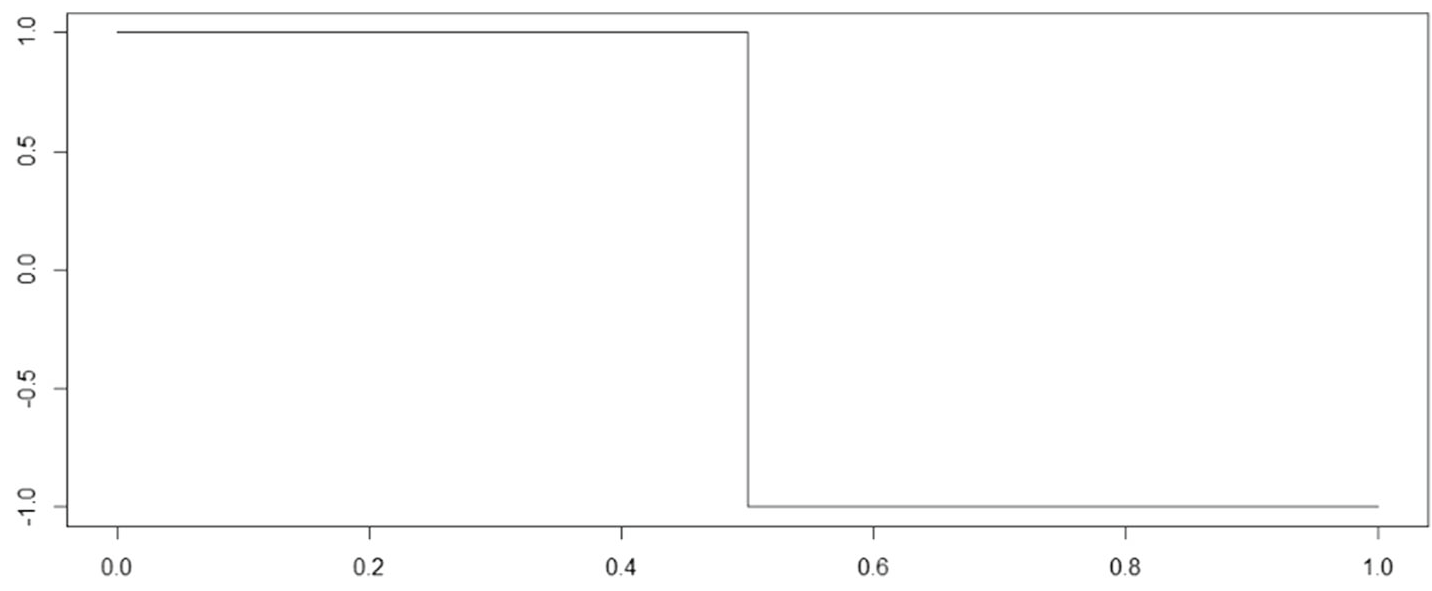 Figure 1: The schematic representation showing the flow from raw data decomposition to hybrid model prediction.
Experiments: D4 vs. The World
The researchers tested four wavelet filters—Haar, D4, D6, and LA8—across two decomposition levels (3 and 6).
Key Findings:
- Level Matters: Level 6 decomposition consistently outperformed Level 3, suggesting that digging deeper into the frequency domain helps capture the "true" global trend of the price.
- Filter Quality: The D4 (Daubechies) filter emerged as the most robust choice. It provides a balance between smoothness and the ability to capture abrupt price jumps compared to the simpler Haar filter.
- SOTA Comparison: In a head-to-head battle, the W-ANN model crushed ARIMA, GARCH, and even advanced Deep Learning models like LSTM.
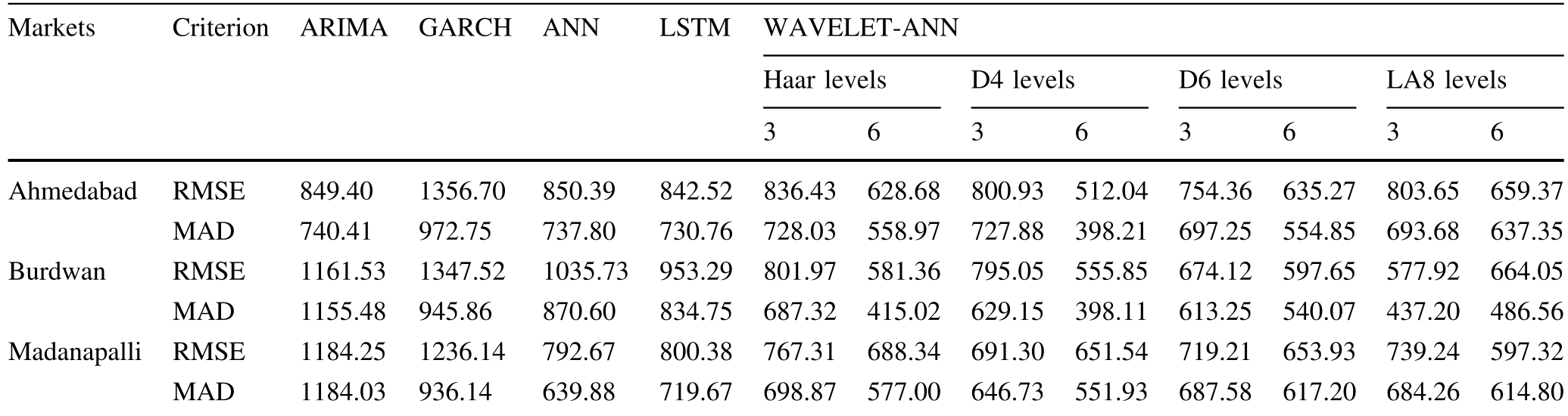 Table 1: Validation set results showing the dramatic reduction in RMSE and MAD using Level 6 Wavelet-ANN models.
Critical Insight & Conclusion
The true value of this work lies in its validation of "Feature Engineering through Physics." While many modern researchers simply throw larger Transformers or LSTMs at a problem, this paper proves that applying a mathematical "lens" (Wavelets) to the data before it enters the network is far more effective.
Takeaway for Practitioners: If your time-series data is "chaotic" (high CV, non-normal), do not rely on standard activation functions. Integrating a wavelet-based preprocessing layer can reduce error rates by over 40% compared to traditional linear methods.
Future Outlook
While the W-ANN framework is powerful, it is currently computationally heavier than a simple ARIMA model. Future research could explore Adaptive Wavelet Networks where the decomposition level is learned dynamically, further automating this high-precision forecasting tool for real-time agricultural policy-making.