
Beyond ARIMA: Mastering Agricultural Price Volatility with Hybrid Wavelet-ANNs
Performance comparison of wavelets-based machine learning technique for forecasting agricultural commodity prices
This paper introduces a hybrid Wavelet-Artificial Neural Network (W-ANN) framework specifically designed for forecasting highly volatile agricultural commodity prices in India. By integrating Maximal Overlap Discrete Wavelet Transform (MODWT) with feed-forward ANNs using mother wavelets as activation functions, the method achieves SOTA performance across major tomato markets, significantly outperforming traditional ARIMA and standard LSTM models.
TL;DR
Predicting agricultural prices in India is notoriously difficult due to extreme volatility and non-linear patterns. This paper presents a Hybrid Wavelet-ANN (W-ANN) model that decomposes chaotic price data into manageable "resolutions" using Wavelet Transforms before processing them with Neural Networks. The result? A significant leap in accuracy over traditional ARIMA, GARCH, and even modern LSTM models, particularly when using Daubechies (D4) filters.
The Problem: Why Traditional Models Fail at the Farm Gate
Agriculture price series in India are not just "random walks"; they are non-stationary, non-normal, and highly heteroscedastic.
- ARIMA's Blind Spot: ARIMA assumes linear dynamics. When a sudden supply shock hits the tomato market, ARIMA's linear equations cannot adapt to the structural break.
- The "Noise" Trap: Standard Artificial Neural Networks (ANNs) are powerful but "greedy." In the presence of high-frequency noise (daily market fluctuations), they overfit to the chaos rather than the signal.
Methodology: The "Divide and Conquer" of Signal Processing
The core innovation lies in the Maximal Overlap Discrete Wavelet Transform (MODWT). Instead of looking at the price series as a single line, the authors treat it like a prism treats light—splitting it into different frequencies.
The Architecture
The workflow follows a rigorous pipeline:
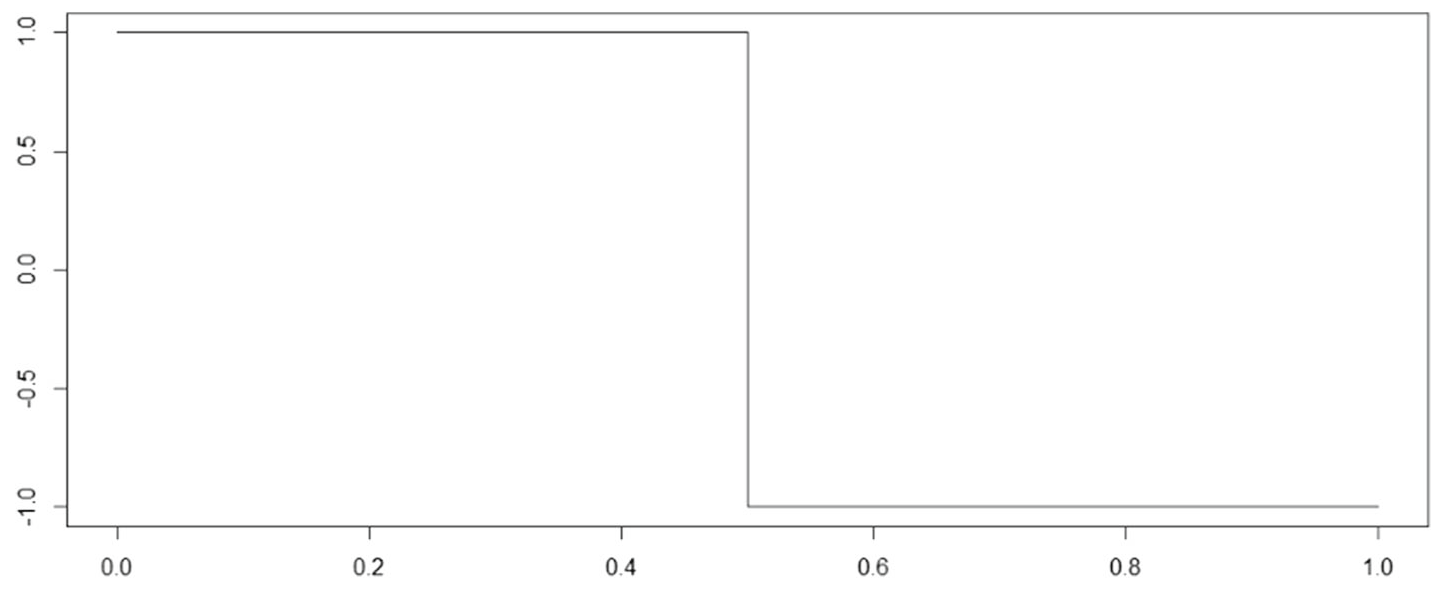
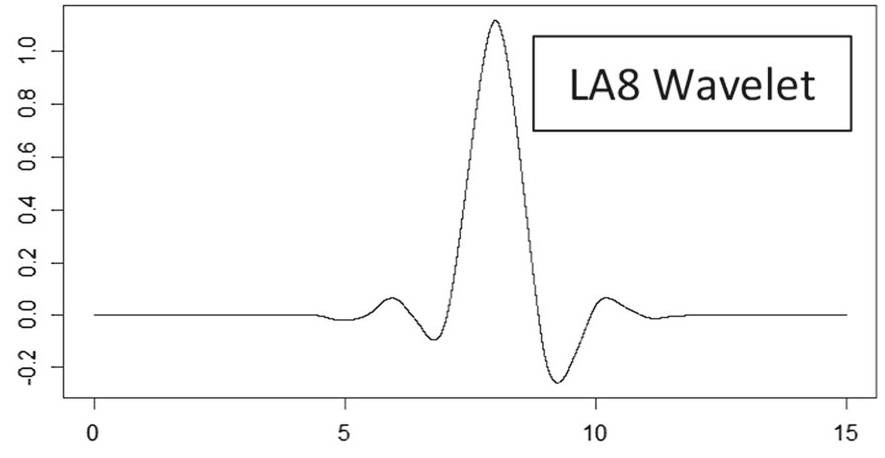
- Decomposition: Using filters like Haar, D4, D6, and LA8, the signal is split into multiple levels ( and ).
- Processing: Each sub-series is modeled by an ANN. Crucially, the authors replace standard Sigmoid functions with Mother Wavelets as activation functions, creating a "Wavelet Network."
- Reconstruction: An Inverse Wavelet Transform aggregates the results back into a single, denoised price prediction.
Experimental Results: A Crushing Victory Over Baselines
The authors tested their approach on monthly wholesale tomato prices from Ahmedabad, Burdwan, and Madanapalli.
Key Performance Indicators
The study compared the W-ANN against ARIMA, GARCH, ANN, and LSTM. The results were conclusive:
- Higher Levels = Higher Accuracy: Models at the 6th level of decomposition consistently outperformed those at the 3rd level, as higher levels capture the "Global Trend" more effectively.
- The D4 Edge: The Daubechies-4 (D4) filter emerged as the most robust tool for handling tomato price fluctuations.
Quantitative Impact (Validation Set)
In the Burdwan market validation, the W-ANN (D4, Level 6) achieved an RMSE of 555.85, compared to 1161.53 for ARIMA and 953.29 for LSTM. This represents an error reduction of over 50% compared to traditional statistical methods.
Critical Analysis & Conclusion
Why it Works
The success of W-ANN isn't just about "more layers." It's about feature engineering through physics. By isolating the "Detail" (high-frequency noise) from the "Approximation" (long-term trend), the ANN is allowed to learn the underlying market logic without being distracted by temporary anomalies.
Limitations & Future Work
While the W-ANN shows remarkable performance, the choice of the "correct" wavelet filter remains somewhat empirical. The authors suggest that moving forward, exploring an even broader class of filters (like Symlets or Mexican Hat) could generalize the model for even more volatile commodities like onions or pulses.
Final Takeaway: For practitioners in data analytics, this paper proves that pre-processing is often more important than the model itself. Even a simple ANN, when fed clean, decomposed signals, can outperform complex Deep Learning architectures like LSTMs.