
Beyond the Individual: Harnessing We-Intention and Moral Trust to Drive Social Collaboration
We-Intention, Moral Trust, and Self-Motivation on Accelerating Knowledge Sharing in Social Collaboration
This study proposes a theory-driven empirical research model to analyze the drivers of knowledge sharing in social collaboration. By integrating "We-Intention," Moral Trust, and Self-Motivation as key motivational factors, the authors provide a framework for understanding how group-centric commitments and individual interests accelerate collective participation and information exchange in online social networks.
TL;DR
Why do people share valuable expertise with strangers online for no financial gain? This paper moves beyond individualistic psychology to explore Social Collaboration as a collective act. By validating a new research model, the authors prove that a sense of "We-Intention," rooted in moral trust and intrinsic self-motivation, is the primary engine that accelerates knowledge sharing in our networked world.
Contextualizing the Shift: From "I" to "We"
Most existing Information Systems (IS) research focuses on classic individual-based models—asking why one person uses one tool. However, online social networks represent a "Collective Social Action." This paper argues that we must look at the Group-Based Model, specifically the transition from "I-Intention" (personal gain) to We-Intention (a commitment to perform a joint act as a member of a collective).
The authors identify a critical gap: while we have the technology to connect, we lack a deep understanding of the sociopsychological triggers—Moral Trust and Self-Motivation—that turn a passive user into a proactive contributor.
Methodology: The Motivational Triad
The research model tests three core drivers that lead to Participation, which in turn facilitates Knowledge Sharing:
- We-Intention: Captures the individual's commitment to the group. It is the belief that "We together will perform X."
- Moral Trust: Goes beyond "reliance" (expecting someone to do something because it's in their interest). It focuses on the moral character—honesty, loyalty, and fairness—of collaborators.
- Self-Motivation: The internal drive fueled by self-efficacy (believing your knowledge can solve problems) and the enjoyment of the task itself.
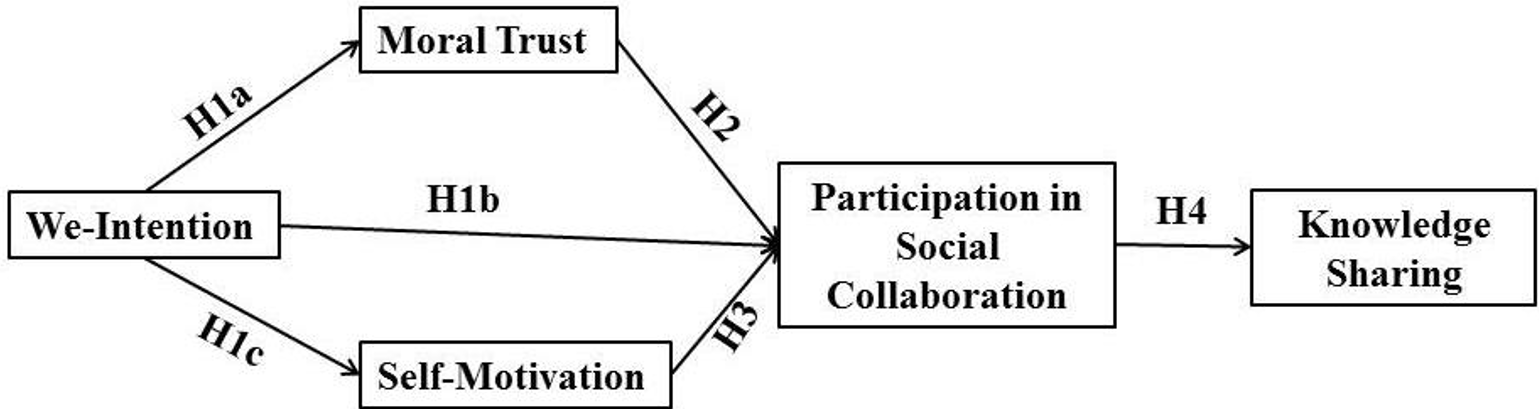 Figure 1: The proposed path where We-Intention acts as a foundation for Trust and Motivation, ultimately driving Participation and Knowledge Sharing.
Key Insights from the Data
The study involved 238 active participants and utilized path analysis to verify the strength of these relationships.
- The Power of Intrinsic Drive: Self-Motivation had the highest impact on participation (Path Coefficient: 0.75). If users find the act of helping others enjoyable or if it boosts their self-efficacy, they are far more likely to engage.
- The Moral Fiber of Networks: Moral Trust (0.67) was nearly as influential. In decentralized environments where formal contracts don't exist, the perceived "betrayal risk" is managed through shared moral expectations.
- We-Intention as the Catalyst: The data suggests that "We-Intention" is the prerequisite for both trust and motivation. When individuals identify as part of a "group," they naturally develop higher trust and feel more motivated to contribute to the collective pool.
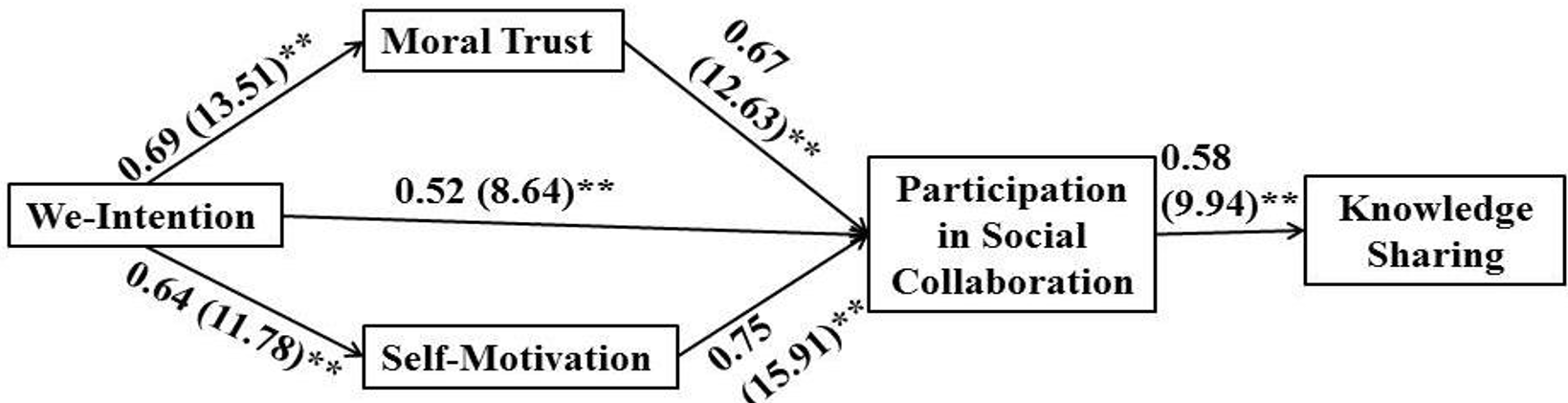 Figure 2: Empirical results showing significant positive correlations across all hypothesized paths (p < 0.01).
Critical Analysis & Future Outlook
Takeaway for Designers: Platforms shouldn't just build faster "save" buttons; they must build "share" cultures. This involves creating "Embedded Social Gestures"—features that make participation simple, rewarding, and morally reinforcing.
Limitations: The study was conducted within a specific academic demographic in Nepal. Future research should examine if these "Moral Trust" dynamics hold in highly commercialized or anonymous "dark" social networks where the sense of the "We" might be fragmented.
Conclusion: In the new world of social collaboration, the line between consuming and creating is blurring. By fostering We-Intention, organizations and platform architects can transform isolated knowledge silos into dynamic, participating networks where sharing becomes the default behavior.