
Wearable Sensors & Real-Time Biofeedback: Revolutionizing Swimming Rehabilitation
Wearable Sensor Devices for Prevention and Rehabilitation in Healthcare: Swimming Exercise With Real-Time Therapist Feedback
The paper introduces a real-time feedback system utilizing wearable 6-DoF inertial sensors (IMU) to monitor and guide swimming-based physical rehabilitation. By analyzing rotation angles and stroke dynamics, the system provides therapists with immediate data on swimming symmetry, stroke period, and fatigue, achieving high-precision monitoring without specialized technical personnel.
TL;DR
This research presents a wearable sensor system designed to transform swimming into a data-rich rehabilitation tool. By using a single 6-DoF inertial measurement unit (IMU) on the lower back, the system provides therapists with real-time "digital eyes" to monitor stroke symmetry, timing, and intensity, allowing for immediate corrective feedback that was previously impossible.
Context: Why Swimming and Why Now?
Health is the cornerstone of Quality of Life (QoL). Physical activity, particularly swimming (hydrotherapy), is widely recognized for its benefits in rehabilitation due to water's buoyancy, which reduces joint stress. However, monitoring a swimming patient is notoriously difficult—water obscures vision, and technical setups are often too complex for clinic use.
The authors bridge this gap by integrating Pervasive Healthcare concepts with Wearable IoT, moving monitoring from "after the lap" to "during the stroke."
The Core Problem: The Observational Gap
Current rehabilitation relies on:
- Therapist Observation: Highly subjective and limited to surface movements.
- Camera Systems: Restricted by space and requiring lengthy post-processing.
The fundamental challenge is that rehabilitation requires real-time intervention to prevent improper movements from becoming ingrained or causing further injury.
Methodology: Precision Through Rotation
The researchers shift the focus from simple acceleration peaks to longitudinal rotation angles (Roll). By mounting a waterproof IMU on the lower back (near the center of mass), they capture the body's cyclic "roll" which is characteristic of Freestyle (Front Crawl) and Backstroke.
1. System Architectures
The paper defines three levels of deployment:
- Multiuser Therapist System: A single therapist monitors multiple patients via a tablet.
- Autonomous User System: The patient receives direct biofeedback (e.g., via waterproof headphones).
- Cloud System: Aggregates big data for long-term recovery analysis and population-level health insights.
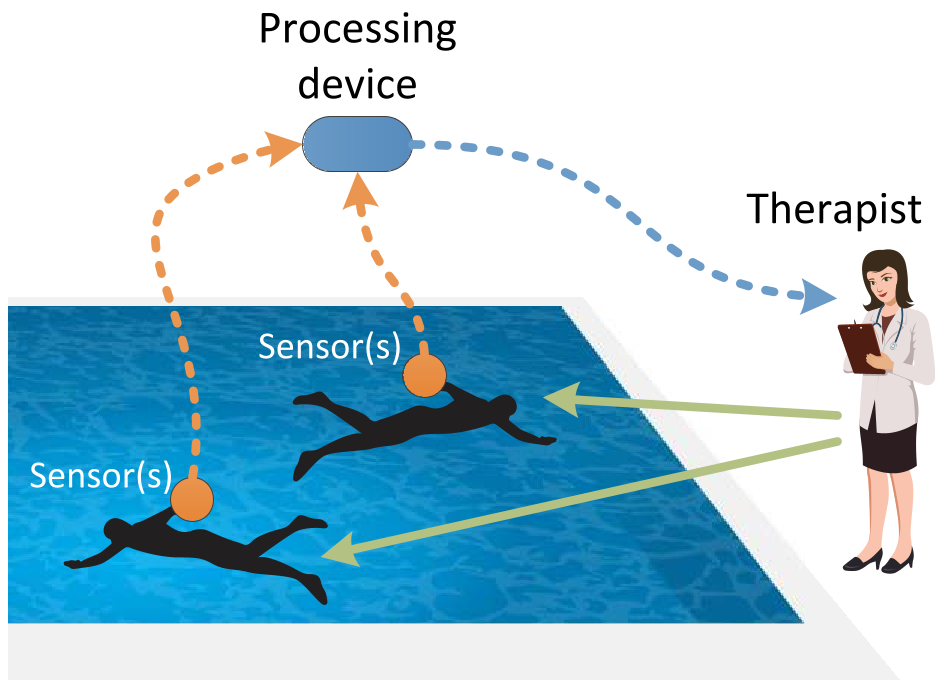 Fig 1. Multiuser therapist system setup for simultaneous monitoring.
2. Signal Processing Logic
The system identifies four styles (Butterfly, Backstroke, Breaststroke, Front Crawl) by analyzing the accelerometer component and the (longitudinal) gyroscope signal.
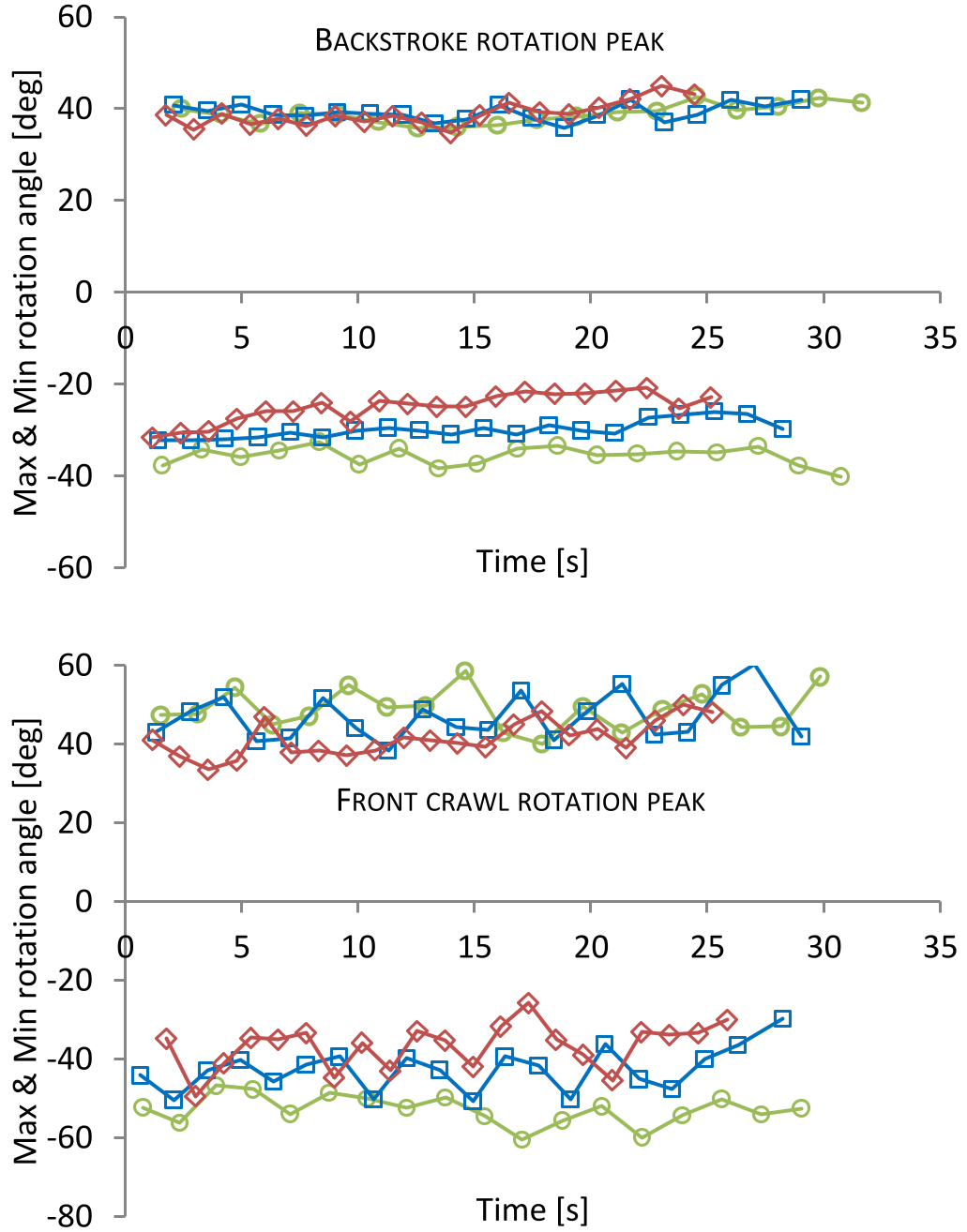 Fig 2. The extraction of "roll" angle peaks to determine stroke timing and symmetry.
Experiments & Results: The Power of Symmetry
The study involved elite swimmers to establish baselines across different intensities (Low, Medium, High).
Key Findings:
- Intensity vs. Amplitude: Low-intensity swimming surprisingly results in larger rotation angles (more body roll), whereas high-intensity swimming is flatter and faster.
- The Symmetry Metric: The system calculates a Symmetry Ratio for both temporal (time) and spatial (angle) parameters.
- Fatigue Detection: In high-intensity laps, timing asymmetry increased significantly, providing a clear biological marker for tiredness that therapists can use to stop an exercise before injury occurs.
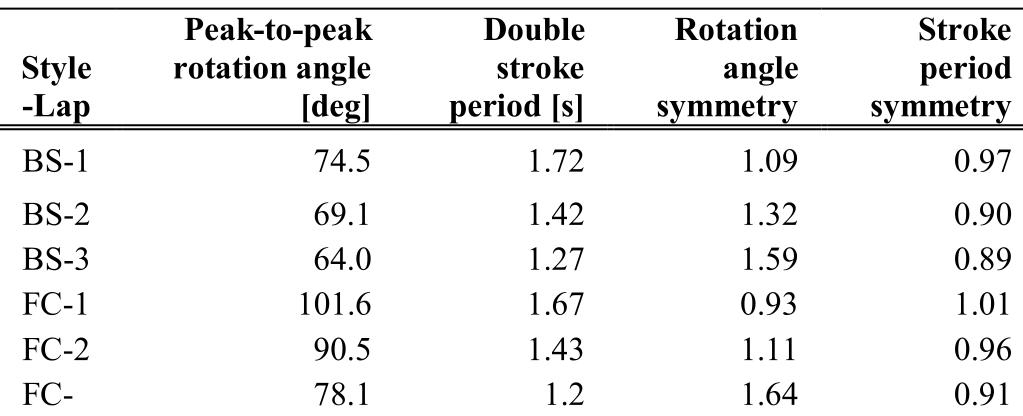 Table 1. Evaluation of rotation angle and stroke period symmetry.
Critical Insight & Future Outlook
The brilliance of this work lies in its simplicity. By proving that a single sensor on the lower back provides sufficient data for complete stroke analysis, the authors make the technology accessible to therapists—not just engineers.
Limitations: The current prototype is a belt-mounted device. Future work needs to focus on a more hydrodynamic, "invisible" form factor and the integration of automated haptic feedback (vibrations) to correct the swimmer's form in the middle of a lap.
Conclusion
This paper is a blueprint for the future of Digital Physical Therapy. By turning raw sensor data into actionable "Symmetry" and "Tiredness" metrics, it empowers therapists to provide personalized, data-driven care that improves the efficiency and safety of rehabilitation.