
Socializing the Cloud: Weaving Network Principles into Web Service Discovery
Towards a framework for weaving social networks principles into web services discovery
The paper introduces a novel framework that applies social networking principles to the discovery of Web services. It proposes the "Social Web Service" metaphor, organizing services into dynamic networks based on three relationship types: substitution, competition, and collaboration, achieving more context-aware and efficient service retrieval.
TL;DR
This research moves beyond the "Yellow Pages" era of Web services. By treating services as social entities capable of collaboration, competition, and substitution, the authors propose a framework that builds dynamic "friendship" networks between software components. This approach shifts discovery from static keyword matching to dynamic, context-aware navigation, significantly improving how services failover and combine.
Background: The Discovery Crisis
In the early days of SOA (Service Oriented Architecture), finding a service was a matter of looking up a registry. Today, with thousands of functionally similar services, the "Registry-based" approach is broken. Traditional discovery is:
- Isolated: Services don't know their neighbors.
- Static: It ignores a service's history or current performance.
- Imprecise: Syntactic searches return too many irrelevant results.
The authors suggest a radical shift: What if Web services "socialized" like humans?
Methodology: The Three Pillars of Service Socializing
The framework identifies three core interactions that define the lifecycle of a Web service in a digital society:
- Substitution (The Safety Net): Functional similarity allows one service to replace another during failure.
- Competition (The Marketplace): Multiple services offer the same function; the "best" (based on QoS) is selected.
- Collaboration (The Partnership): Different services work together to fulfill a complex user request (e.g., an Air Booking service recommending a Taxi service).
Architecture Overview
The framework operates across three levels: the Service Level, the Tool Level (for matching and management), and the Social Level (where the graphs live).
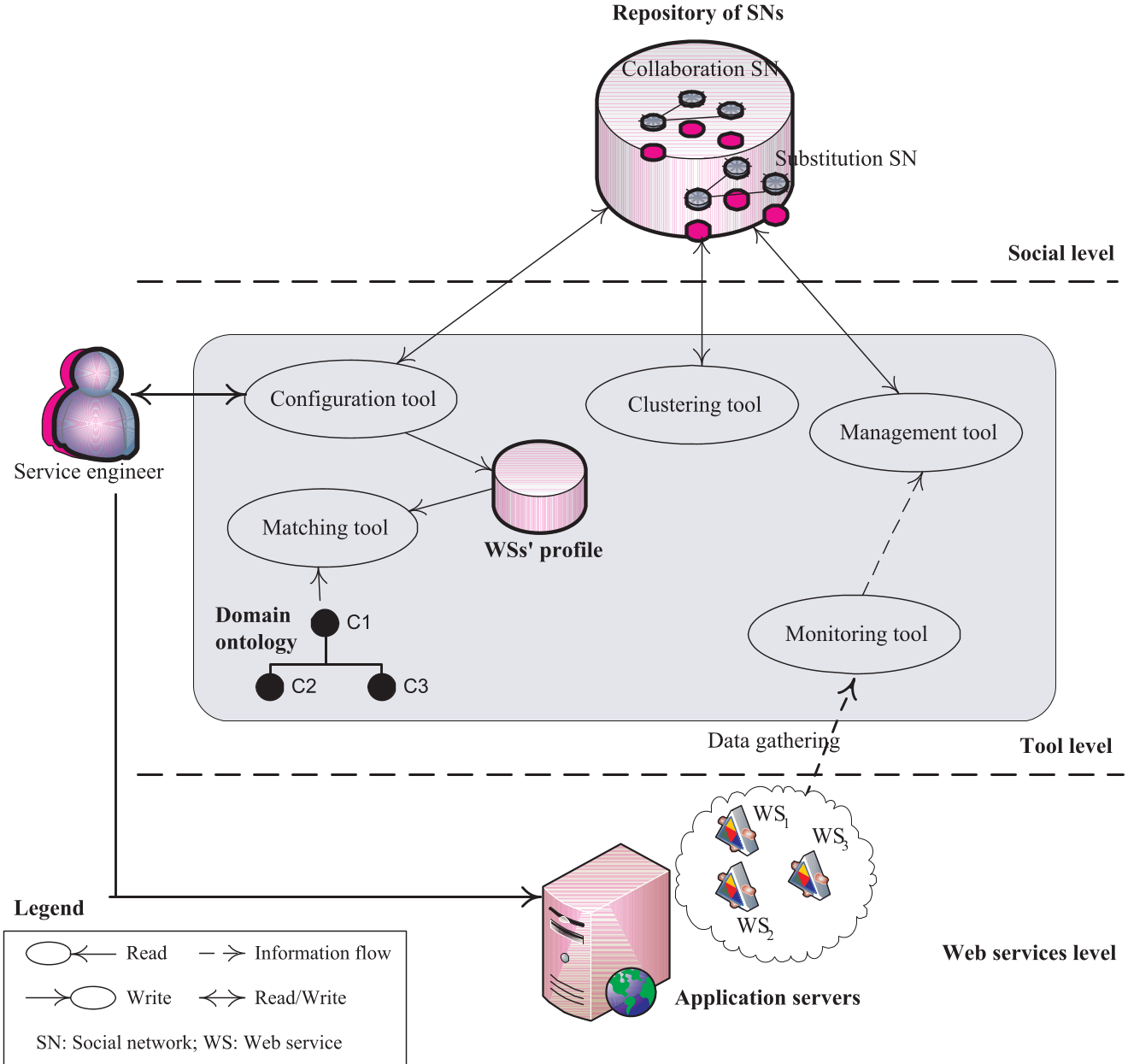
The Clustering Logic
Services aren't just connected; they are ranked. Based on a Degree of Similarity (DS) and Degree of Complementarity (DC), the system clusters services into "Strong," "Average," and "Weak" tiers.
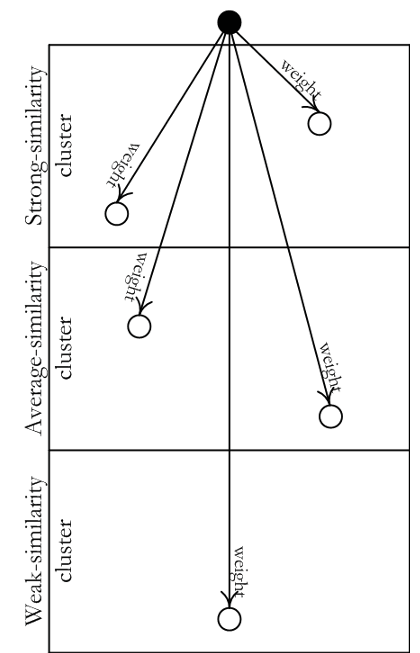
The weight of the edges (connections) between services is not static. It evolves using a reward-based mechanism. If a substitute service successfully handles a request, its "relationship" with the original service strengthens. If it fails or is overloaded, its status is "demoted."
Experiments: Proving the "Social" Advantage
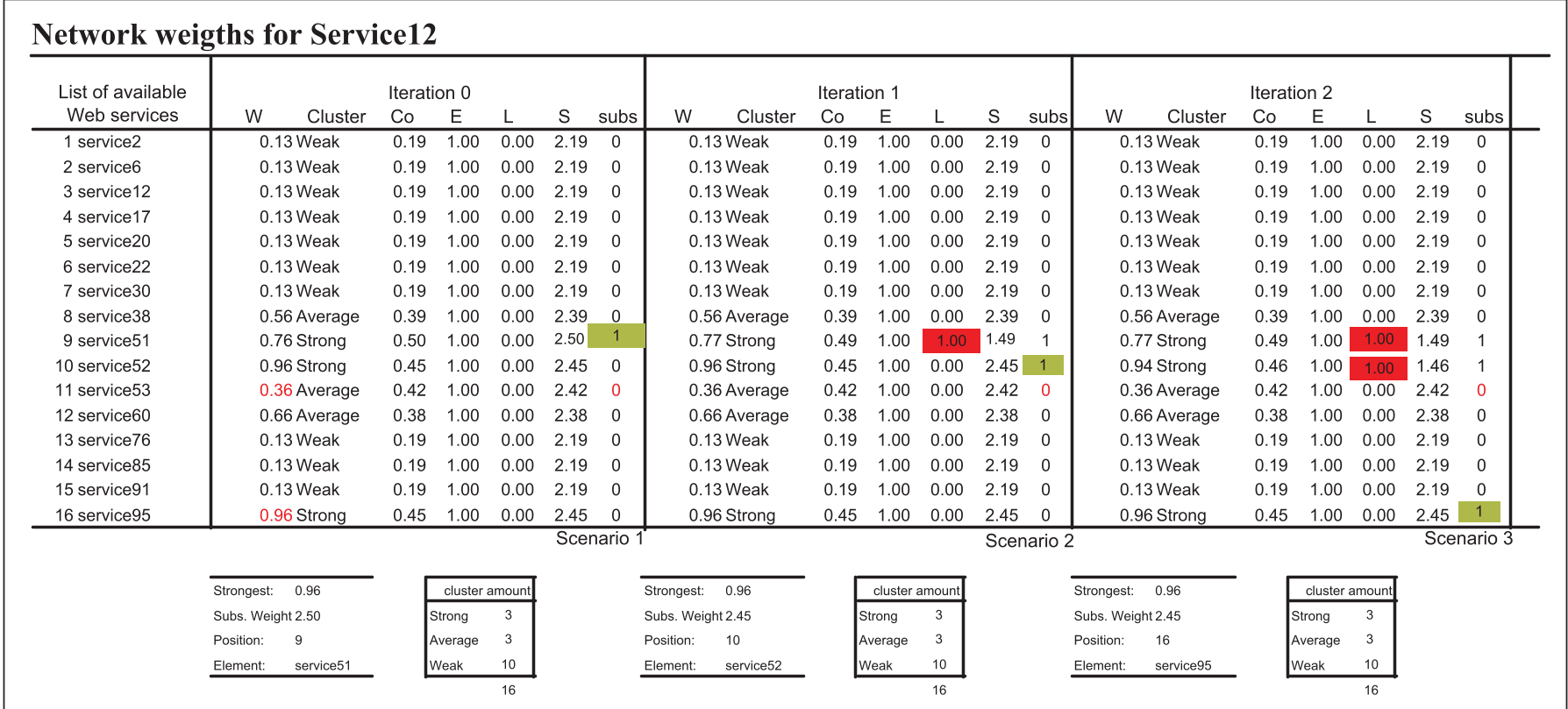
The authors tested the framework using real-world translation services. They focused on how the "Management Tool" behaves under different stress conditions (Scenario-based testing).
Key Findings:
- Load Balancing: When the "Strongest" peer (Service51) hit a load of 1.0, the framework automatically selected the next best social contact (Service52), maintaining system reliability.
- Promotion/Demotion: Services that consistently satisfied user requests moved from "Weak" to "Average" clusters over time, effectively "learning" which services are the most reliable partners.
Critical Insight: Why This Matters
The true value of this work is the Inductive Bias it introduces into Distributed Systems. By assuming that services have relationships, we reduce the search space for discovery. Instead of searching a global registry, a failing service "asks its trusted circle" for a substitute.
Limitations & Future Work
While the framework is conceptually strong, the computational overhead of constantly updating edge weights in a global-scale network remains an open question. The authors' future work will focus on fine-tuning discovery times and comparing them against high-performance registry alternatives.
Conclusion
By weaving social principles into the technical fabric of the Web, this framework transforms Web services from "black boxes" into "aware components." This shift is essential for the next generation of resilient, self-organizing cloud architectures.