
Beyond Algorithms: Modeling Web Mining as a Strategic Game in Healthcare E-Commerce
Applicability Evaluation of Web Mining in Healthcare E-Commerce towards Business Success and a derived Cournot Model
This paper evaluates the impact of web mining on the success of healthcare e-commerce through a comparative study of "exhaustive" versus "partial" promotion strategies. It proposes a novel application of the Cournot Model from Game Theory to formalize web mining competition as an economic strategy for market share optimization.
Executive Summary
TL;DR: This research bridges the gap between data mining and business economics. By categorizing healthcare e-commerce into Exhaustive and Partial promotion types, the authors demonstrate that technical web mining efficiency directly correlates with market survival. The study introduces a Cournot Game Theory model to explain why some firms dominate the digital healthcare space while others fail despite having quality products.
Context: This work positions itself as a "techno-economical" framework, moving past the "what" of web mining (algorithms) to the "why" and "how much" (strategic investment and market competition).
The "Promotion Gap" in Healthcare
The authors identify a critical friction point: many healthcare providers assume that simply having a website is enough. However, the study identifies two distinct species of online business:
- Exhaustive Promote: Websites like Amazon or eBay where every click is engineered to lead to a "Buy" action. These firms treat web mining as a trade secret.
- Partial Promote: Many healthcare institutions or educational sites that use the web only for information.
The research finds that while top-tier firms have mastered "Link Juice" (the ratio of internal/external links) and SEO, smaller healthcare firms often ignore basic web mining requirements, leading to "false detections" of potential customers.
Methodology: Web Mining as a Cournot Competition
The core innovation of this paper is treating web mining as a Cournot Competition. In economics, this model describes a market where firms compete on the quantity of output produced independently.
Why Cournot?
The authors argue that in E-commerce:
- Independent Decisions: Firms choose their web mining intensity (SEO effort, data harvesting) simultaneously without collusion.
- Homogeneous "Products": In the eyes of a search engine, the "output" is the visibility/traffic generated.
- Strategic Rationality: Firms seek to maximize profit where the cost of mining must be lower than the price (value) gained from the customer.
The Payoff Formula: The paper defines the profit (payoff) for a firm as: Where:
- : Human navigation patterns/traffic generated via mining.
- : Set price.
- : The cost of implementing mining/SEO.
Architecture of the Web Mining Framework
 Figure 1: The lifecycle of discovery, classification, personalization, and recommendation.
Experimental Insights: The Cost of Ignorance
The authors used a "SEO Webpage Analyzer" to audit healthcare websites. The results were startling. While "Exhaustive" firms had refined architectures, "Partial" promote firms suffered from:
- Invalid Doc Types.
- Excessive Page Weight (57.38 kb+).
- Zero Keywords or Meta-descriptions.
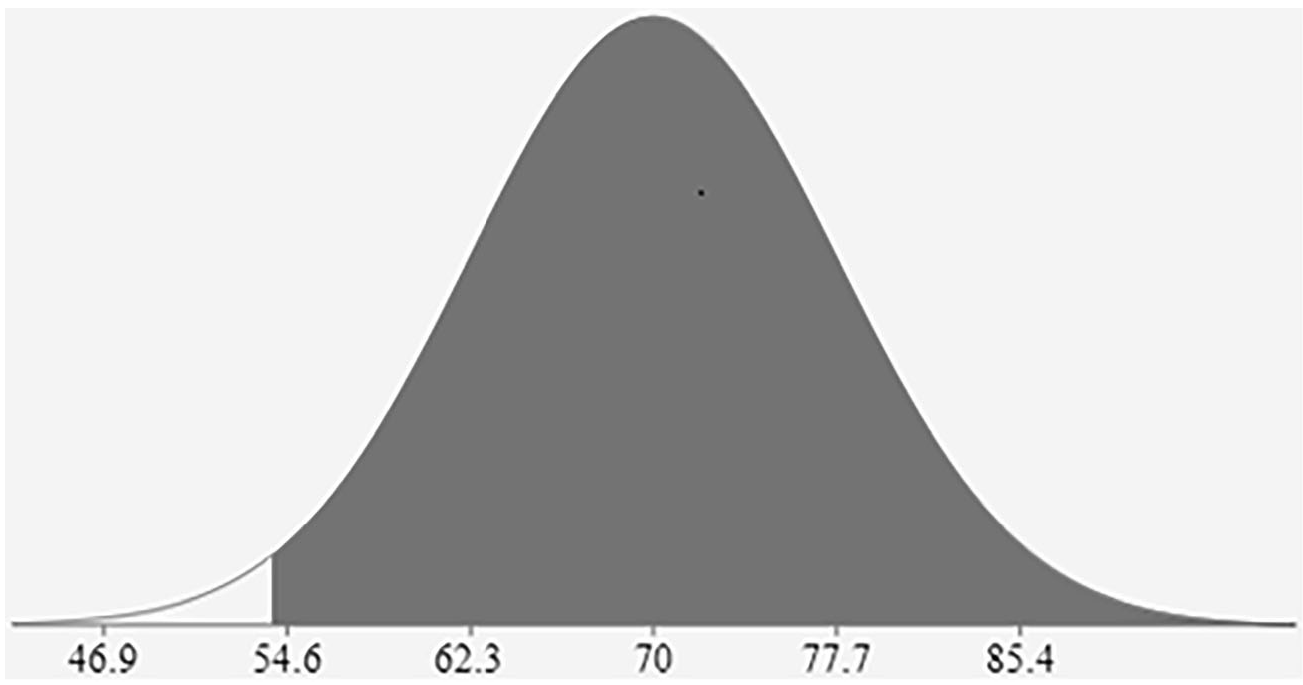 Figure 2: Normal distribution of "Link Juice" violations across partial promote websites.
This data confirms that the difference in business success isn't just about product quality, but about the utilization of web content mining.
Final Verdict: The Shift to Adaptive Mining
The study concludes that firms using Hybrid or Adaptive/Perfect Mining (dynamic strategies that adapt to emerging techniques) see the highest "Business Success Ratios" (up to 92%).
Takeaways for the Industry:
- Healthcare SEO is Lagging: There is a massive opportunity for healthcare providers to gain a competitive edge by simply fixing basic web content mining violations.
- Game Theory Matters: Decisions to invest in web mining should be made by analyzing the "residual demand" left by competitors.
- Privacy vs. Personalization: As firms move toward "Exhaustive Promote" models, the ethical harvesting of social media data becomes a primary conflict point.
Limitations & Future Work
The model assumes a fixed number of participants and homogeneous products, which doesn't always reflect the rapidly changing "Wild West" of health-tech startups. The authors plan to develop an integrated adaptable techno-economical framework that automates these game-theoretic decisions in real-time.