
From Web Mining to Social Multimedia Mining: Bridging the Semantic Gap with Social Intelligence
From Web Mining to Social Multimedia Mining
This paper introduces the conceptual framework of "Social Multimedia Mining," an emerging interdisciplinary field that integrates web mining, multimedia research, and social network analysis. It proposes a new taxonomy to adapt traditional web mining techniques to the participatory, heterogeneous environment of Web 2.0.
TL;DR
As the web evolves from a static repository of documents to a vibrant ecosystem of user-generated multimedia, traditional data mining is hitting a wall. This paper conceptualizes Social Multimedia Mining, a framework that combines Web Mining, Multimedia Research, and Social Network Analysis (SNA) to extract meaningful patterns from the chaotic, heterogeneous data of Web 2.0.
Problem & Motivation: The Limitations of Web 1.0 Paradigms
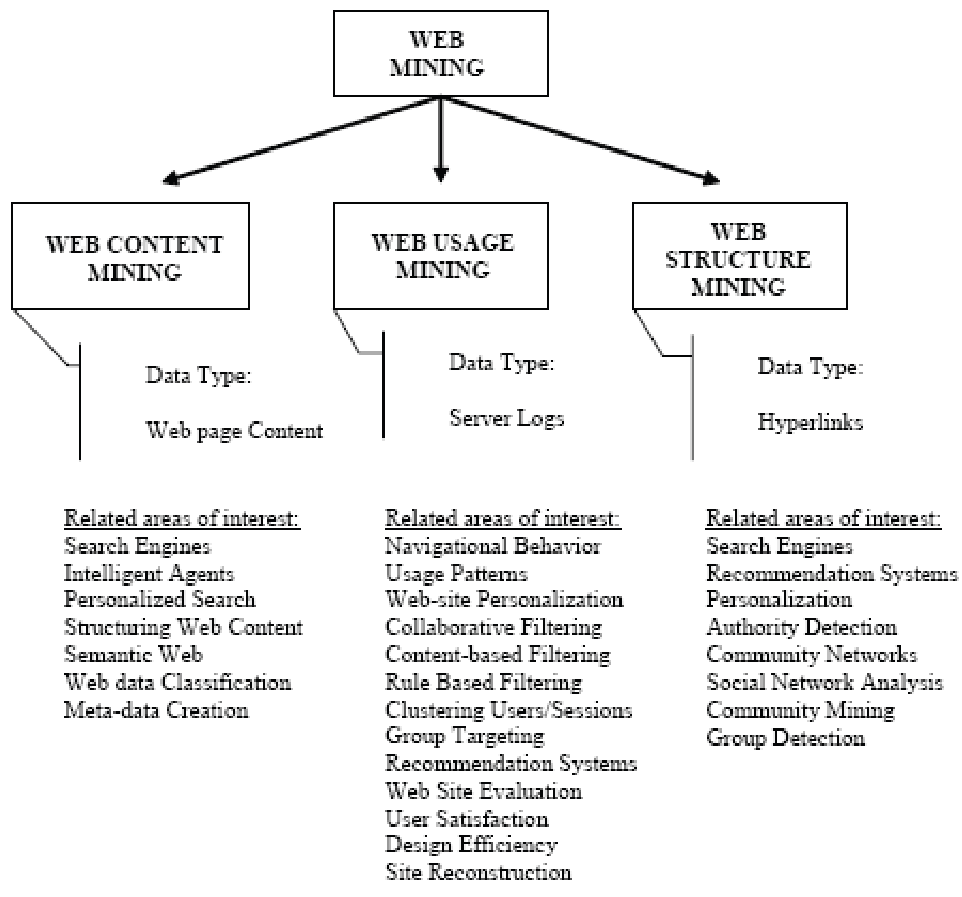
The classic taxonomy of web mining—Content, Structure, and Usage—was built for a world of passive consumption. In the age of Facebook, YouTube, and Flickr, two major hurdles prevent these traditional methods from scaling:
- The Semantic Gap: The difficulty in translating low-level visual features (pixels, colors) into high-level concepts (events, emotions).
- Noisy Metadata: User-generated tags and descriptions are often inaccurate, misleading, or incomplete.
The author argues that we need a paradigm shift: we shouldn't just look at what the content is, but how users interact with it and who they are connected to.
Methodology: The Three Pillars of Social Multimedia Mining
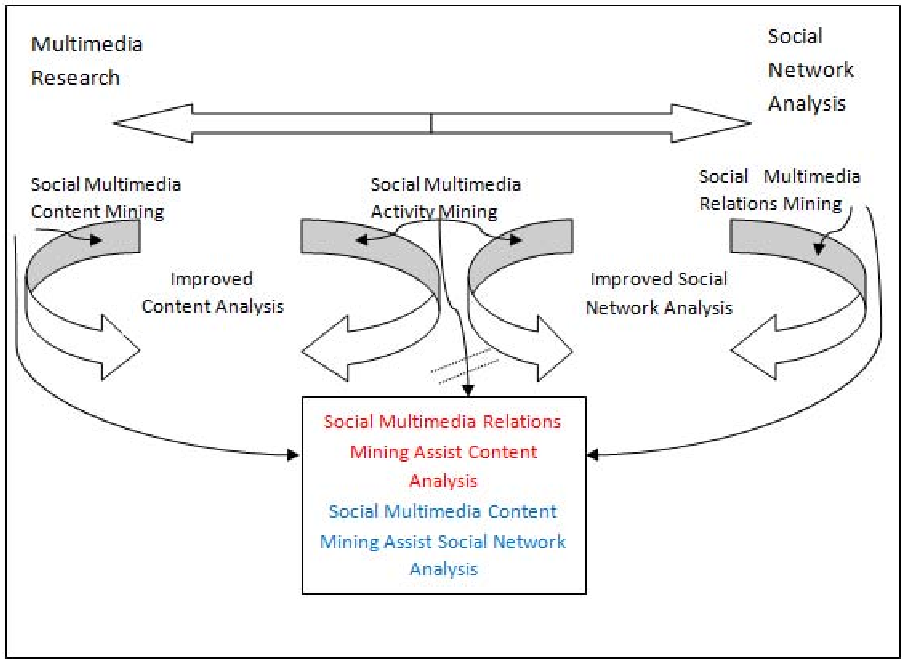
The paper proposes a refined taxonomy that replaces "Usage" with "Activity" to reflect the participatory nature of modern users.
1. Social Multimedia Content Mining
This focuses on the raw data: images, videos, and text. However, unlike traditional computer vision, it exploits "social metadata" (community tags and context) to boost accuracy.
2. Social Multimedia Activity Mining (The "Why" Factor)
This is the most innovative shift. Instead of just logging HTTP requests, it analyzes:
- Implicit feedback: Pauses, clicks, and seek-bar behavior on videos.
- Explicit feedback: Comments, ratings, and shares.
- Insight: Analyzing where thousands of users pause a video can automatically identify "highlights" without complex visual recognition.
3. Social Multimedia Relations Mining
This utilizes Social Network Analysis (SNA) to understand the social graph. By seeing which groups share which types of images, systems can better categorize content and predict user preferences.
Industry Applications: From Tourism to Politics
The paper highlights several SOTA (at the time of writing) applications of this framework:
- Travel & Tourism: Mining Flickr/Instagram data to build "City Landmark" recognition engines and personalized travel assistants.
- Political Science: Tracking election dynamics by analyzing multimedia distributions and comment sentiments across community boundaries.
- Marketing: Improving advertisement targeting by segmenting groups based on their behavioral responses to video content (Activity Mining).
Critical Analysis & Conclusion
Takeaway
The core contribution of this work is the recognition that social context is the cure for the semantic gap. By triangulating content analysis with behavioral activity and relational structures, mining algorithms can achieve higher precision than by looking at pixels alone.
Limitations & Future Work
While the paper provides a strong theoretical framework, it acknowledges the massive technical challenge of scalability. Processing millions of videos and billions of social links in real-time requires significant computational resources. Furthermore, the paper touches on "Social Studies" but leaves the door open for deeper ethical discussions regarding privacy in social mining—a topic that has only become more critical since its publication.
In conclusion, Social Multimedia Mining isn't just a sub-field; it is the necessary evolution of how we understand the "Internet of People."