
SDC Algorithm: Reconstructing Web Opinion Mining for Sparse Social Data
Web opinion mining for social networking sites
This paper explores Web opinion mining for social networking sites using clustering techniques to identify themes and influential participants. It introduces the Scalable Distance Clustering (SDC) algorithm as a robust alternative to DBSCAN for uncovering latent topic similarities in sparse Web data.
TL;DR
Web opinions are messy, sparse, and linguistically diverse. This paper proposes the Scalable Distance Clustering (SDC) algorithm to move beyond the limitations of traditional DBSCAN. By refining how density-reachable points are grouped, the authors achieve higher accuracy in identifying discussion themes and social influence patterns within complex networking sites.
Context: This work is a targeted improvement on density-based spatial clustering, specifically optimized for the constraints of Web 2.0 user-generated content (slang, brevity, and topic-drift).
The Problem: When Density Leads to "Elongated" Errors
While DBSCAN is a staple for spatial clustering (handling noise and arbitrary shapes), it falters in the high-dimensional space of Web opinions. Its core mechanism—density-reachability—allows clusters to grow as long as points are somewhat nearby. In text mining, this creates "chains" that connect two completely different topics because a few transitional comments exist between them.
The authors argue that Web opinions require a mechanism that resists this "elongation" to ensure that the themes identified remain cohesive and semantically relevant.
Methodology: From Raw Text to Scalable Clusters
The methodology follows a rigorous NLP pipeline to prepare data for the SDC algorithm:
- Tokenization & Stop-word Removal: Cleaning the noise from raw blog comments.
- TF-IDF Vectorization: Assigning weights to terms based on their discriminative power within the thread collection.
- Cosine Similarity: Measuring the distance between threads on a [0, 1] scale.
- SDC Execution: Unlike DBSCAN, SDC uses a "shrinking epsilon" approach. It starts with a dense core and gradually expands, ensuring that points added later are actually relevant to the existing cluster "centroid" logic rather than just being adjacent.
 Figure 1: The SDC logic—ensuring points within a cluster are close to one another within a reasonable distance.
Experiments and Insights
The authors tested their approach on three primary threads from The Times of India, involving political figures like Rahul Gandhi and Akhilesh Yadav.
Key Metrics:
- Indegree: A measure of "Participation." How many replies does a person post?
- Outdegree: A measure of "Influence/Initiation." How many new threads does a person start?
The study found that most users have a significantly higher Indegree than Outdegree, confirming the behavior that most social media users are "reactors" rather than "initiators."
SDC vs. DBSCAN:
The core of the result lies in the accuracy comparison. As the MinPts (Minimum Points) parameter increases, the SDC algorithm consistently maintains a higher accuracy rate in thread classification compared to DBSCAN.
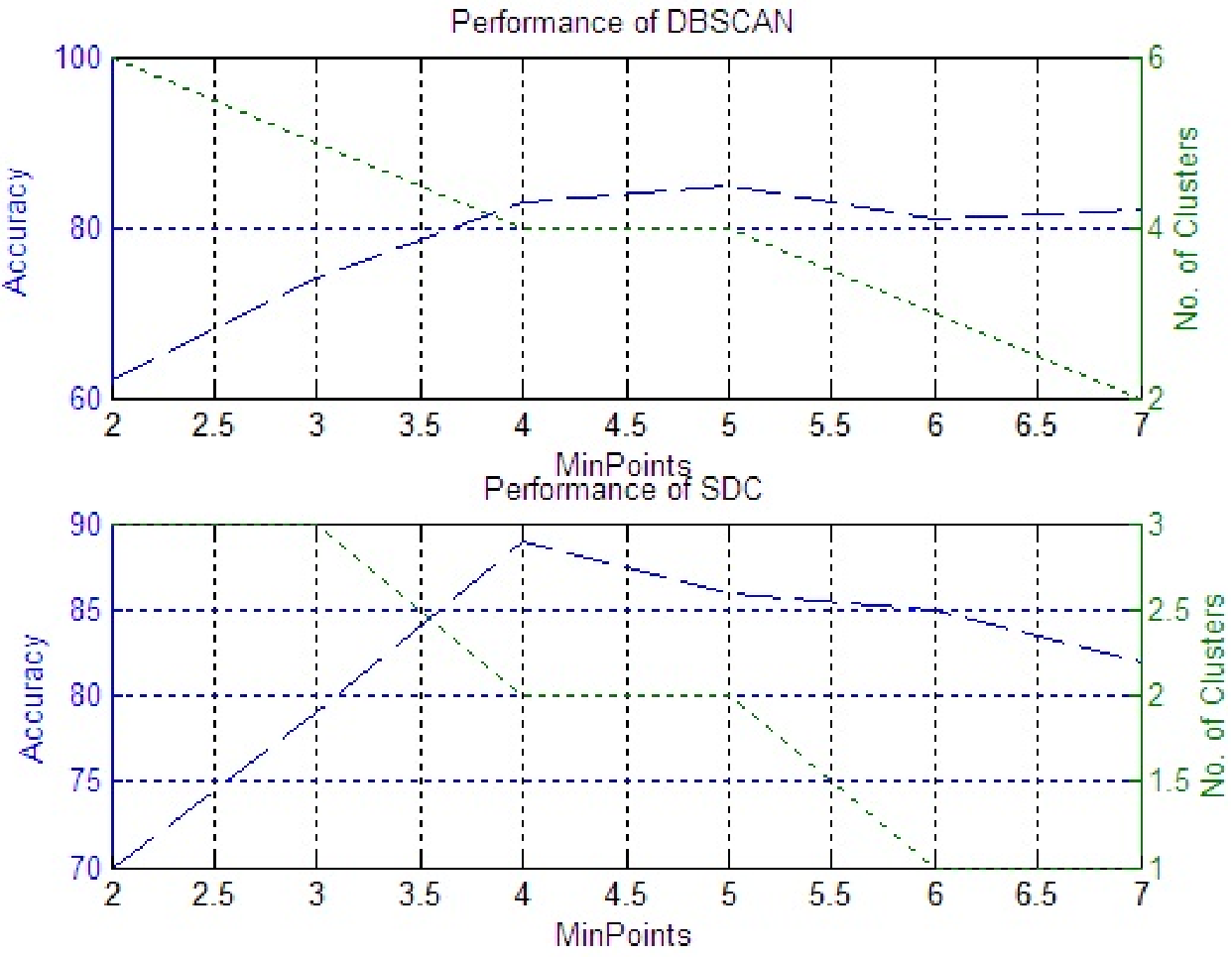 Figure 2: Accuracy Comparison—SDC maintains superior performance as parameters scale.
Critical Analysis & Conclusion
This paper provides a valuable blueprint for Intelligence and Security Informatics. By grouping similar ideologies and identifying "active participants," organizations can track the spread of specific sentiments or propaganda.
Limitations: The current approach relies heavily on TF-IDF, which does not capture the deep semantic meaning (context) as well as modern Word Embeddings or Transformers might. However, for 2012-era technology, the SDC refinement was a significant leap in precision.
Future Outlook: The logic of "Scalable Distance" remains highly relevant for current LLM-based clustering. As we deal with massive vector databases, the principle of avoiding elongated clusters is essential for accurate retrieval-augmented generation (RAG) and topic modeling.