
Living Documents: Bridging the Semantic and Social Web in Life Sciences
Web Semantics: Science, Services and Agents on the World Wide Web
The paper introduces the Living Document (LD), a framework that integrates Semantic Web ontologies with Social Web tagging to manage Life Sciences literature. It features a web prototype that enables automatic and manual annotation of atomic document components, transforming static PDFs into "document routers" linked to biological databases.
TL;DR
The "Living Document" (LD) is a paradigm shift from static PDFs to dynamic, networked data containers. By combining the rigorous structure of the Semantic Web (Ontologies) with the collaborative power of the Social Web (Tagging), LD transforms research papers into active routers that connect scientists to biological databases, external tools, and relevant peers based on the specific concepts (genes, proteins, diseases) mentioned in the text.
Problem: The "Silo" Nature of Scientific Literatures
In the Life Sciences, crucial knowledge is scattered across millions of papers and online databases. However, the relationship between a protein mentioned in a paragraph and its entry in a database is often negligible.
- Inflexible Metadata: Current digital libraries use rigid taxonomies or simple keyword searches.
- Coarse-Grained Tagging: Existing tools allow users to tag a whole paper, but not a specific technical term or a crucial sentence within it.
- Lack of Interoperability: There is no "interconnection bus" that allows a document to automatically trigger queries in external biological resources.
Methodology: The Living Document Architecture
The core innovation lies in the Paper-Of-A-Paper (POAP) ontology. Unlike human-centric social networks (modeled by FOAF), POAP facilitates a concept-centric network where the document itself is the node.
1. The Multi-Layered Approach
As shown in the system architecture, the LD framework consists of three layers:
- Data Layer: Ingests XML/PDF documents from sources like Elsevier or PubMed.
- Annotation Pipeline: Uses tools like WhatIzIt to automatically identify biological entities (Swissprot names, GO terms).
- Social Semantic Layer: Integrates user-generated tags (Folksonomies) with formal ontologies (MOAT, SCOT).
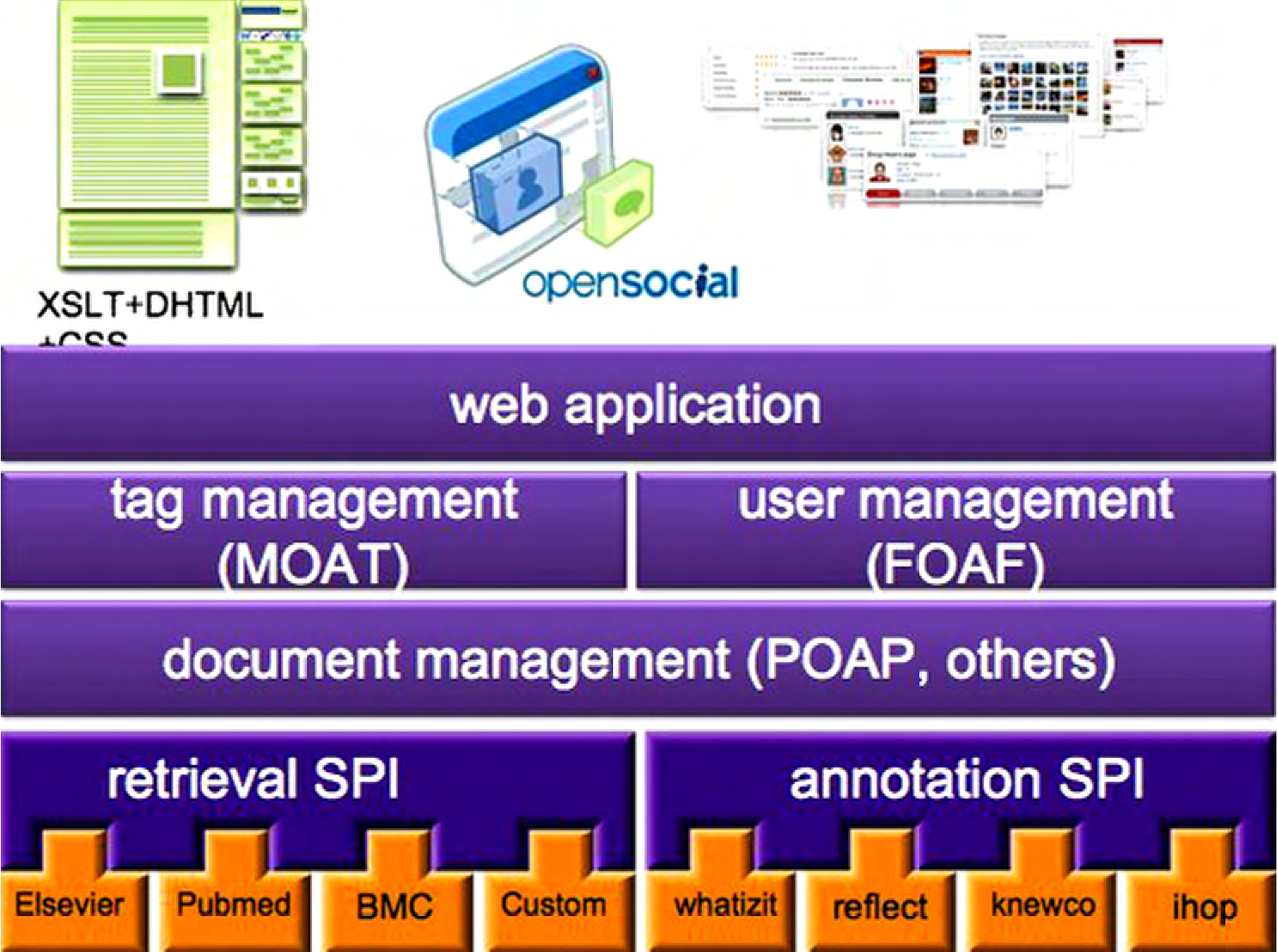 Fig 1: The general system architecture demonstrating the integration of annotation pipelines and semantic layers.
2. Concept-Centric Networking
By tagging atomic components (e.g., a specific gene sequence), the paper becomes a router. If two researchers tag the same "atomic component" in different papers, the LD framework identifies a "Scientific Hyperlink," suggesting a collaboration path that traditional citation analysis might miss.
Experiments and Results
The authors validated the prototype using a collection of over 500 papers. By allowing users to browse "clouds of tags," the system facilitated more expressive queries.
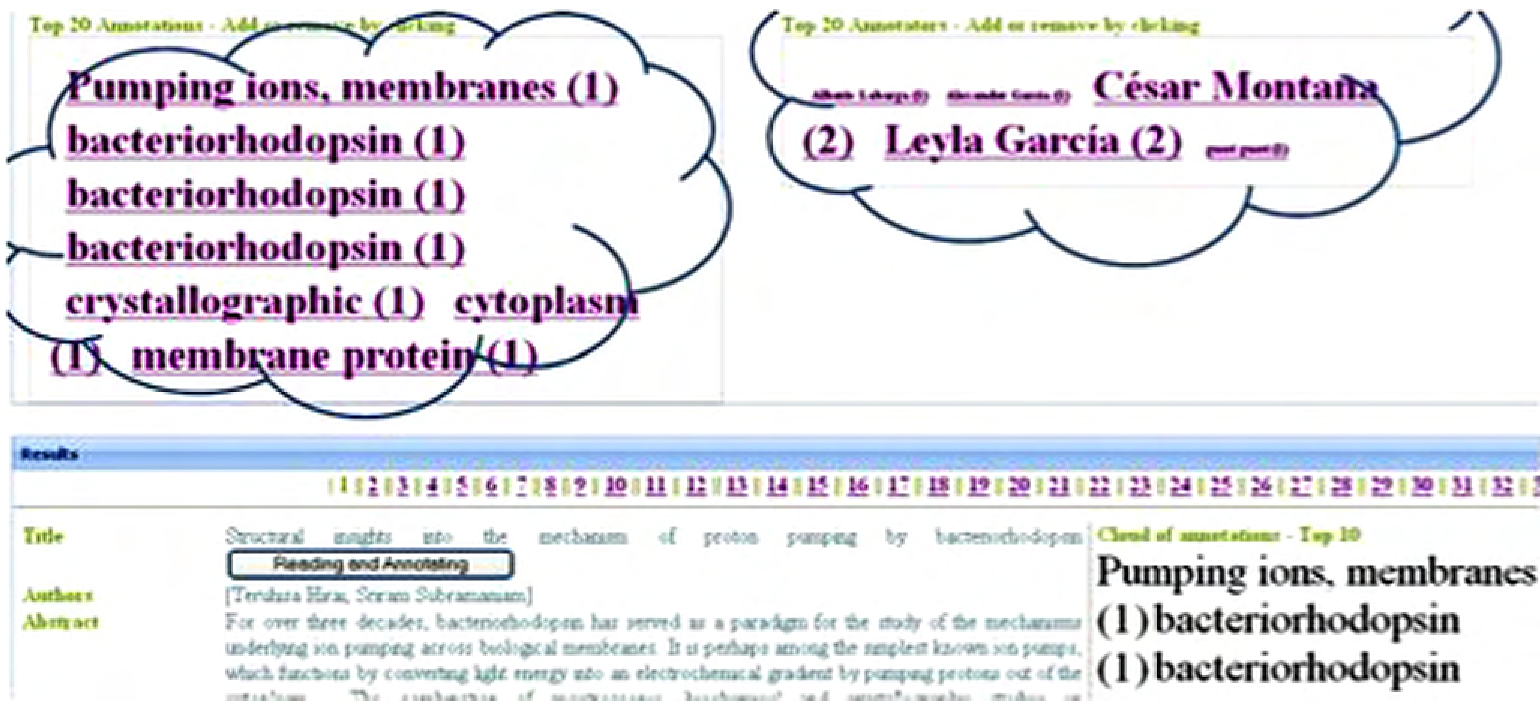 Fig 2: Using tag clouds to refine scientific queries and discover related documents.
Key Findings:
- Accuracy: Tag-based recommendations provided more relevant results than the native recommendation engines of commercial digital libraries.
- Social Trust: The system allowed users to filter for tags generated by specific "trusted" experts in the community, creating an implicit social ranking.
- Cross-Linking: Documentation once isolated became linked to resources like AMIGO, UniProt, and Entrez automatically.
Critical Analysis & Future Outlook
The Living Document represents an early and visionary attempt to realize the "Semantic Web" in a practical, user-friendly way.
Limitations:
- At the time of writing, the system relied heavily on Java-based filters and regular expressions, which may struggle with the linguistic nuances that today's Transformer-based models (like BERT or GPT-4) can handle with ease.
- Massive community adoption (the "Social" part) remains a hurdle for any decentralized tagging system.
The Takeaway: The true value of a scientific paper is not the paper itself, but the network of data it contains. As we move further into the era of AI-driven research, the principles of the Living Document—treating atomic concepts as first-class citizens in a global knowledge graph—will be essential for creating an interoperable scientific ecosystem.
Conclusion
By merging the "rigidity" of ontologies with the "spontaneity" of social folksonomies, the LD framework provides a blueprint for the future of scientific publishing: a world where documents aren't just read, but lived in and connected to the broader web of life sciences knowledge.