
WEB-SOBA: Streamlining Domain Ontologies with Word Embeddings for Hybrid ABSA
WEB-SOBA: Word Embeddings-Based Semi-automatic Ontology Building for Aspect-Based Sentiment Classification
The paper introduces WEB-SOBA, a semi-automatic methodology for constructing domain-specific sentiment ontologies for Aspect-Based Sentiment Analysis (ABSA) using word embeddings. By integrating word2vec and sentiment-based vector refinement, it builds a structure that achieves state-of-the-art accuracy when used within the HAABSA hybrid framework.
Executive Summary
TL;DR: WEB-SOBA is a semi-automatic framework that builds domain sentiment ontologies by leveraging the semantic power of word embeddings (word2vec). It slashes the human labor required for ontology construction by over 50% while boosting the accuracy of Aspect-Based Sentiment Analysis (ABSA) to 87.16% when integrated into a hybrid neural-symbolic framework.
In the landscape of NLP, this work bridges the gap between traditional symbolic AI (ontologies) and modern connectionist AI (neural networks), proving that these two paradigms are most potent when used in tandem.
The "Knowledge Bottleneck" in ABSA
Aspect-Based Sentiment Analysis (ABSA) is crucial for businesses to understand specific feedback (e.g., "The food was great, but the service was slow"). Hybrid models—which use ontologies for logical reasoning and machine learning as a fallback—currently represent the SOTA.
However, the bottleneck has always been the ontology itself.
- Manual Construction: Too slow (hours/days of expert effort).
- Frequency-based (Co-occurrence): Faster, but lacks semantic depth. It treats words as isolated tokens rather than points in a semantic space.
Methodology: How WEB-SOBA Works
The core innovation of WEB-SOBA lies in its three-stage pipeline driven by word embeddings.
1. Term Selection via Semantic Density
Instead of just counting words, WEB-SOBA calculates a TermScore (TS) using:
- Domain Similarity (DS): Comparing domain-specific vectors (Yelp) against general vectors (Google News) to find unique restaurant terminology.
- Mention Class Similarity (MCS): Judging how close a word is to core concepts like "Food" or "Service" in the vector space.
2. Sentiment Refinement
A notorious weakness of word2vec is that "good" and "bad" often have similar vectors because they appear in the same contexts. WEB-SOBA solves this by sentiment-aware refinement, pushing vectors closer to known emotional anchors (using the E-ANEW lexicon) or further apart based on polarity.
3. Hierarchical Clustering
The system uses Average Linkage Clustering (ALC) to group terms into a hierarchy (e.g., "Fries" "Food"). This creates the "is-a" relationships necessary for ontological reasoning.
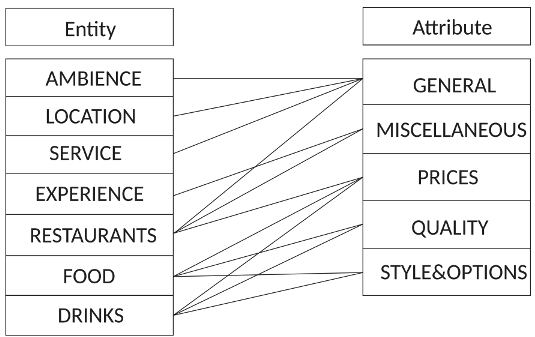 Figure 1: The skeletal structure of the Mention classes used as the foundation for the ontology.
Experiments & Results: Efficiency meets Accuracy
The authors evaluated WEB-SOBA on the SemEval-2016 restaurant dataset.
The Speed Advantage
WEB-SOBA requires significantly less "human-in-the-loop" time:
- Manual: 420 mins
- SOBA (Prior SOTA): 90 mins
- WEB-SOBA: 40 mins
The Performance Leap
When used as part of the HAABSA framework (pairing the ontology with a Rotatory Attention neural network), WEB-SOBA outperformed even the handcrafted manual ontology.
 Table 1: Hybrid approach results showing WEB-SOBA achieving 87.16% accuracy.
The Welch t-test (p < 0.05) confirmed that this improvement isn't just noise—it's a statistically significant advancement. WEB-SOBA complements neural models better because its embedding-based construction captures the same semantic nuances the neural network is looking for.
Critical Insight & Conclusion
Why does it work?
WEB-SOBA succeeds because it treats ontology building as a mapping problem rather than a discovery problem. By starting with word embeddings, the system already "understands" which words are related; the user simply acts as a high-level filter to ensure the logic remains sound.
Limitations & Future Paths
- Polysemy: Current word2vec models struggle with words that have multiple meanings. The authors suggest moving toward BERT-based contextual embeddings in future iterations.
- Type-3 Sentiment: The system struggled to identify context-dependent sentiment (e.g., "cold" is positive for beer but negative for pizza) due to dataset sparsity.
Final Takeaway: WEB-SOBA is a major step toward Scalable Knowledge Engineering. It proves that we can build high-precision expert systems without the grueling manual labor traditionally associated with them.