
Empowering the Grassroots: The Web 2.0 Revolution in Chinese Civil Society
The use of Web2.0 style technologies among Chinese civil society organizations q
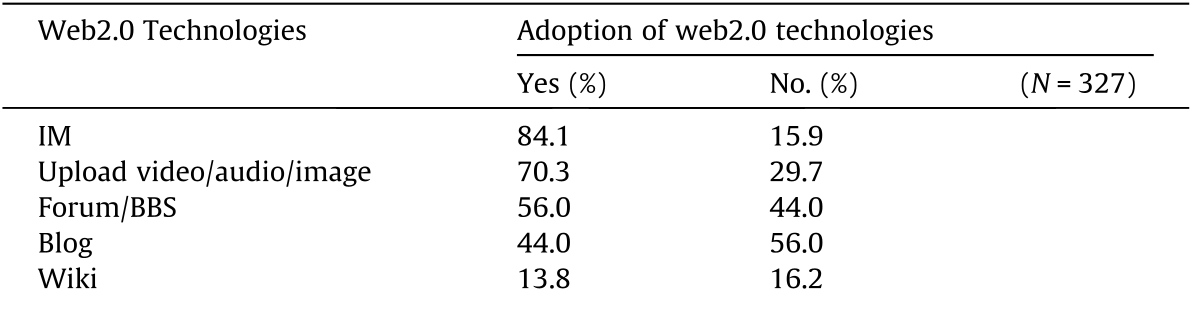
This research presents the first nationwide quantitative analysis of Web 2.0 technology adoption among more than 500 Chinese civil society organizations (CSOs). It identifies that while technologies like Instant Messaging (84.1%) and video sharing (70.3%) have achieved high penetration, significant regional and financial inequalities persist in the digital landscape of Chinese civil society.
TL;DR
Based on a landmark nationwide survey, this research reveals that Web 2.0 technologies—IM, blogs, and video sharing—have become vital survival tools for Chinese Civil Society Organizations (CSOs). While these tools help "poorer" organizations bypass legal and financial hurdles, a stark regional divide remains: organizations in Western China are being left behind in the digital "read-write" era.
The Motivation: Bypassing the Gatekeepers
In the early 2010s, Chinese CSOs faced two existential threats: a lack of legal status (registration difficulties) and a lack of funding. Traditional Web 1.0 communication (official websites) required expensive IT expertise and maintenance.
The author's core insight is that Web 2.0—defined by "Web-as-free-platform" and "lowered technical barriers"—provided a disruptive alternative. By allowing non-technical staff to "write" to the web for free, these technologies theoretically empowered grassroots CSOs to have their voices heard without the need for high-end infrastructure or government-sanctioned media channels.
Methodology: Mapping the Digital Landscape
The study analyzed over 500 CSOs using a mix of email surveys and telephone interviews. To move beyond a monolithic view of "The Internet," the author specifically tracked five pillars of the Web 2.0 era:
- Instant Messaging (IM): For real-time mobilization.
- Blogs: For narrative building.
- Video Sharing: For visual evidence and transparency.
- Forums/BBS: For community discussion.
- Wikis: For collaborative knowledge management.
Key Findings: The Paradox of Wealth and Geography
1. The "Resource-Need" Paradox
One of the most striking findings is that money does not equal digital maturity. The data shows that CSOs with medium financial support are often the most active users of Web 2.0.
- The Insight: Highly funded organizations (often Government-Operated NGOs or GONGOs) rely on traditional media and expensive Web 1.0 sites. They lack the motivation to innovate. Smaller, resource-constrained CSOs use Web 2.0 because they must—it is their only affordable megaphone.
2. The Great Regional Divide
Despite the "borderless" nature of the net, geography matters. CSOs in Western China reported the lowest adoption rates across almost all categories.
- Eastern China: Dominates in Blogs and Forums.
- Central China: Surprisingly leads in Video/Audio uploads (88.4%).
- Western China: Constrained by poor hardware access (the "Internet Cafe" hurdle) and a lack of skilled human resources.

Critical Analysis & Takeaways
This research repositioned the "Digital Divide" from a question of simple access (Web 1.0) to a question of participatory capacity (Web 2.0).
- The Takeaway: For international aid agencies and policymakers, the focus should not just be on "getting organizations online," but on bridging the regional expertise gap. If Western Chinese CSOs cannot "write" to the web, their local issues will remain invisible in the national discourse.
- Limitations: As a snapshot from 2009-2012, the study missed the massive pivot to "Mobile Web 3.0" (WeChat/TikTok). However, its analysis of user motivation vs. resources remains a foundational principle for understanding how technology serves civil society in restrictive environments.
Future Outlook
As we look toward an era of AI and algorithm-driven social media, the lesson from this paper still holds: technology is only as effective as the community's motivation to use it. The challenge for today's CSOs is no longer just "writing" to the web, but being seen by the algorithm.