
Evaluating E-Government Readiness: A Deep Dive into Indonesia’s Ministerial Digital Strategy
Website Quality Analysis in Three Ministries of Indonesia Study Ministry of Finance, Ministry of Home Affairs, and Ministry of Village
This study evaluates the e-government readiness of three Indonesian ministries (Finance, Home Affairs, and Village) by assessing their official websites and Twitter engagement. Using a qualitative descriptive approach and Nvivo 12 Plus analysis, the research measures quality across five key governance indicators to determine digital transparency and service effectiveness.
TL;DR
This research investigates the digital effectiveness of three major Indonesian ministries. While most achieve "High Quality" ratings for transparency and features, technical gaps in interactivity and navigation system—particularly within the Ministry of Finance—highlight a critical disconnect between providing information and facilitating user engagement.
Background & Positioning
In the landscape of digital governance, Indonesia operates under Presidential Instruction No. 3/2003, which shifts e-government from an "experimental" phase to a permanent bureaucratic pillar. This study sits at the intersection of Public Administration and Information Systems, moving beyond simple "uptime" metrics to evaluate how digital portals actually embody the principles of Good Governance (transparency, accountability, and efficiency).
Problem & Motivation: The Gap in Digital Interactivity
The authors identify a persistent issue: many government websites provide "good content" but fail due to "slow access or inadequate navigation." The motivation behind this study is to move away from a static view of e-government toward a dynamic "Web 2.0" or "We-Government" model, where social media (Twitter) and official websites work in tandem to foster public trust.
Methodology: The Five Pillars of Website Quality
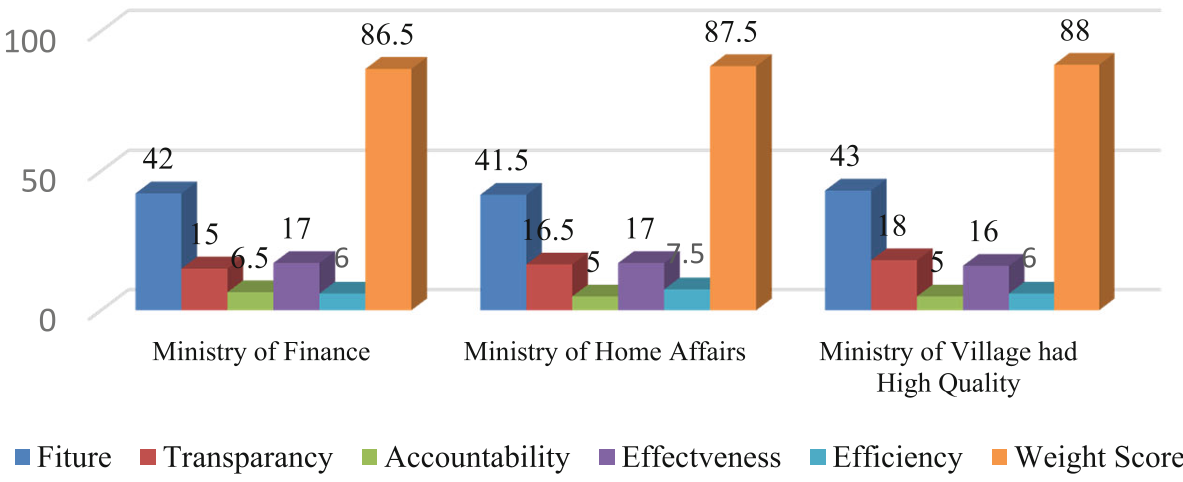
The researchers utilized a structured scoring method based on 50 units of assessment. The core dimensions analyzed were:
- Features: Technical capabilities and tools.
- Transparency: Openness of data and policies.
- Accountability: Reporting mechanisms and responsibility.
- Effectiveness: Ability to achieve intended public service goals.
- Efficiency: Optimization of resources and time.
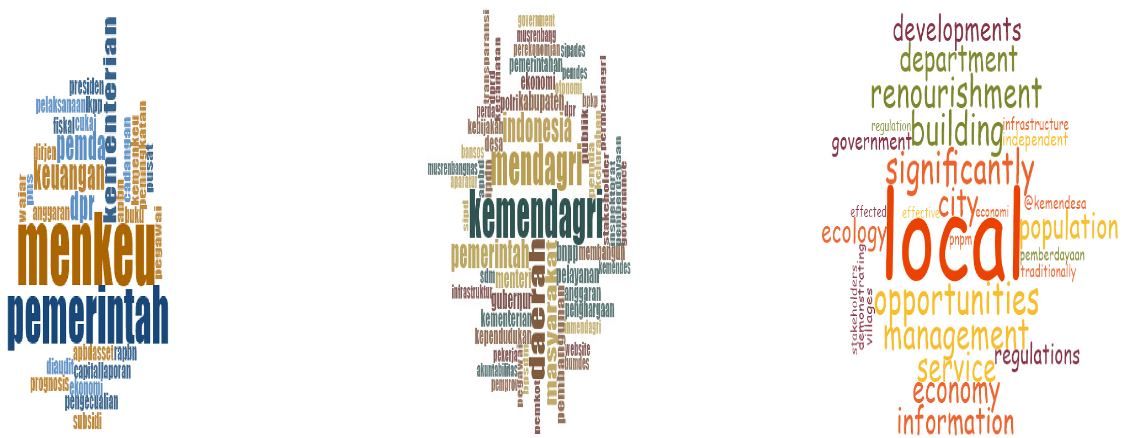
For social media, the team used NVivo 12 Plus to perform qualitative content analysis. By capturing Twitter data, they generated word clouds to visualize whether the "public chatter" aligned with the ministries' official mandates.
Critical Results & Analysis
The findings present a nuanced reality of Indonesian digital readiness:
- The Content-Navigation Paradox: The Ministry of Finance showed high accountability but failed significantly in Interactivity and Navigation (30.05%). This suggests that while the data is "there," it is not "accessible" or "user-friendly."
- The Ministry of Village Success: This ministry achieved the highest transparency score (18% of its total weight), indicating a strong push toward providing rural development data to the public.
- Twitter as a Service Extension: Analysis showed that Twitter is no longer just for "chirping"—it has become a primary hub for economic policy discussions and incident reporting.
Institutional Depth: Why This Matters
The study highlights that E-Readiness is not just about having a website; it’s about the "Quality of Information" and "Service Delivery." A website that is "High Quality" by the numbers can still feel "Low Quality" to a citizen if they cannot navigate the menu structure to find specific regional regulations.
Critical Analysis & Conclusion
Takeaway
The research confirms that e-government in Indonesia is well-established but unevenly executed. The leap from "Quality" to "High Quality" depends less on adding more features and more on refining Navigation Systems and Interactivity.
Limitations
- Sample Size: The study only covers three ministries, which may not represent the digital landscape of the hundreds of local government agencies in Indonesia.
- Platform Specificity: Focusing primarily on Twitter ignores the massive user bases on WhatsApp and Instagram, which are culturally dominant in the region.
Future Outlook
Future research should look toward AI-driven accessibility, examining how chatbots and automated data processing can overcome the "navigation failures" identified in the Ministry of Finance's current portal.