
Weighted Network Decapitation: The Economics of Iterated Attack and Defense
Weighted network decapitation: the economics of iterated attack and defense
The paper introduces a formal economic framework for "Weighted Network Decapitation," a model for iterated attack and defense in scale-free networks. By extending the work of Nagaraja and Anderson to weighted structures, the author proposes cost-aware strategies for node destruction and replenishment using delegation and clique replacement mechanisms.
TL;DR
This seminal paper by Josep Domingo-Ferrer transforms the study of network security into an economic game of "cat and mouse." By introducing weights and cost functions to the classic problem of network decapitation, the research provides a roadmap for how scale-free networks (like P2P systems or social networks) can survive targeted attacks through dynamic delegation and clique-based replenishment.
Problem & Motivation: Beyond One-Shot Vulnerability
Most studies on network robustness follow a simple script: Identify the "hubs" (nodes with high connectivity), remove them, and observe the network fragment. However, real-world conflict is iterated. An attacker destroys a node, and a defender tries to rebuild it.
The author points out two major flaws in prior literature:
- The Weight Paradox: In real networks, not all connections are equal. Trust, physical distance, and bandwidth (weights) dictate the true efficiency of a network.
- The Budget Constraint: Attackers don't have infinite resources to find and kill nodes; defenders don't have infinite resources to rewire the network.
Methodology: The Defense Mechanics
The core of the paper lies in how a network can "hide" its most critical components before and after an attack.
1. Node Degree Delegation
If a node becomes too "popular" (high degree), it becomes a target. Algorithm 1 describes a process where a high-degree node transfers its connections to less-connected neighbors. This flattens the power-law distribution, making the network look less like a "scale-free" target and more like a uniform (and thus more robust) mesh.
2. Centrality Delegation and Clique Replacement
For nodes that are critical because they sit on many shortest paths (High Betweenness Centrality), the author suggests replacing the single node with a Clique—a group of nodes where everyone is connected to everyone else.

In this model, when a hub is targeted, the defense replaces it with a -size clique, redistributing the original links among the new members to maintain connectivity while diluting the "criticality" of any single point.
3. The Economic Cost Functions
The paper formalizes the cost of war:
- Attacker Cost (): . Where is the cost to "scout" the network and is the cost to destroy a node.
- Defender Cost (): Involves the cost of creating new nodes () and the cost of "edge transfer" (), which varies based on the trust or difficulty of communication between the nodes.
Experiments & Evaluation Metrics
The paper shifts the definition of a "successful attack." Traditionally, success was measured only by the size of the Largest Connected Component (LCC). Domingo-Ferrer argues that in weighted networks, we must watch the Average Path Length.
If an attack doesn't break the network but doubles the "distance" (or reduces trust/reliability) between nodes, the attacker has successfully degraded the network's utility.
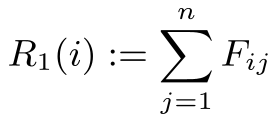 The use of reliability indices and allows attackers to target nodes that facilitate the "most reliable" paths, rather than just the most paths.
Critical Analysis & Conclusion
Takeaway
The shift from topological analysis to economic analysis is vital. It acknowledges that security is a trade-off. A perfectly robust network (a complete graph) is too expensive to build, while a perfectly efficient scale-free network is too easy to destroy.
Limitations
As a "roadmap" paper, the primary limitation is the lack of large-scale simulation data to back the theoretical cost functions. The "cost" of an edge transfer in a social network (privacy degradation) is notoriously difficult to quantify.
Future Outlook
This work lays the groundwork for Self-Healing Networks. Imagine a P2P protocol that automatically triggers "Algorithm 1" the moment a node’s centrality crosses a certain threshold—essentially a network that "hides" its hubs in real-time to frustrate attackers.