
TANN: Decoding the "Teacher's Intuition" for Educational Ranking
What should I learn next? Ranking Educational Resources
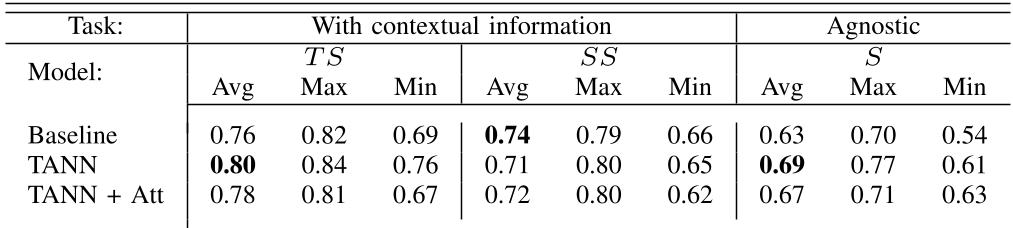
The paper introduces TANN (Timeline Aware Neural Network), a novel model designed to rank Open Educational Resources (OER) based on their pedagogical sequence. By leveraging teacher-organized lecture series from the Yale OpenCourseWare dataset, the model learns to predict the "progressive" order of learning resources, achieving up to 80% accuracy in contextual settings and 69% in agnostic, cross-domain scenarios.
TL;DR
The explosion of Open Educational Resources (OER) has created a paradox of choice: we have the content, but we lack the roadmap. This paper introduces TANN (Timeline Aware Neural Network), a model that learns the "progressive" logic of teachers. By treating course transcripts as temporal sequences rather than bags-of-words, TANN can predict which lecture should follow another with ~70% accuracy—even for subjects it has never seen before.
Background Positioning
Most recommenders (like YouTube's) optimize for engagement. In education, this is a trap; the most "engaging" video isn't necessarily the one that helps you master Calculus. This work shifts the focus toward Pedagogical Recommendation, aiming to recreate the logical flow of a curriculum. It positions itself as a solution to the "Cold Start" problem in OER by learning universal patterns of didactic discourse.
The Problem: The Narrative Gap in Recommendation
Existing NLP-based recommendations often rely on Doc2Vec or global embeddings. While these are great at finding "similar" topics, they are "directionless." They can tell you that "Linear Algebra" and "Vector Spaces" are related, but they struggle to tell you which one is the prerequisite.
The authors identify two fatal flaws in prior work:
- The Engagement Trap: Maximizing clicks often leads to pseudo-scientific or low-pedagogical value content.
- Structural Blindness: Standard embeddings ignore the internal timeline of a lecture—the way a teacher introduces a concept, builds on it, and then transitions.
Methodology: Capturing the Teacher's Timeline
The core innovation is the Timeline-preserving semantic representation. Instead of squeezing an entire lecture into one vector, the authors:
- Chunk the Text: Split transcripts into 1000-word blocks with a 500-word overlap.
- RNN Encoding: Feed these chunks into an RNN to capture how the "ideas" evolve over 60 minutes.
- Pairwise Ranking: Take the final state of two resources and use a Feed-forward Neural Network (FNN) to decide: Does ri come before rj?
Why this works
By using an RNN, the model doesn't just look at what is being said, but where and after what it is being said. This captures the didactic component—the linguistic markers and logical scaffolding teachers use to build knowledge.
Experiments: Testing Global Logic
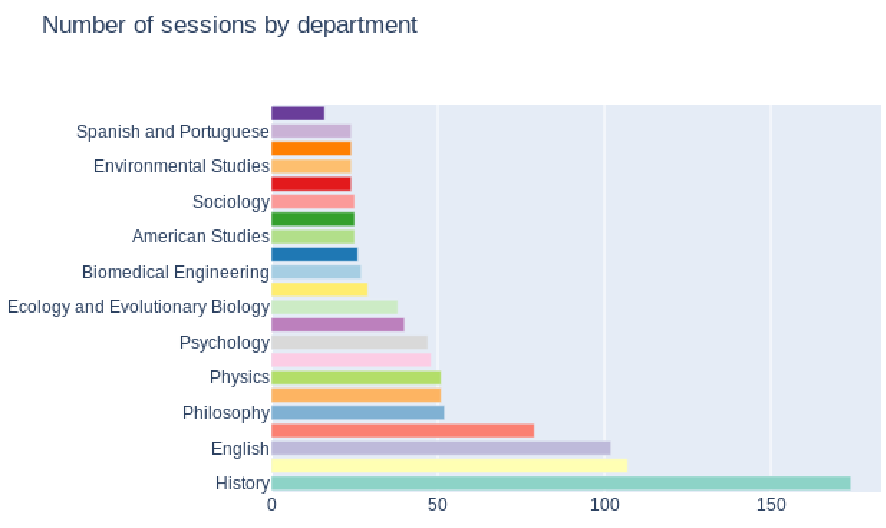
The authors tested TANN on 40 series from the Yale OpenCourseWare project. They designed three levels of difficulty:
- Episode Level: Adding a new lecture to a known course (80% accuracy).
- Pair Level: Ranking two new lectures from a known course (71% accuracy).
- Agnostic Task: Ranking lectures from a completely new subject/teacher (69% accuracy).
Insight: Generalization is Possible
The "Agnostic" result is the most significant. It suggests that there are universal pedagogical patterns in how humans teach. A model trained on Physics and History can still catch the "scaffolding" logic used in a Biology lecture it has never seen.
Critical Analysis & Future Outlook
Takeaway
TANN proves that the "logic of consumption" is a learnable feature. For OER platforms like X5-GON, this means we can automatically organize "playlists" of fragmented resources into coherent learning paths.
Limitations
- Text-Heavy: The model relies on transcripts. For highly visual OERs (like pure math on a chalkboard without speech), the model might struggle.
- Transformer Evolution: The authors noted that in 2020-2021, Transformers were prohibitive for this task due to data limits. Today, fine-tuning a small LLM (like Mistral or Llama-3) on this "precedence" task would likely yield even higher agnostic accuracy.
Conclusion
This paper moves AI in education away from "matching" and toward "teaching." By respecting the timeline of learning, TANN offers a blueprint for a more structured, teacher-aligned future for Open Education.