
WhatsApp as a Clinical Shield: Breaking the Stigma of OCD in the Middle East
Abstract -Social media applications such as WhatsApp, Facebook, Instagram, Twitter, etc., are widely used among society; each application has its own uses, differences and market share. According to official Jordanian statistics, WhatsApp is considered to be the most commonly used social media application by Jordanian people for creating, sharing and exchanging information. In this paper, we present a comprehensive preliminary study for the implementation of a national platform that contains information about Obsessive-Compulsive Disorder (OCD) in Jordan using the WhatsApp to collect the information. This project will be a pilot study using a cross-sectional design to determine the potential of the proposed platform in usability and effectiveness as a prototype system. Moreover, it will be the first mental health application that addresses the needs of the Arabic culture and region. The project will be implemented in two phases: the first phase, which includes the design of the OCDquestionnaire and the collection of data using the WhatsApp application, the collected data will be stored to a database which is going to be the first OCD database of its kind. The second phase of the project involves the design of a mobile application that can help to diagnose cases and provide medical advice to help alleviate the symptoms of the OCD. The publicity of using WhatsApp application will help in covering different geographical areas and reaching a variety of people with maintaining their confidentiality
This paper presents a preliminary study for a national Obsessive-Compulsive Disorder (OCD) platform in Jordan, utilizing WhatsApp as a primary vehicle for data collection and screening. It introduces the first Arabic-centric mental health digital tool designed to build a comprehensive OCD database and facilitate early diagnosis via mobile technology.
TL;DR
Mental health treatment in the Arabic region faces a unique hurdle: social stigma. This paper proposes a novel framework that turns WhatsApp—the most popular communication tool in Jordan—into a clinical gateway for screening Obsessive-Compulsive Disorder (OCD). By combining the Yale-Brown Obsessive-Compulsive Scale (Y-BOCS) with the anonymity of instant messaging, the authors aim to build the first national OCD database in Jordan.
The "Invisible" Crisis: Why Traditional Diagnosis Fails
Obsessive-Compulsive Disorder affects approximately 2.3% of the global population, yet in countries like Jordan, it often remains hidden. The authors identify three critical barriers:
- Cultural Stigma: Patients often feel shame or embarrassment, viewing mental struggles as a lack of self-control.
- Resource Scarcity: A lack of localized, Arabic-language tools means symptoms go unnoticed until they become severe.
- Digital Mismatch: While many global health apps exist, they are seldom designed with the cultural nuances of the Arab world in mind.
The motivation is clear: reach people where they already are. With 91% of Jordanians using WhatsApp, the app represents a "safe" and familiar space for healthcare intervention.
Methodology: Connectivism and the Two-Phase Approach
The study is grounded in Connectivism, a learning theory asserting that technology reinforces knowledge through network availability. The project unfolds in two distinct phases:
Phase 1: Data Harvesting & Screening
The team uses WhatsApp's broadcast and group features to distribute the Y-BOCS (Yale-Brown Obsessive-Compulsive Scale) questionnaire. This allows for:
- Anonymity: Crucial for encouraging honest self-reporting in conservative societies.
- Encryption: Utilizing WhatsApp's end-to-end encryption to ensure clinical privacy.
- Database Creation: Establishing a repository for demographic and risk-factor analysis.
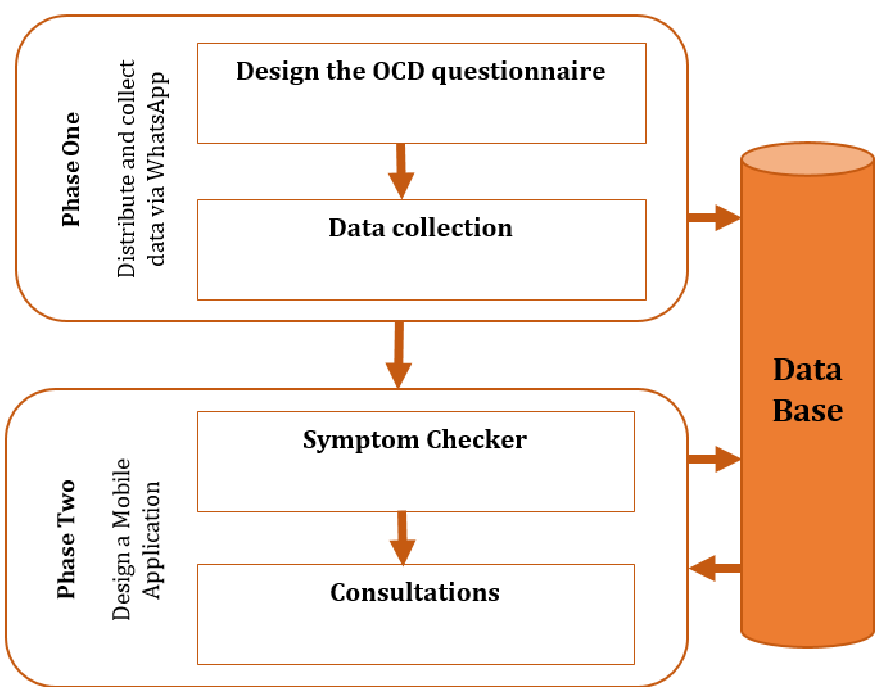 Figure 1: The proposed workflow from WhatsApp distribution to clinical database storage.
Phase 2: Diagnosis and Intervention
The second phase involves the development of a dedicated mobile application that processes the collected data using Machine Learning to discover patterns and provide automated medical advice or physician referrals.
Evidence of Feasibility
The researchers back their choice of platform with compelling local statistics. The shift from traditional PCs to smartphones in Jordan is nearly complete.
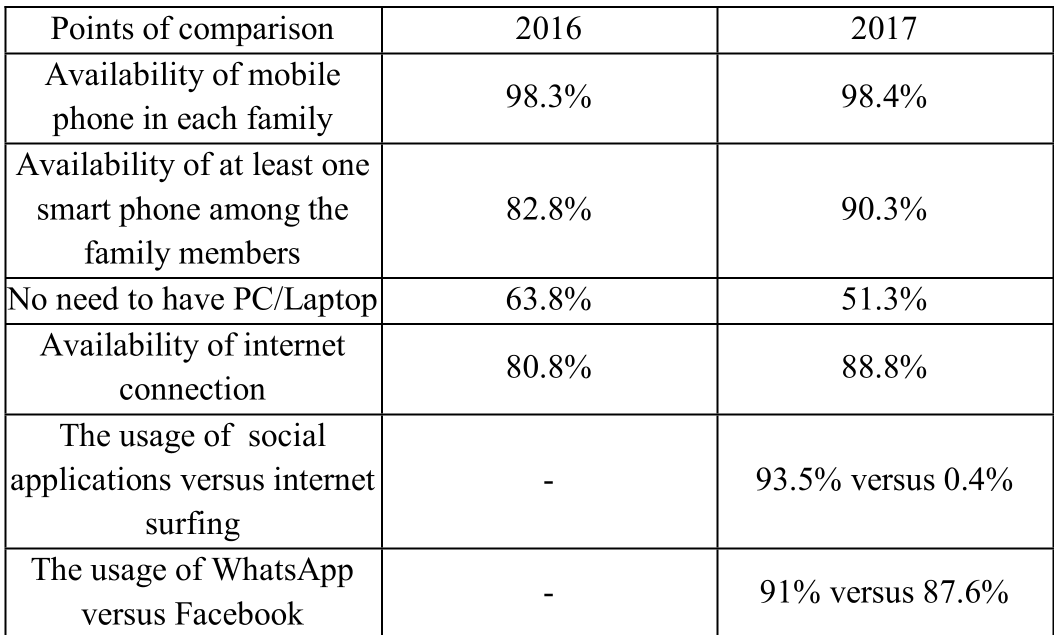 Table 1: Mobile and Internet penetration in Jordan (2016-2017), showing the dominance of WhatsApp over traditional web surfing.
The data shows that 93.5% of users prefer social applications over standard internet surfing. This "social-first" digital landscape justifies the use of messaging apps as the primary clinical interface.
Critical Insight & Future Outlook
The brilliance of this study lies not in complex new algorithms, but in Infrastructure Realism. Instead of forcing users to download a new, unfamiliar medical app, they "piggyback" on an existing habit.
Potential Challenges:
- Data Validation: Self-reported data via WhatsApp may introduce bias compared to face-to-face clinical interviews.
- Scale: While WhatsApp groups are limited to 256 members (at the time of the study), widespread broadcast lists will be necessary for a truly "national" platform.
Conclusion
This preliminary study serves as a blueprint for culturally-sensitive digital health. By meeting the Jordanian population on WhatsApp, the researchers have created a low-friction path to mental health awareness that could be replicated across the entire Arab world. As they move into the implementation phase, the integration of Machine Learning for symptom prediction will be the next frontier to watch.