
Whispers in the Dark: Decoding the Mechanics of Anonymous Socializing
Whispers in the Dark: Analysis of an Anonymous Social Network
This paper presents the first large-scale empirical study of Whisper, a pseudo-anonymous mobile social network. Utilizing a 3-month dataset of 24 million messages from 1 million users, the authors analyze interaction structures, user engagement, and content moderation, ultimately uncovering a critical location-tracking vulnerability.
TL;DR
This seminal study dissects Whisper, the pioneer of anonymous mobile messaging. Researchers found that while anonymity encourages intimate disclosure, it fundamentally alters the social graph—turning "small worlds" into "random graphs." The study also exposes a chilling reality: an anonymous identity does not prevent physical stalking, as the authors successfully pinpointed users within 200 meters using only public distance data.
Problem & Motivation: The Identity-Free Paradox
In the wake of the Snowden disclosures, privacy-seeking behavior led to the explosion of apps like Whisper and Snapchat. Unlike Facebook, Whisper has no profiles, no persistent friends, and no history.
From a technical perspective, this creates a Sustainability Paradox: if social networks gain value through "network effects" and "strong ties," how does a platform with zero social links survive? Does the lack of accountability turn these spaces into toxic voids, and does anonymity actually provide security?
Methodology: Mining the Whisper Stream
The researchers analyzed a complete 3-month trace of the network. Their approach was three-pronged:
- Structural Analysis: Building an interaction graph where edges are directed "replies."
- Predictive Modeling: Using Random Forests and SVM to determine if a user will quit based on their first week of "whispering."
- Security Probing: Developing a "location triangulation" algorithm to test the robustness of Whisper's privacy protections.
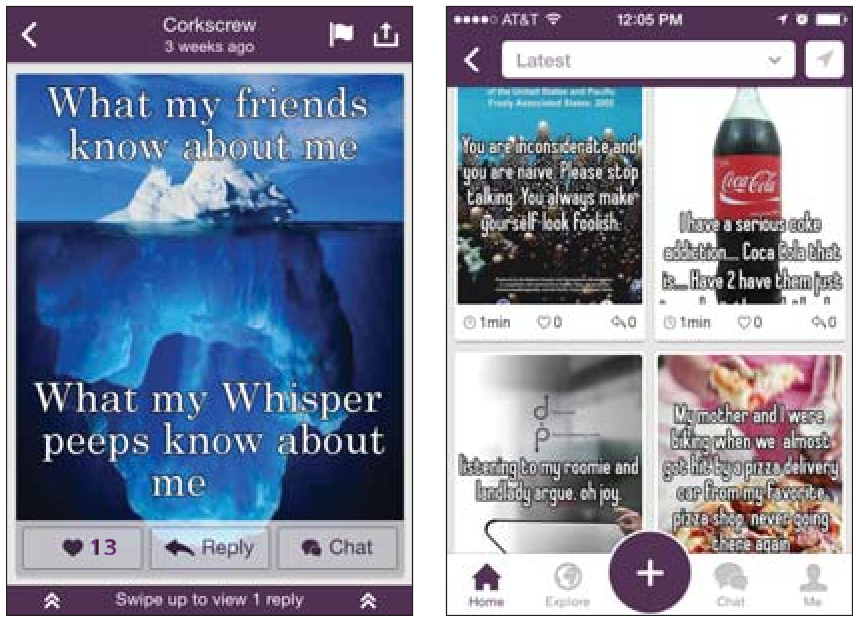
Core Insight 1: Social Graphs without Friends
The study revealed that Whisper's interaction graph is fundamentally different from Twitter or Facebook.
- Low Clustering: Unlike the "friend-of-a-friend" triangles found in Facebook, Whisper interactions are highly dispersed.
- Geographic Gravity: In the absence of an interest graph, the "Nearby" feed becomes the primary engine for interaction.
The researchers found that Whisper communities are almost entirely defined by geolocation. If you are in a community, there is a 60%+ chance you share the same state/region as the other members.
Core Insight 2: Predicting the "Try and Leave" Users
Engagement in Whisper is bimodal. Users either leave within 48 hours or stay for months. By analyzing features like the ratio of replies received and the delay in responses, the authors built a classifier that predicts long-term retention with 85% accuracy.
- The "Stickiness" Factor: The most predictive feature for new users is interaction quality (replies and likes received on Day 1). If a user doesn't get "heard" immediately, they vanish.
Core Insight 3: The Death of Anonymity via Triangulation
The most significant finding is the Location Tracking Attack. Even though Whisper obfuscates distance (rounding to the nearest mile and adding noise), the researchers used an iterative triangulation algorithm.
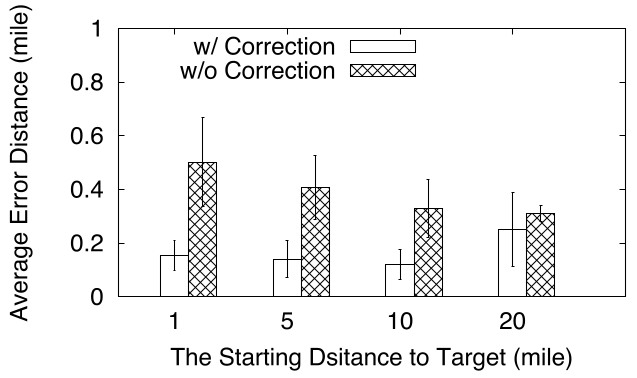
By querying the server from multiple "spoofed" GPS coordinates, they could cancel out the noise. The result? They could locate a target within 0.1 miles—close enough to identify a specific house or workplace.
Critical Analysis & Conclusion
The paper proves that "anonymity" is a double-edged sword. It lowers the barrier for self-expression (40% of posts relate to moods/emotions), but it also removes the social safety net, making user retention highly volatile and dependent on algorithmic discovery rather than social intent.
Takeaway: Design for privacy must go beyond hiding names. As this study shows, metadata (location and distance) is often more identifying than a username. For developers, the ultimate defense remains rate-limiting or removing granular distance metrics entirely.
Limitations: The study focuses on public interactions. Much of Whisper's "stickiness" likely resides in private chats, which remain a "black box" for external researchers.